






Integrating a Linear Weigher Powder Packing Machine in Lines
This article explains how to integrate the Kenwei JW-B20 Semi-Automatic Multi-Function Single Bucket Conveying Powder granule food Packaging Machine with Linear Weigher into packaging lines. It covers benefits, installation, throughput and accuracy comparisons, compliance, maintenance, ROI, typical applications and a FAQ to help manufacturers choose and deploy a Powder Packing Machine effectively.
- Integrating a Linear Weigher Powder Packing Machine in Lines
- Product overview: Semi Automatic Multi-function Single Bucket Conveying Powder granule food Packaging Machine With Linear Weigher JW-B20
- Why integrate a Linear Weigher into your Powder Packing Machine line?
- How the JW-B20 Linear Weigher operates within a packaging line
- Key benefits for manufacturers using a Powder Packing Machine with linear weighing
- Throughput and accuracy: realistic expectations for powder and granule products
- Practical steps to integrate a JW-B20 into an existing packaging line
- Electrical, mechanical and control considerations
- Material handling and product compatibility for powder systems
- Maintenance, calibration and long-term reliability
- Compliance and food safety when integrating a Powder Packing Machine
- Return on investment (ROI) considerations for adopting the JW-B20
- Typical applications and case scenarios
- Brand advantages: why choose Kenwei's JW-B20 for your Powder Packing Machine needs
- FAQ (Frequently Asked Questions)
- Q: What types of powders can the JW-B20 handle?
- Q: How accurate is the JW-B20 Powder Packing Machine?
- Q: Can the JW-B20 integrate with existing bagging and sealing equipment?
- Q: What maintenance is required to keep weighing accurate?
- Q: Is the JW-B20 suitable for high-speed operations?
- Contact us / View the product
- Authoritative references and further reading

Integrating a Linear Weigher Powder Packing Machine in Lines
Product overview: Semi Automatic Multi-function Single Bucket Conveying Powder granule food Packaging Machine With Linear Weigher JW-B20
The Kenwei JW-B20 Semi-Automatic Multi-Function Packaging Machine with Linear Weigher is ideal for powders and granules like sugar, salt, rice, coffee, and milk powder. It automates feeding, weighing, and output with high accuracy and efficiency. Compact and cost-effective, it suits various bag types not supported by standard machines, making it perfect for flexible, space-saving packaging needs. Better system integration directly impacts efficiency, which is why many plants focus on reducing waste and cost with accurate powder packing tech.
Why integrate a Linear Weigher into your Powder Packing Machine line?
Integrating a linear weigher into a Powder Packing Machine line addresses core manufacturing goals: higher accuracy, simplified changeovers for different products, and consistent fill performance. Unlike some volumetric or auger fillers that rely on product density assumptions, linear weighers measure weight directly at the feed points and can reduce giveaway (product overfill) while maintaining target fill tolerances. This improves product cost control and packaging consistency—especially important for powdered and granular food products where small weight variations compound across large production runs.
How the JW-B20 Linear Weigher operates within a packaging line
The JW-B20 combines a single-bucket conveying system with a linear weigher and semi-automatic bag handling. In a line layout it typically performs three tasks: precise metering (via linear weighing), controlled conveying (single-bucket conveyance minimizes dust and segregation) and synchronized discharge into the bag. The machine can be positioned after upstream dosing or upstream of a bag former/sealer depending on line architecture. Its compact footprint lets it integrate where space is limited and when flexibility in bag styles is required.
Key benefits for manufacturers using a Powder Packing Machine with linear weighing
Manufacturers gain several concrete benefits by adopting a linear weigher Powder Packing Machine like the JW-B20:
- Improved accuracy and reduced giveaway, lowering material costs.
- Faster setup and changeover across powders and granules, increasing uptime.
- Reduced product degradation and segregation, important for fragile blends and instant powders.
- Compatibility with a variety of bag types and sizes, supporting SKU diversity.
- Compact and cost-effective option for small-to-medium production lines that don't require full automation.
Throughput and accuracy: realistic expectations for powder and granule products
Throughput and accuracy depend on product characteristics (flowability, particle size, bulk density) and operator setup. Typical performance windows for linear weighers in powder applications are:
- Fill accuracy: ±0.5%–±2% depending on product and calibration.
- Cycle rate: 10–40 cycles per minute for many powders on compact linear weighers; higher rates on larger multihead systems.
Below is a comparison table showing general trade-offs among common dosing technologies when packaging powders and granules.
| Feature | Linear Weigher (e.g., JW-B20) | Multihead Weigher | Auger Filler |
|---|---|---|---|
| Best for | Powders and granules requiring moderate-to-high accuracy, compact lines | High-speed granular products, snacks, variable weights | Fine powders requiring controlled auger dosing |
| Typical accuracy | ±0.5%–±2% | ±0.2%–±1% | ±0.5%–±3% (product dependent) |
| Throughput | Moderate (10–40 cpm) | High (up to 150+ cpm for small items) | Low–moderate |
| Changeover simplicity | High (simple settings) | Moderate (mechanical adjustments required) | Moderate to high (depends on auger designs) |
| Dust control | Good (closed conveying possible) | Moderate | Requires dust mitigation systems |
Practical steps to integrate a JW-B20 into an existing packaging line
To minimize downtime and ensure smooth commissioning, follow these practical steps:
1) Line audit: map existing conveyors, baggers, sealers and control systems to identify mechanical and electrical tie-in points. 2) Footprint planning: allocate space for the JW-B20 including service access (cleaning, maintenance). 3) Utilities check: ensure compatible power (voltage, frequency), compressed air supply and communication interfaces (PLC, I/O) are available. 4) Product testing: run representative product samples to set weigh tolerances, test feed behavior and finalize bag-acceptance settings. 5) Operator training: train staff on cleaning, setup, troubleshooting and basic calibration. 6) Validation: perform production acceptance tests (PAT) to verify accuracy across expected environmental and product variations.
Electrical, mechanical and control considerations
When integrating a Powder Packing Machine like the JW-B20 into a line, consider:
- Control integration: provide PLC or digital I/O mapping for start/stop, fault reporting and recipe selection. Modern machines support Ethernet/IP, Modbus or discrete I/O for line synchronization.
- Mechanical interfaces: align conveyor heights and ensure product flow transition is smooth to prevent bridging or spillage. Flexible couplings or infeed chutes may be required.
- Safety and guarding: install interlocked guards around moving parts and comply with local machinery safety regulations.
- Cleanability: choose hygienic surfaces and allow for easy access to areas where powders accumulate to prevent cross-contamination.
These considerations reduce integration risk and speed up commissioning time while ensuring operator safety and regulatory compliance.
Material handling and product compatibility for powder systems
Different powders behave differently—free-flowing salts differ from cohesive milk powders. The JW-B20’s single-bucket conveying reduces segregation and dust generation, improving consistency for mixed or hygroscopic powders. For very cohesive powders, auxiliary solutions such as vibratory feeders, gentle agitation, or controlled humidity environments may be needed. Evaluate all SKUs against these criteria: particle size distribution, bulk density, flowability (Hausner Ratio or Carr Index) and sensitivity to compression.
Maintenance, calibration and long-term reliability
Regular maintenance is essential to keep weighing accuracy and uptime high. Recommended practices:
- Daily: visual check for product buildup, basic cleaning of hoppers and discharge areas.
- Weekly: inspect seals and conveyors for wear; verify sensors and weigh cells are free from obstructions.
- Monthly: perform calibration checks with certified weights, review logs for drift, and confirm control firmware is up to date.
- Annual: professional service for mechanical inspection and load cell certification if required by local standards.
A modest preventive maintenance plan reduces unexpected downtime and preserves accuracy for the Powder Packing Machine over its service life.
Compliance and food safety when integrating a Powder Packing Machine
Food-grade packaging lines must meet regulatory and hygienic standards. For food powders, key requests include using food-contact-grade materials (e.g., stainless steel 304/316), easily cleanable surfaces, and dust control measures to prevent contamination and allergen cross-contact. Manufacturers in regulated markets should reference FDA food packaging guidance and international standards such as those from the International Organization of Legal Metrology (OIML) for weighing equipment traceability. Proper documentation of validation, cleaning protocols and traceability is essential for audits and recalls.
Return on investment (ROI) considerations for adopting the JW-B20
ROI for a Powder Packing Machine depends on improved yield (reduced giveaway), labor savings from semi-automation, and reduced downtime from easier changeovers. Estimate ROI using these inputs:
- Current giveaway per package and annual production volume
- Cost per unit of material saved by improved accuracy
- Labor cost savings from automation of weighing and conveyance
- Reduced maintenance and downtime benefits
Example quick calculation:
If giveaway reduction saves $0.005 per pack and annual volume is 10,000,000 packs, annual savings = $50,000. Add labor savings and reduced scrap to project payback—many organizations recover capital within 12–36 months depending on scale.
Typical applications and case scenarios
The JW-B20 is suited to small-to-medium scale food manufacturers producing sugar sachets, coffee sachets, milk powder packs, salt packets, rice samples and mixed seasonings. Typical scenarios include:
- A start-up transitioning from manual weighing to semi-automatic packaging to scale production.
- A contract packer adding a compact line for low-volume, high-SKU flexibility.
- A manufacturer seeking a low-footprint solution to pack specialty mixes and delicate powders where dust and segregation must be controlled.
Brand advantages: why choose Kenwei's JW-B20 for your Powder Packing Machine needs
Kenwei’s JW-B20 delivers advantages tailored to manufacturers seeking accuracy and flexibility without the footprint and cost of larger automated lines:
- Compact design that fits constrained production spaces.
- Versatility for powders and granules across many bag types.
- Cost-effective semi-automatic operation that reduces initial capital while enabling faster scale-up.
- Simplified maintenance and calibration for consistent performance.
Combined, these brand advantages make the JW-B20 a pragmatic choice for companies balancing quality, cost and line flexibility.
FAQ (Frequently Asked Questions)
Q: What types of powders can the JW-B20 handle?
A: The JW-B20 handles a wide range of powders and granules including sugar, salt, rice, coffee, milk powder and blended seasonings. Very cohesive powders may require auxiliary handling aids.
Q: How accurate is the JW-B20 Powder Packing Machine?
A: Accuracy typically ranges from ±0.5% to ±2% depending on product characteristics and calibration. Regular calibration and proper product testing will optimize accuracy.
Q: Can the JW-B20 integrate with existing bagging and sealing equipment?
A: Yes. The JW-B20 is designed for easy integration into lines and supports standard electrical and mechanical interfaces. A line audit and minor mechanical adjustments are usually necessary.
Q: What maintenance is required to keep weighing accurate?
A: Routine cleaning, weekly inspections, monthly calibration checks, and annual professional servicing are recommended. Keep load cells and weigh hoppers free from buildup and damage.
Q: Is the JW-B20 suitable for high-speed operations?
A: The JW-B20 is optimized for small-to-medium throughput. For ultra-high-speed operations, larger multihead weighers or dedicated high-speed systems may be more appropriate.
Contact us / View the product
If you are evaluating Powder Packing Machine options or want a site assessment to integrate the JW-B20 into your line, contact our sales team for a demo, product specs, and ROI modelling. Request a quote or schedule a technical consultation to see how the JW-B20 fits your production needs.
Authoritative references and further reading
For background and regulatory guidance referenced see:
- Multihead weigher — Wikipedia: https://en.wikipedia.org/wiki/Multihead_weigher
- Packaging machine — Wikipedia: https://en.wikipedia.org/wiki/Packaging_machine
- Weighing scale — Wikipedia: https://en.wikipedia.org/wiki/Weighing_scale
- Food packaging — Wikipedia: https://en.wikipedia.org/wiki/Food_packaging
- PMMI — The Association for Packaging and Processing Technologies: https://www.pmmi.org/
- U.S. Food & Drug Administration (Food and Packaging): https://www.fda.gov/food
- OIML — International Organization of Legal Metrology: https://www.oiml.org/
For product-specific inquiries, demonstration scheduling and technical support, please reach out to our team to discuss how the Kenwei JW-B20 Semi Automatic Multi-function Single Bucket Conveying Powder granule food Packaging Machine With Linear Weigher can be integrated into your production line.
Tags
china food packing machine
china food packing machine
dynamic checkweigher
dynamic checkweigher
multihead weigher for sale
multihead weigher for sale
china food metal detector
china food metal detector
automatic granular product packing line for cereals
automatic granular product packing line for cereals
metal detector sensitivity food industry
metal detector sensitivity food industry
Recommended for you
The B2B Buyer’s Guide to snack food packaging machine
Multihead Weigher Buyer’s Guide: Choose the Right Model for Your Line
Ultimate Guide to Food Packing Machine for Multihead Weigher
Tips for buy combination weigher scales
Prdoucts Categories
Question you may concern
About Product choice
What is the average lifespan of Kenwei products?
Kenwei machines are built for durability and longevity. With proper maintenance, our products are designed to last for many years, even under heavy usage. We offer maintenance services and support to help extend the lifespan of your machines.
About Cooperation Process
Does Kenwei offer installation and training?
Yes, Kenwei provides installation services and comprehensive training to ensure that your team can operate the machinery efficiently. Our engineers can travel to your facility for on-site installation, and we also offer remote training options if needed.
About Price and payment
Are the prices for Kenwei machines negotiable?
Prices are generally fixed, but depending on the order volume, long-term partnerships, or special circumstances, we may offer discounts or promotional pricing. Please contact our sales team to discuss your specific situation.
About Logistics
How long does logistics delivery take?
Shipping times depend on your location and the shipping method you choose. Generally speaking, international shipping can take anywhere from a few weeks to a few months.
About Solution suggestions
Can Kenwei provide solutions for high-volume production?
Yes, Kenwei specializes in high-speed, high-throughput machines designed for large-scale operations. Our multi-head weighers, packing machines, and check weighers.
You may also like
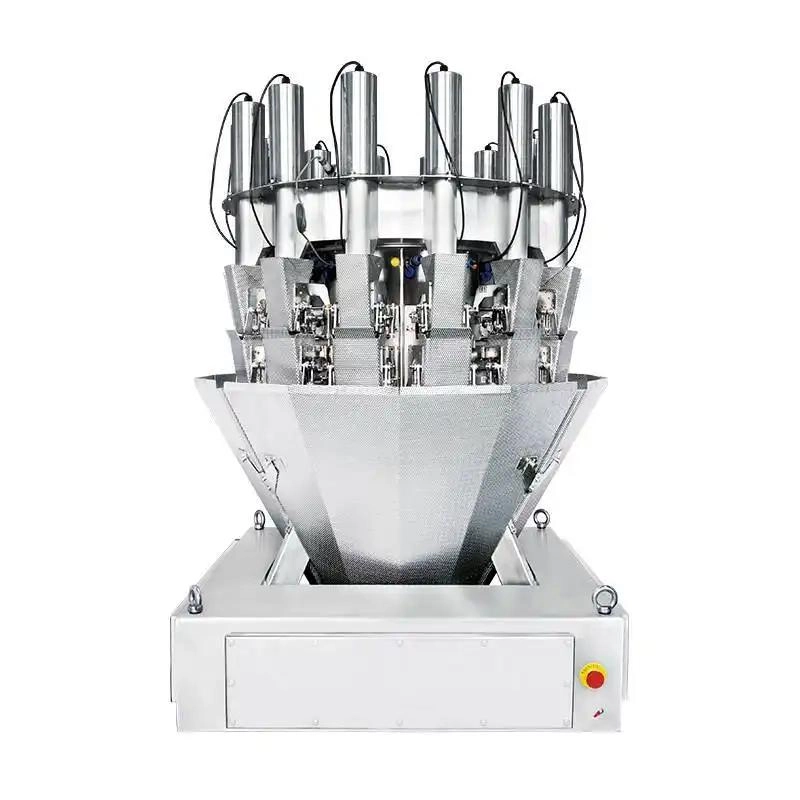
14 Heads Vertical Single Screw Feeding Pickles Weigher backups
This type of weigher is designed to handle the unique characteristics of pickles, ensuring precise measurements for packaging and distribution. It uses a vertical single screw mechanism to feed the pickles into the weighing system, allowing for efficient and consistent weighing. This technology is particularly useful in food processing and packaging facilities where precise portioning is essential for quality control and customer satisfaction. This specialized equipment is perfect for accurately measuring and dispensing pickles in a production line or packaging facility. The vertical design allows for efficient and precise filling of containers, while the single screw feeding mechanism ensures consistent and reliable weighing.
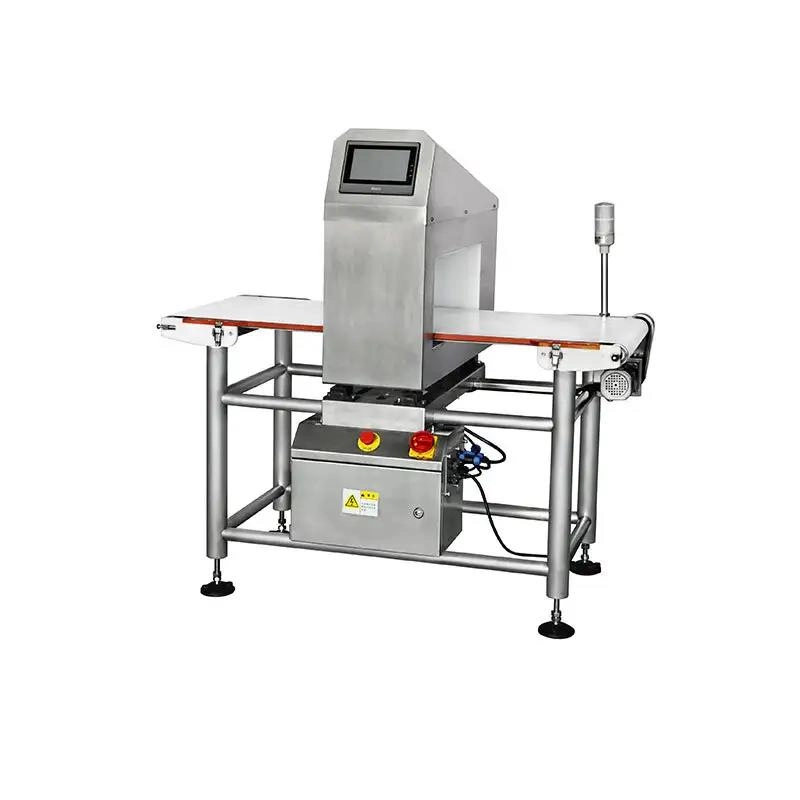
Food Metal Detector Manufacturer For Reject Defective Products G5020
The G5020 multi-frequency metal detector features a specialized conveyor belt designed to reduce contamination risks, ensure smooth operation, and maintain high detection sensitivity. It is easy to disassemble for convenient maintenance. Ideal for detecting metal contaminants in food, pharmaceuticals, spices, plastics, electronics, textiles, toys, handicrafts, and more.
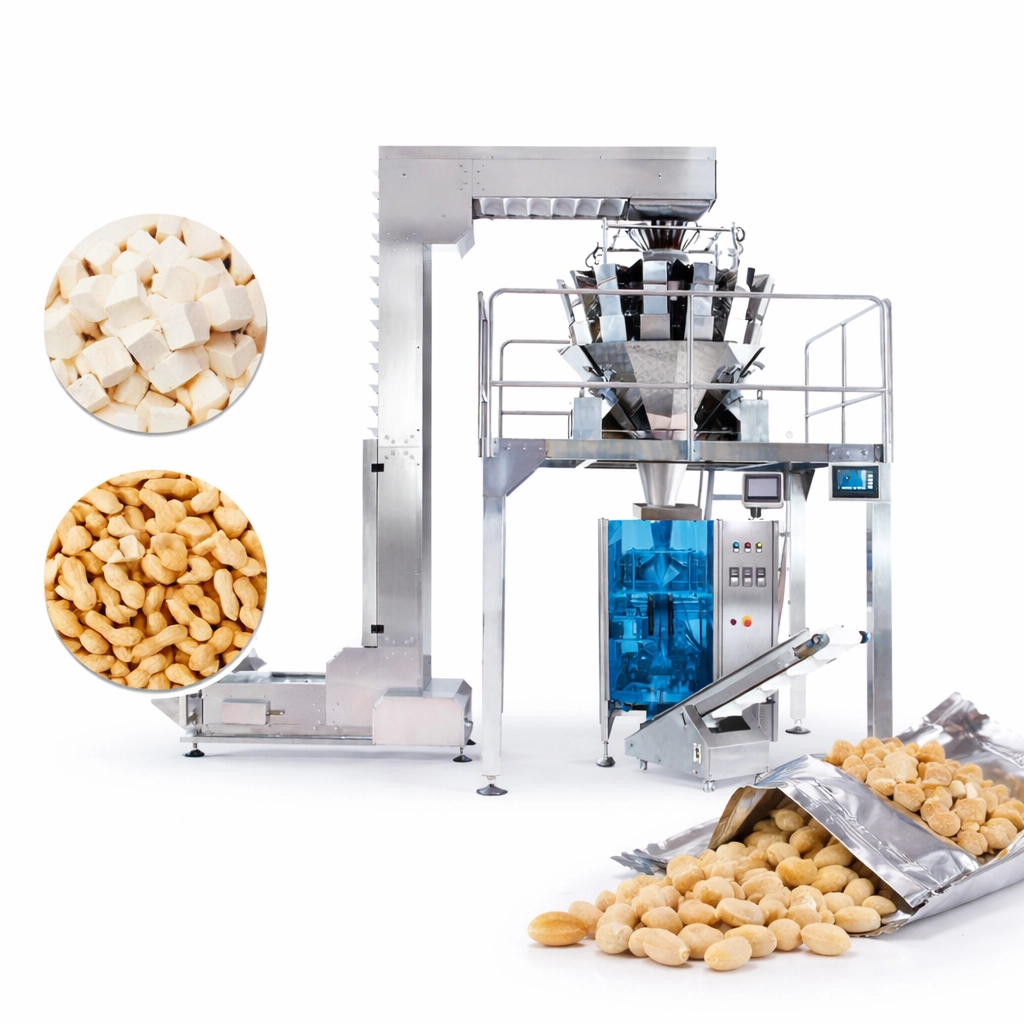
High-Precision Weighing & Packaging for Granular Products
The Granular Food Packing Machine is a fully automated solution designed for accurate weighing, filling, and packaging of various granular food products. Integrated with a multihead weigher and advanced packaging system, it ensures high speed, precision, and hygiene standards for modern food production.
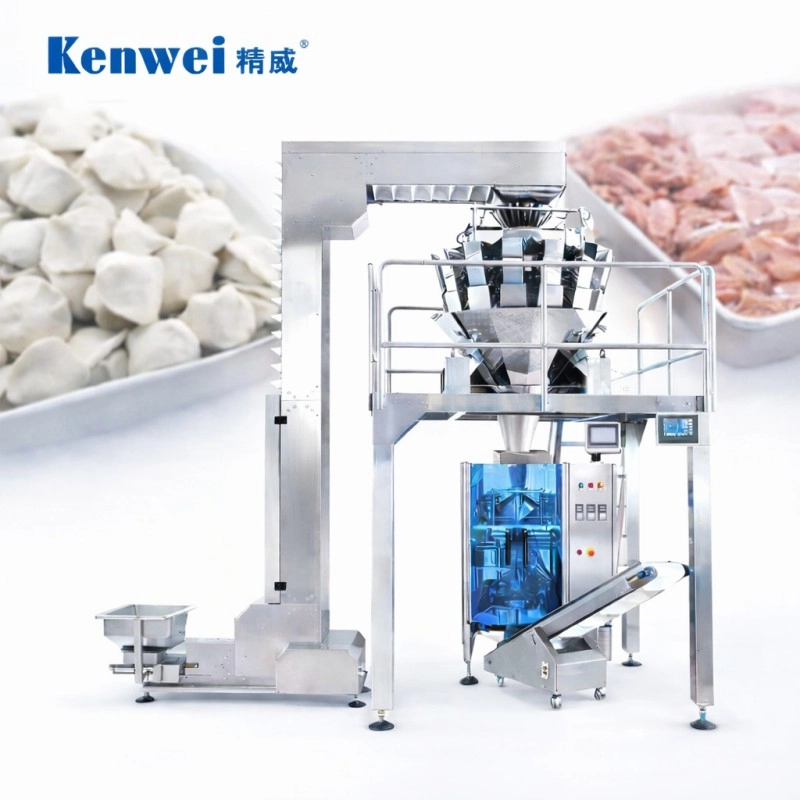
Vertical Frozen Food Packaging Machine for IQF & Frozen Products JW-B1
The Kenwei JW-B1 Vertical Frozen Food Packaging Machine is designed for IQF and frozen products, ensuring efficient, airtight packing. This vertical packing machine boosts productivity with precision sealing, ideal for frozen food packaging needs in the food industry.
Get in touch with us
If you have any comments or good suggestions, please leave us a message, later our professional staff will contact you as soon as possible.
Kenwei
Kenwei
Kenwei multi weigh
Kenwei
Kenwei
Kenwei