






Why aluminum foil is a challenge for food metal detectors
Aluminum foil packaging creates electrical and magnetic noise that masks metal contaminants for conventional metal detectors. This article explains the physics behind the problem, practical detection strategies for the food industry, and how the Metal Detector for Aluminum Foil in the Food Industry for Accurate Contamination Detection (2415) addresses these challenges.
- How aluminum foil affects metal detection in food processing
- Why aluminum packaging produces a strong detector signal
- Types of product effect and how foil aggravates it
- Why conventional detectors struggle with foil-wrapped products
- Technologies and methods to overcome aluminum foil interference
- Multi-frequency and adaptive detection systems
- Ground-referenced and balance-improved search heads
- Complementary detection: X-ray and vision systems
- Practical strategies for food manufacturers handling aluminum-foiled items
- Risk-based inspection planning
- Optimize detector settings and validate regularly
- Conveyor design, product presentation, and packaging handling
- Case study: Metal Detector for Aluminum Foil in the Food Industry for Accurate Contamination Detection (2415)
- Product overview and how it addresses foil challenges
- Key technical features and benefits
- When to choose a specialized metal detector versus X-ray
- Performance comparison and typical detection limits
- Comparing detection technologies for aluminum-foiled products
- Typical detection limits you can expect
- Implementation checklist: reducing foil-related detection failures
- Pre-installation planning
- Commissioning and validation
- Ongoing operation and maintenance
- Regulatory context and best-practice references
- Standards and guidance
- Audit readiness and documentation
- Frequently Asked Questions (FAQ)
- Q: Can any metal detector find contaminants in aluminum-foiled packages?
- Q: Should I replace metal detection with X-ray when using foil packaging?
- Q: How often should I validate the detector?
- Q: What test pieces should I use for foil-packaged products?
- Q: How does the 2415 unit reduce false rejects caused by foil?

Aluminum foil-packaged foods present a unique challenge for food safety screening: the packaging itself generates signals that can mask or mimic the presence of dangerous metal fragments. For food manufacturers and quality assurance teams using a metal detector for food industry applications, understanding why aluminum interferes with detection and what technological approaches overcome this barrier is essential for compliance, product safety, and minimizing costly recalls.
How aluminum foil affects metal detection in food processing
Why aluminum packaging produces a strong detector signal
Aluminum is a non-ferrous, highly conductive metal. When a product wrapped in aluminum foil passes through the search head of a conveyor-based metal detector, the foil creates eddy currents and capacitive coupling that produce large, complex signals. These signals can overshadow the much smaller signatures produced by small ferrous or non-ferrous contaminants, reducing the detector’s signal-to-noise ratio and increasing the chance of missed contaminants or false rejects.
Types of product effect and how foil aggravates it
In metal detection, product effect refers to the intrinsic electrical and magnetic properties of the product that influence detector signals. Moisture, salt content, temperature, and conductive packaging all contribute. Aluminum foil introduces a strong, variable product effect because its thickness, folds, orientation and overlap change the electromagnetic response as the package moves or rotates. That variability is particularly problematic for single-frequency, coil-balanced detectors used widely in the food industry.
Why conventional detectors struggle with foil-wrapped products
Balanced coil detectors are optimized to ignore uniform backgrounds and detect localized metal anomalies. However, aluminum foil often creates spatially large, non-uniform interference. The detector's filters and sensitivity settings may either be desensitized (missing small contaminants) or tightened to reject foil signals (causing frequent false rejects). This trade-off hurts throughput, yields, and compliance.
Technologies and methods to overcome aluminum foil interference
Multi-frequency and adaptive detection systems
Modern metal detectors for food industry use multi-frequency or variable-frequency technologies that measure responses across a range of frequencies. Because aluminum and ferrous contaminants behave differently as frequency changes, multi-frequency systems can separate packaging effects from real contaminants. Adaptive algorithms analyze phase and amplitude across frequencies to distinguish foil-induced signals from true metal fragments.
Ground-referenced and balance-improved search heads
Advanced search-head designs and grounding techniques reduce environmental noise and provide a more stable baseline. Ground-referenced systems and improved coil balancing help reduce the impact of conductive packaging. Proper installation—correct grounding, separation from motors and other electromagnetic noise sources—also matters to maximize sensitivity around aluminum-wrapped products.
Complementary detection: X-ray and vision systems
When aluminum packaging makes metal detection unreliable for specific product types, manufacturers often use X-ray inspection as a complementary technology. X-ray systems are less sensitive to packaging conductivity and can detect differences in density and shape, although they have limitations detecting very small low-density fragments. Combining metal detectors and X-ray inspection yields the best coverage for many product ranges.
Practical strategies for food manufacturers handling aluminum-foiled items
Risk-based inspection planning
Begin with a risk assessment: consider where, how, and why metal contamination could occur in your process. For high-risk lines that pack in aluminum foil—coffee bags, vacuum-sealed meats, chocolates in foil wrap—a layered approach using an optimized metal detector plus periodic X-ray checks reduces both false accepts and false rejects.
Optimize detector settings and validate regularly
Metal detectors should be factory-calibrated for aluminum-foiled products and validated on-line with representative samples. Use certified test pieces (ferrous, non-ferrous, stainless) in the actual package format and orientation. Maintain routine verification logs and follow standards such as ISO 22000 for food safety management (ISO 22000).
Conveyor design, product presentation, and packaging handling
Small mechanical changes can improve detection: create consistent product presentation, avoid overlapping packages in the aperture, control product orientation, and ensure clean, wrinkle-free packaging paths. Reducing package rotation and tilt minimizes the variable foil-induced signal and stabilizes detector performance.
Case study: Metal Detector for Aluminum Foil in the Food Industry for Accurate Contamination Detection (2415)
Product overview and how it addresses foil challenges
The Metal Detector for Aluminum Foil in the Food Industry for Accurate Contamination Detection is engineered specifically to detect magnetic metal contaminants in aluminum foil-packaged goods without being overwhelmed by the packaging itself. The 2415 Metal Detector for Aluminum Foil is equipped with high-sensitivity sensors that effectively filter out signals from aluminum packaging, ensuring precise detection of magnetic metal contaminants. Ideal for detecting foreign bodies in aluminum foil-packaged items such as coffee bags, peanuts, dried meats, chocolate, and more. This versatile metal detector offers adjustable settings, with a maximum width of 24mm and height ranging from 20-150mm, making it suitable for a wide variety of aluminum foil packaging applications.
Key technical features and benefits
- High-sensitivity sensors tuned for aluminum packaging to maintain detection levels for magnetic and metallic fragments.
- Adjustable aperture up to 24mm width and 20–150mm height to fit diverse product formats.
- Advanced filtering algorithms and multi-parameter discrimination to reduce false rejects while keeping high detection rates.
- Easy-to-use interface for on-line calibration, validation and recordkeeping to meet audit requirements.
When to choose a specialized metal detector versus X-ray
For many foil-wrapped items, a specialized metal detector such as the 2415 provides the most cost-effective and sensitive solution for detecting metal fragments. If product density variations, bone fragments, or glass are also concerns, or if extremely small non-metallic defects need detection, supplementing with X-ray inspection is recommended. Combining technologies on critical lines is consistent with global best practice and food safety management principles, such as those promoted by the Codex Alimentarius and regulatory frameworks like the FDA's Food Safety Modernization Act (FSMA).
Performance comparison and typical detection limits
Comparing detection technologies for aluminum-foiled products
The table below summarizes strengths and limitations of common inspection technologies for aluminum-foiled food packaging.
| Technology | Strengths | Limitations for Aluminum Foil | Typical Application |
|---|---|---|---|
| Standard Balanced Coil Metal Detector | Cost-effective, fast, excellent for ferrous metals in non-conductive packaging | Suffers reduced sensitivity or high false rejects with foil packaging | Dry, non-conductive packaged products |
| Multi-frequency Metal Detector (e.g., 2415 optimized unit) | Better discrimination between foil and contaminants; improved sensitivity | Higher cost; requires correct calibration and validation | Aluminum-foiled coffee, snacks, chocolates |
| X-ray Inspection | Detects density differences and non-metallic contaminants; less affected by conductivity | Reduced sensitivity to very small metal fragments; higher capital cost | High-risk products, composite packaging |
Typical detection limits you can expect
Detection capability varies with product, packaging geometry and detector model. For optimized multi-frequency detectors on foil-wrapped items, reliably detecting ferrous fragments in the 0.8–2.0 mm range is achievable under controlled conditions. However, stainless steels and very small non-magnetic particles may require X-ray confirmation or tighter process controls. Always validate performance using representative test pieces and package formats as part of your HACCP and verification program (refer to ISO 22000 guidance: ISO 22000).
Implementation checklist: reducing foil-related detection failures
Pre-installation planning
- Identify lines with aluminum-foiled products and prioritize risk levels.
- Define required aperture size and throughput expectations.
- Plan grounding, electrical isolation, and physical separation from noisy equipment.
Commissioning and validation
- Calibrate with representative packaged test pieces and certified test samples.
- Document detection limits and maintain validation logs for audits.
- Train operators on product effect, test-piece placement, and alarm procedures.
Ongoing operation and maintenance
Run daily function checks, scheduled re-validation after product or packaging changes, and keep a controlled environment around the detector to minimize drift. Where line speed or product mix varies frequently, implement automatic balancing and recipe-based settings to maintain performance without constant manual tweaks.
Regulatory context and best-practice references
Standards and guidance
Food safety management systems such as ISO 22000 and regulatory programs under the FDA FSMA emphasize preventive controls and verification. For background on metal detection technologies, general principles are summarized in resources like the Metal detector article on Wikipedia and Codex publications (Codex Alimentarius).
Audit readiness and documentation
Maintain proof of detector capability with validation certificates, routine test logs, corrective action records and operator training records. Auditors expect documented verification that your metal detector for food industry lines can reliably detect contaminants in the actual packaged product.
Frequently Asked Questions (FAQ)
Q: Can any metal detector find contaminants in aluminum-foiled packages?
A: Not all metal detectors are equal. Standard single-frequency detectors often struggle with foil. Multi-frequency or foil-optimized detectors (such as the 2415 Metal Detector for Aluminum Foil) provide superior discrimination and sensitivity for foil-wrapped products.
Q: Should I replace metal detection with X-ray when using foil packaging?
A: Not necessarily. X-ray and metal detection have different strengths. For many manufacturers, combining a foil-optimized metal detector with periodic X-ray checks gives the best coverage and cost-effectiveness. Choose based on risk assessment, product type and regulatory requirements.
Q: How often should I validate the detector?
A: Validate at installation, after major maintenance, when product or packaging changes, and on a scheduled basis (e.g., monthly or per HACCP plan). Maintain a log of daily function checks and formal validation records for audits.
Q: What test pieces should I use for foil-packaged products?
A: Use representative ferrous, non-ferrous and stainless steel test pieces sized to your risk tolerance, and always test using the actual packaged format and orientation. Document the detection limit and keep test records.
Q: How does the 2415 unit reduce false rejects caused by foil?
A: The 2415 includes high-sensitivity sensors and advanced filtering algorithms tuned to filter out the aluminum packaging signal. It provides adjustable aperture and on-line calibration tools so operators can set optimal detection without excessive false rejects.
If you would like product specifications, a validation plan, or a quote for the Metal Detector for Aluminum Foil in the Food Industry for Accurate Contamination Detection (2415), please contact our sales team or view the product page. Our experts can help select the right detection strategy and perform on-site trials to validate performance in your production environment.
References and further reading: ISO 22000 (ISO), FDA FSMA (FDA), Codex Alimentarius (FAO/WHO Codex), Metal detector overview (Wikipedia).
Tags
cheese packing machine
cheese packing machine
food metal detector
food metal detector
metal detector for food factory
metal detector for food factory
vacuum packaging
vacuum packaging
packing machines
packing machines
metal detector for food production line
metal detector for food production line
Recommended for you
The B2B Buyer’s Guide to snack food packaging machine
How to Choose the Right Combination Weigher for Your Product
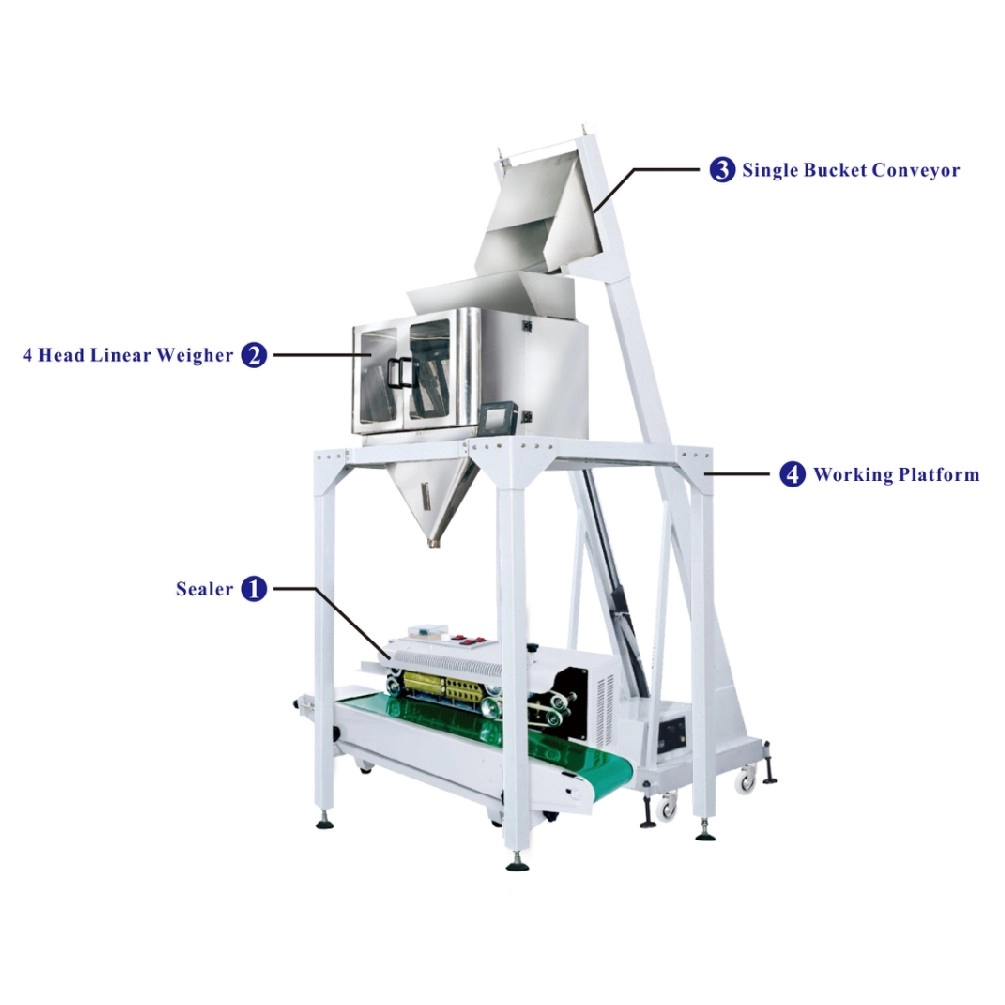
Reducing Waste and Cost with Accurate Powder Packing Tech

Maintenance Checklist for Good Metal Detectors in Food Plants
Prdoucts Categories
Question you may concern
About Product choice
Can Kenwei's machines be used in my industry?
Kenwei’s equipment is highly versatile and can be used across a wide range of industries, including:Food,Pharmaceuticals,Chemicals,Plastics and Agriculture.
Plastics If you're unsure whether our products are suitable for your industry, please contact us, and we can provide you with specific solutions tailored to your needs.
How do I choose the right product for my business?
Choosing the right machine depends on several factors:
Product Type: Different machines are suited for different products (e.g., powder, granules, etc.).
Production Capacity: Consider the volume of products you need to process and the speed requirements.
Customization: If you have specific needs, such as the need for unique features or sizes, we offer customization options.
About Cooperation Process
Can Kenwei customize equipment to meet my specific needs?
Yes! We offer customized solutions for all of our machines. Our team will work closely with you to understand your specific requirements and create a solution that meets your needs in terms of size, functionality, speed, and other factors.
About Price and payment
Are the prices for Kenwei machines negotiable?
Prices are generally fixed, but depending on the order volume, long-term partnerships, or special circumstances, we may offer discounts or promotional pricing. Please contact our sales team to discuss your specific situation.
About Logistics
How are large machines handled during shipping?
Large machines are typically shipped via sea freight using containerized shipping.
You may also like
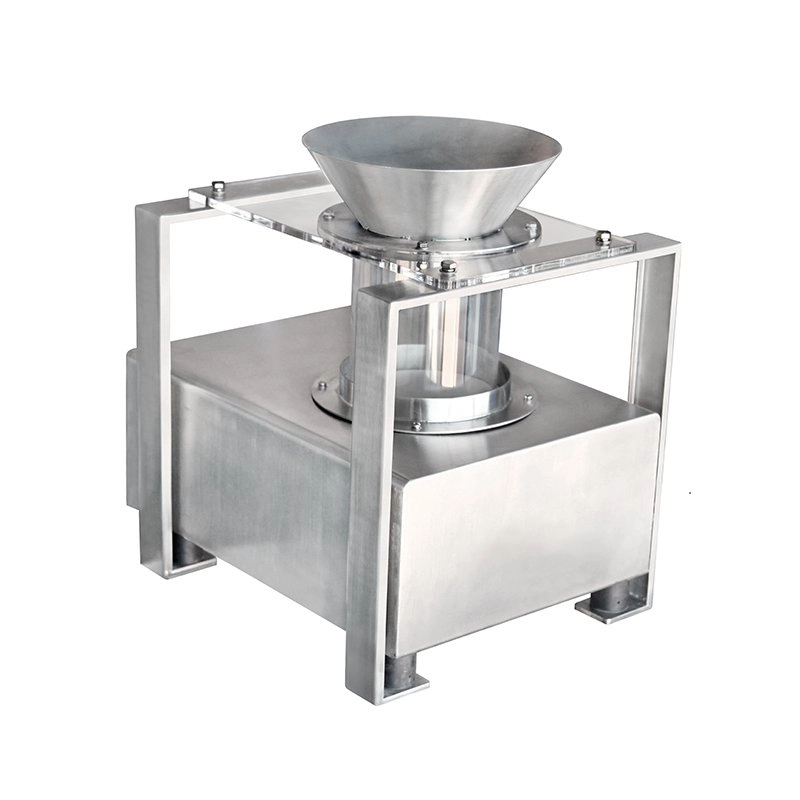
Dropped Metal Detector for Powder Granules For Food Industry
Enhance food safety with Kenwei’s Dropped Metal Detector for Powder Granules. This advanced food metal detector ensures precise detection in the food industry, safeguarding products and maintaining high quality standards throughout processing.
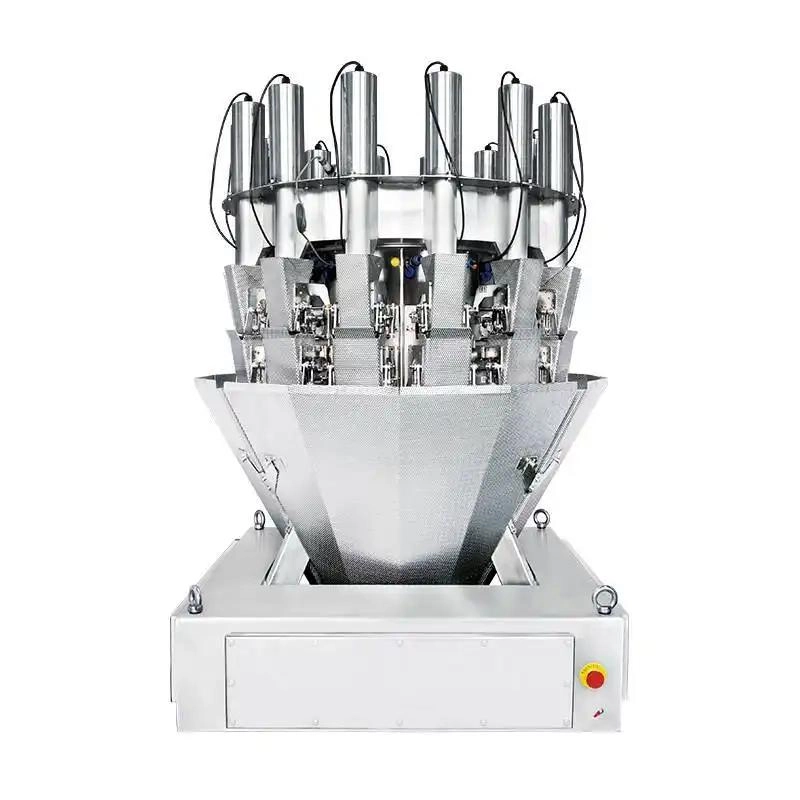
14 Heads Vertical Single Screw Feeding Pickles Weigher backups
This type of weigher is designed to handle the unique characteristics of pickles, ensuring precise measurements for packaging and distribution. It uses a vertical single screw mechanism to feed the pickles into the weighing system, allowing for efficient and consistent weighing. This technology is particularly useful in food processing and packaging facilities where precise portioning is essential for quality control and customer satisfaction. This specialized equipment is perfect for accurately measuring and dispensing pickles in a production line or packaging facility. The vertical design allows for efficient and precise filling of containers, while the single screw feeding mechanism ensures consistent and reliable weighing.
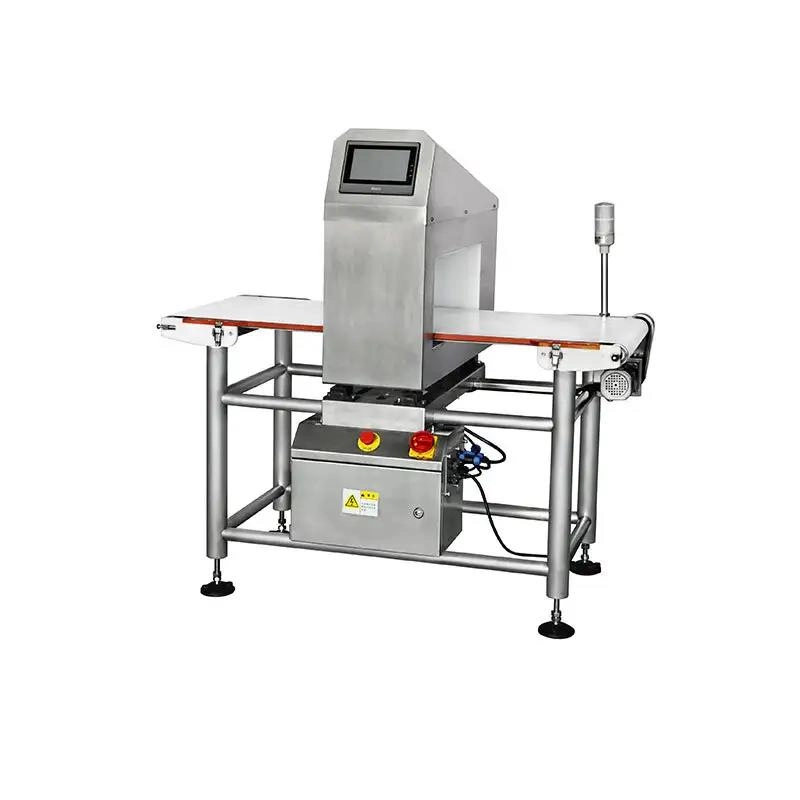
Food Metal Detector Manufacturer For Reject Defective Products G5020
The G5020 multi-frequency metal detector features a specialized conveyor belt designed to reduce contamination risks, ensure smooth operation, and maintain high detection sensitivity. It is easy to disassemble for convenient maintenance. Ideal for detecting metal contaminants in food, pharmaceuticals, spices, plastics, electronics, textiles, toys, handicrafts, and more.
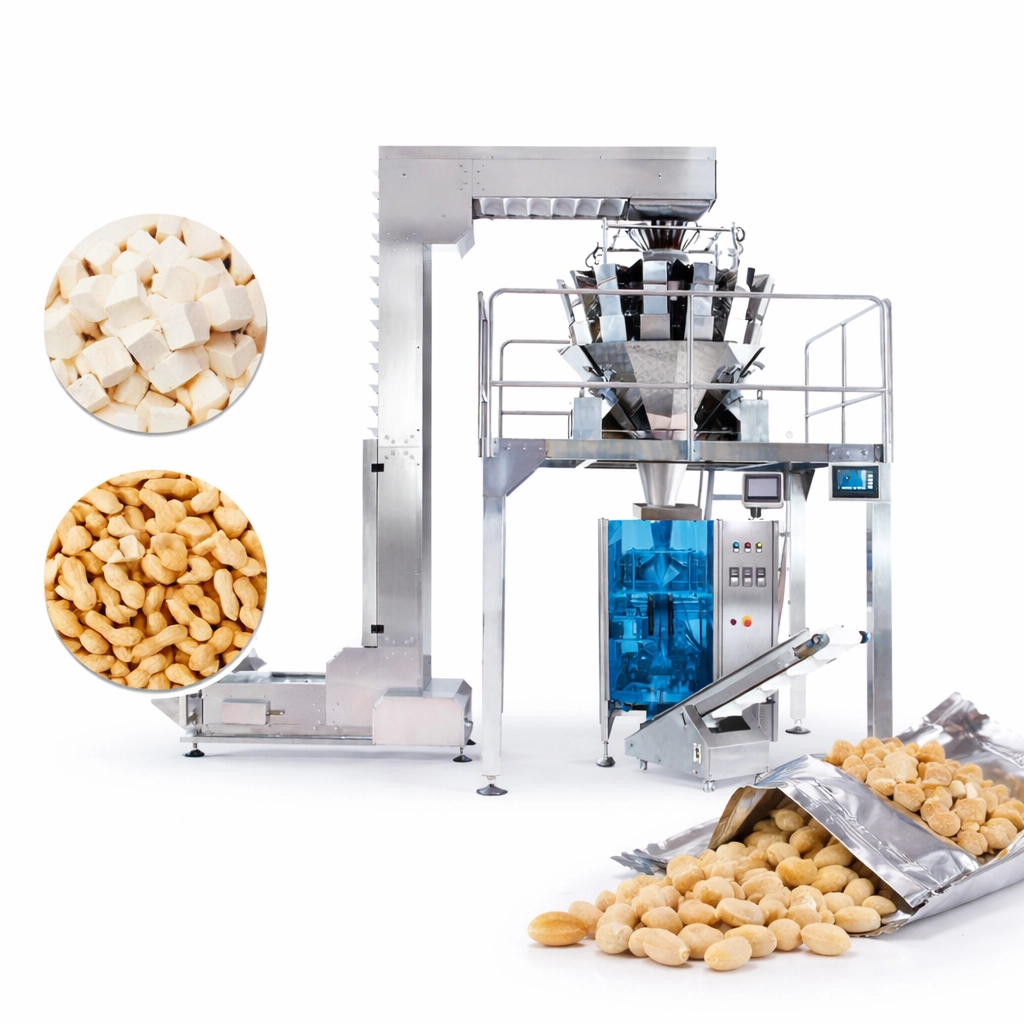
High-Precision Weighing & Packaging for Granular Products
The Granular Food Packing Machine is a fully automated solution designed for accurate weighing, filling, and packaging of various granular food products. Integrated with a multihead weigher and advanced packaging system, it ensures high speed, precision, and hygiene standards for modern food production.
Get in touch with us
If you have any comments or good suggestions, please leave us a message, later our professional staff will contact you as soon as possible.
Kenwei
Kenwei
Kenwei multi weigh
Kenwei
Kenwei
Kenwei