






Calculating ROI: Is a Linear Weigher Worth It?
A practical guide to calculating ROI for a linear weigher. Learn cost factors, compare linear vs multihead weighers, run a worked ROI example, and decide when a linear weigher is worth the investment.
- Introduction: Calculating ROI — Is a Linear Weigher Worth It?
- What is a Linear Weigher and when companies choose one
- Understanding the behind Calculating ROI: Is a Linear Weigher Worth It?
- Key factors that drive ROI for a linear weigher
- 1. Capital expenditure (CapEx)
- 2. Operating expenditure (OpEx)
- 3. Labor savings
- 4. Giveaway and accuracy
- 5. Throughput and revenue uplift
- 6. Downtime and changeover
- Simple ROI formulas to apply
- Worked example: Calculating ROI for a linear weigher
- Linear weigher vs multihead weigher: which to choose?
- How to run your own ROI assessment (step-by-step)
- Step 1 — Baseline measurement
- Step 2 — Collect quotes and lifecycle costs
- Step 3 — Estimate conservative benefits
- Step 4 — Calculate payback and scenario sensitivity
- Non-financial benefits that influence ROI decisions
- Common pitfalls to avoid when calculating ROI
- Why choose a partner like Kenwei?
- Conclusion: Is a linear weigher worth it?
- Frequently Asked Questions
- References
Introduction: Calculating ROI — Is a Linear Weigher Worth It?
Manufacturers evaluating automation investments often ask: Calculating ROI: Is a Linear Weigher Worth It? This article explains how to evaluate return on investment (ROI) for a linear weigher using clear business metrics. It is written for packaging managers, operations leaders, and procurement teams who want an actionable, vendor-neutral approach to decide whether to buy or upgrade to a linear weigher.
What is a Linear Weigher and when companies choose one
A linear weigher (also called a linear combination weigher) dispenses product into multiple parallel lanes or linear dose heads that combine to meet target weights. Linear weighers are commonly selected for large, fragile, sticky, or hot products, and for high-speed lines where continuous feed is preferred. Compared with multihead (radial) weighers, linear weighers can be simpler mechanically, better for bulky pieces, and easier to integrate into some continuous flow systems.
Understanding the behind Calculating ROI: Is a Linear Weigher Worth It?
Searchers are typically looking for:
- How to quantify financial benefits (labor, giveaway, throughput, reduced downtime).
- Which cost items to include (capex, opex, integration, maintenance).
- A comparative view vs alternatives (manual, multihead weighers).
- A simple worked example to estimate payback and ROI.
This guide answers those needs and provides a repeatable ROI framework you can apply to your own figures.
Key factors that drive ROI for a linear weigher
1. Capital expenditure (CapEx)
CapEx includes the purchase price of the linear weigher, conveyors, hoppers, installation, electrical and control integration, and any concrete or platform work. Typical market ranges vary widely by model and options — from lower-cost small units to full integrated systems with PLCs and metal detectors. Always request a detailed quote that lists equipment, installation, training, and testing.
2. Operating expenditure (OpEx)
OpEx changes include energy consumption, spare parts, consumables, routine maintenance, and possible increases or reductions in cleaning time. Linear weighers can reduce labor costs but may increase scheduled maintenance compared to purely manual processes.
3. Labor savings
Labor is often the largest and most immediate benefit. Savings come from reduced headcount on the packing line, lower rework, and less handing of product. Calculate annual labor savings as (number of FTEs reduced × fully burdened cost per FTE).
4. Giveaway and accuracy
Giveaway (overfill) is a hidden cost. Better dosing accuracy reduces giveaway and can directly increase gross margin. For higher-value products, small improvements in average giveaway percent can have a big financial impact.
5. Throughput and revenue uplift
Automation often increases packs-per-minute (PPM) and reduces variability. Increased throughput can allow higher production without additional shifts, or enable new SKUs and higher sales volume.
6. Downtime and changeover
Consider mean time between failures (MTBF), ease of cleaning, and SKU changeover times. Faster changeover and higher reliability increase effective production time and improve ROI.
Simple ROI formulas to apply
Use these two practical metrics:
- Net Annual Benefit = Annual savings (labor + reduced giveaway + increased throughput profit) − Annual additional operating costs (energy, maintenance).
- Payback Period (years) = Total Investment (CapEx) ÷ Net Annual Benefit.
- Simple ROI (%) = (Net Annual Benefit ÷ Total Investment) × 100.
Worked example: Calculating ROI for a linear weigher
Below is an illustrative example. Replace the numbers with your plant-specific figures to get a tailored result.
- CapEx (equipment + installation): $80,000
- Current labor cost available to reduce: $120,000/year (3 FTEs at $40k each fully burdened)
- Estimated labor reduction after automation: 2 FTEs = $80,000/year saved
- Reduced giveaway (more accurate fills): $20,000/year saved
- Increased throughput enabling extra sales: $50,000/year incremental margin
- Additional annual operating costs (energy, maintenance): $10,000/year
Net Annual Benefit = 80,000 + 20,000 + 50,000 − 10,000 = $140,000/year
Payback Period = 80,000 ÷ 140,000 ≈ 0.57 years (≈ 7 months)
Simple ROI = (140,000 ÷ 80,000) × 100% = 175% per year
Note: This is an example — real outcomes will vary by product mix, line utilization, labor rates, and integration complexity.
Linear weigher vs multihead weigher: which to choose?
Both technologies have distinct strengths. Use the table below to compare common decision criteria.
| Criteria | Linear Weigher | Multihead Weigher |
|---|---|---|
| Best for | Large, fragile, hot, sticky, or uneven pieces; continuous flow systems | Granular, small pieces, snacks, nuts, candies — high accuracy by combination |
| Accuracy | Good for larger target weights; accuracy depends on lane count and dosing method | Typically higher accuracy for small portion weights (milligram to gram precision) |
| Speed | High continuous throughput for compatible products | High speed for portioning many small items into single packs |
| Cost (typical) | Moderate — often lower CapEx than advanced multihead systems | Can be higher CapEx for higher-accuracy, multi-head units |
| Changeover | Often simpler changeover for large items | Designed for fast SKU changeover for small pieces |
| Recommended when | Your product pieces are bulky, fragile, or require continuous feed | Your priority is gram-level accuracy on small particulate product |
How to run your own ROI assessment (step-by-step)
Step 1 — Baseline measurement
Measure current line metrics for at least 2–4 weeks: packs per minute, downtime minutes, average giveaway %, labor hours, and reject/rework rates.
Step 2 — Collect quotes and lifecycle costs
Request itemized quotes that include installation, training, spare parts kits, warranty terms, CE or regional compliance, and examples of similar installations.
Step 3 — Estimate conservative benefits
Estimate labor reduction, expected decrease in giveaway, and realistic throughput uplift. Be conservative — use low-end improvements for payback planning, and high-end for upside scenarios.
Step 4 — Calculate payback and scenario sensitivity
Run best-case, expected, and worst-case scenarios. Calculate payback period and ROI for each. Consider a five-year total cost of ownership (TCO) view.
Non-financial benefits that influence ROI decisions
While ROI often centers on dollars, there are important qualitative benefits:
- Improved product consistency and customer satisfaction.
- Safer working conditions and less repetitive strain for operators.
- Faster compliance with traceability or inspection requirements when integrated with metal detectors or check weighers.
- Scalability for future product lines.
Common pitfalls to avoid when calculating ROI
- Overestimating throughput gains or underestimating integration complexity.
- Forgetting ongoing service and spare-part costs.
- Ignoring floor-space and supporting infrastructure costs.
- Not validating performance on the actual product during factory acceptance tests (FAT) or on-site trials.
Why choose a partner like Kenwei?
Kenwei is a global manufacturer specializing in multi-head weighers, linear weighers, metal detectors, and check weighers. With capabilities in design, manufacturing, installation, technical training, and after-sales service, Kenwei provides one-stop automated weighing and packaging systems tailored to customer needs. Choosing a supplier with strong local support reduces integration risk and can improve your realized ROI through faster startup and reliable service.
Conclusion: Is a linear weigher worth it?
Short answer: often yes — but it depends. A linear weigher can deliver rapid payback when product characteristics, labor costs, giveaway, and throughput potential align. Use a structured ROI framework: quantify CapEx and OpEx, estimate conservative benefits (labor, giveaway, throughput), and calculate payback and ROI under multiple scenarios. For bulky or fragile products and for continuous feed lines, a linear weigher is frequently the right choice. For very small particulate products requiring gram-level precision, evaluate multihead weighers as an alternative.
Frequently Asked Questions
Q: How quickly can I expect to break even after purchasing a linear weigher?A: Break-even (payback) depends on your inputs; typical payback periods range from under 1 year for high-labor, high-throughput lines to 2–3 years for moderate improvements. Run a scenario-based calculation using your plant costs for an accurate estimate.Q: Is a linear weigher cheaper than a multihead weigher?A: Generally, linear weighers can have lower CapEx for certain applications, but total costs depend on model, options, and integration needs. Consider accuracy, throughput, and product type when comparing costs.Q: What products are NOT suitable for linear weighers?A: Very fine powders, very small particles that require milligram accuracy, or products that flow inconsistently may be better served by other dosing technologies or multihead systems.Q: Will a linear weigher reduce giveaway?A: Yes — improved dosing control typically reduces giveaway. The magnitude depends on current practice and the value of your product; quantify this as part of your ROI.Q: How do I validate a vendor's ROI claims?A: Request FAT with your product, references from similar installations, data on expected giveaway/throughput improvements, and a detailed quote including spares and service agreements.Q: Does Kenwei provide ROI support for customers?A: Kenwei offers consultation, on-site trials, FAT, and after-sales service to help customers validate performance and calculate realistic ROI based on actual production data.
References
- PMMI — The Association for Packaging and Processing Technologies (industry reports and buyer guides)
- Packaging World — industry articles on weighers, throughput and giveaway management
- Statista — packaging machinery market and industry trends
- Kenwei official website — company capabilities and product lines (Kenwei Group)
Tags
multihead weighers
multihead weighers
checkweigher scales
checkweigher scales
vffs packaging machine
vffs packaging machine
semi automatic packaging machine
semi automatic packaging machine
multihead weigher packing machine
multihead weigher packing machine
kenwei multihead weigher
kenwei multihead weigher
Recommended for you
Top 10 linear combination weigher Manufacturers and Supplier Brands

How Food Metal Detectors Prevent Contamination in Production
top strategies for multihead weigher accuracy 2026
Regulatory Compliance for Food Packing Machine Operations
Prdoucts Categories
Question you may concern
About Price and payment
Can I get a detailed quote before making a purchase?
Absolutely! We provide detailed quotes that break down the costs for the machines, customization, shipping, and any additional services. Please contact our sales team with your requirements to receive a customized quote.
About Product choice
Are there any additional features available for Kenwei machines?
Yes, we offer a variety of optional features for customization, such as: advanced touchscreen interfaces, multiple language support and so on.
How do I choose the right product for my business?
Choosing the right machine depends on several factors:
Product Type: Different machines are suited for different products (e.g., powder, granules, etc.).
Production Capacity: Consider the volume of products you need to process and the speed requirements.
Customization: If you have specific needs, such as the need for unique features or sizes, we offer customization options.
About Solution suggestions
How do Kenwei’s machines improve my production efficiency?
Kenwei machines enhance efficiency by automating the weighing, packaging, and quality control processes. Our high-speed, high-precision machines ensure accurate measurements, reduce human error, and increase throughput, leading to faster production times and lower operational costs.
Can Kenwei provide solutions for high-volume production?
Yes, Kenwei specializes in high-speed, high-throughput machines designed for large-scale operations. Our multi-head weighers, packing machines, and check weighers.
You may also like
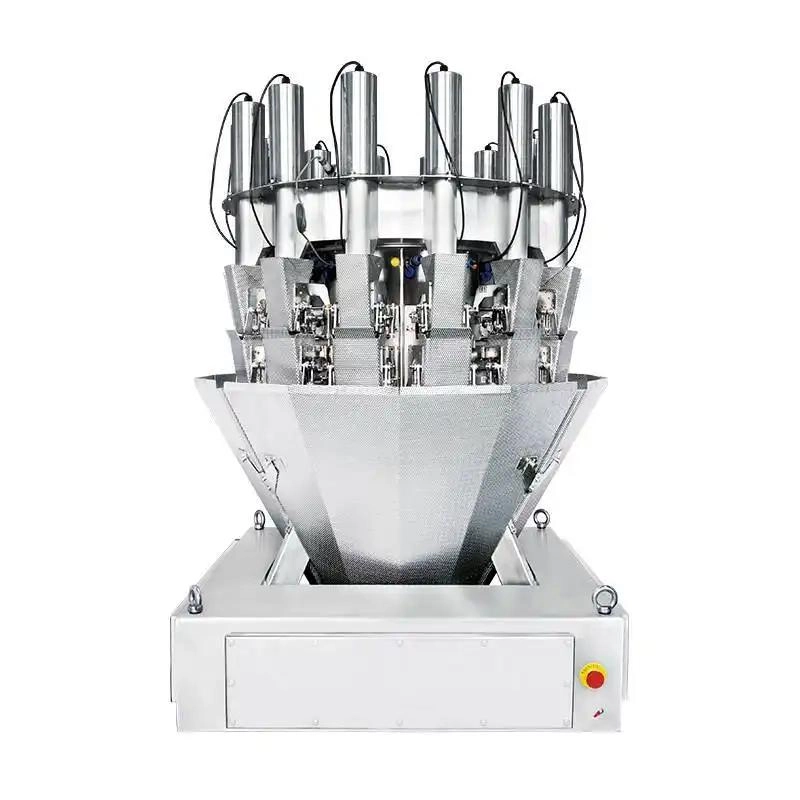
14 Heads Vertical Single Screw Feeding Pickles Weigher backups
This type of weigher is designed to handle the unique characteristics of pickles, ensuring precise measurements for packaging and distribution. It uses a vertical single screw mechanism to feed the pickles into the weighing system, allowing for efficient and consistent weighing. This technology is particularly useful in food processing and packaging facilities where precise portioning is essential for quality control and customer satisfaction. This specialized equipment is perfect for accurately measuring and dispensing pickles in a production line or packaging facility. The vertical design allows for efficient and precise filling of containers, while the single screw feeding mechanism ensures consistent and reliable weighing.
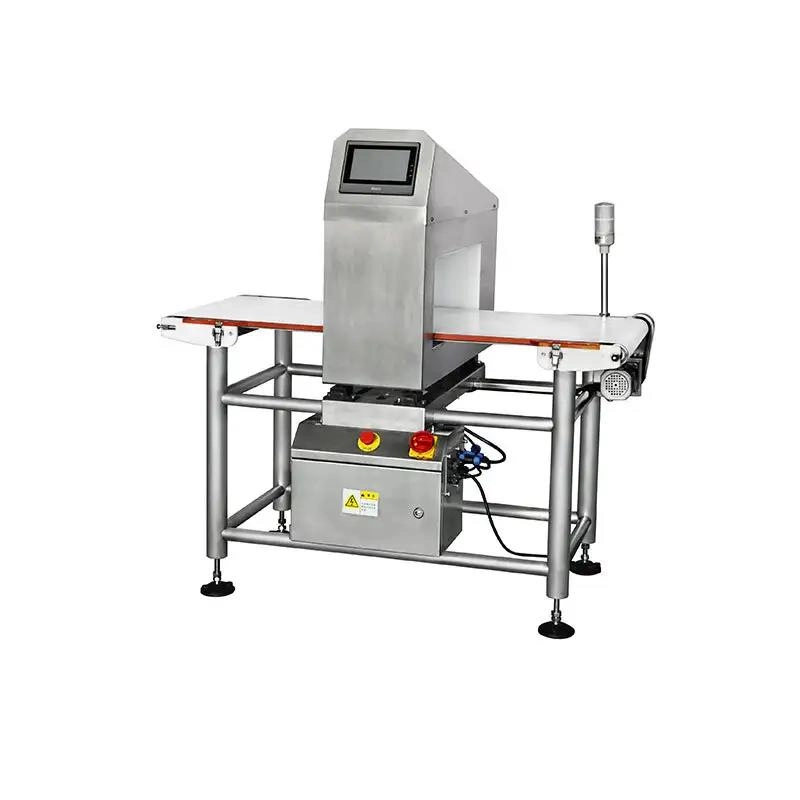
Food Metal Detector Manufacturer For Reject Defective Products G5020
The G5020 multi-frequency metal detector features a specialized conveyor belt designed to reduce contamination risks, ensure smooth operation, and maintain high detection sensitivity. It is easy to disassemble for convenient maintenance. Ideal for detecting metal contaminants in food, pharmaceuticals, spices, plastics, electronics, textiles, toys, handicrafts, and more.
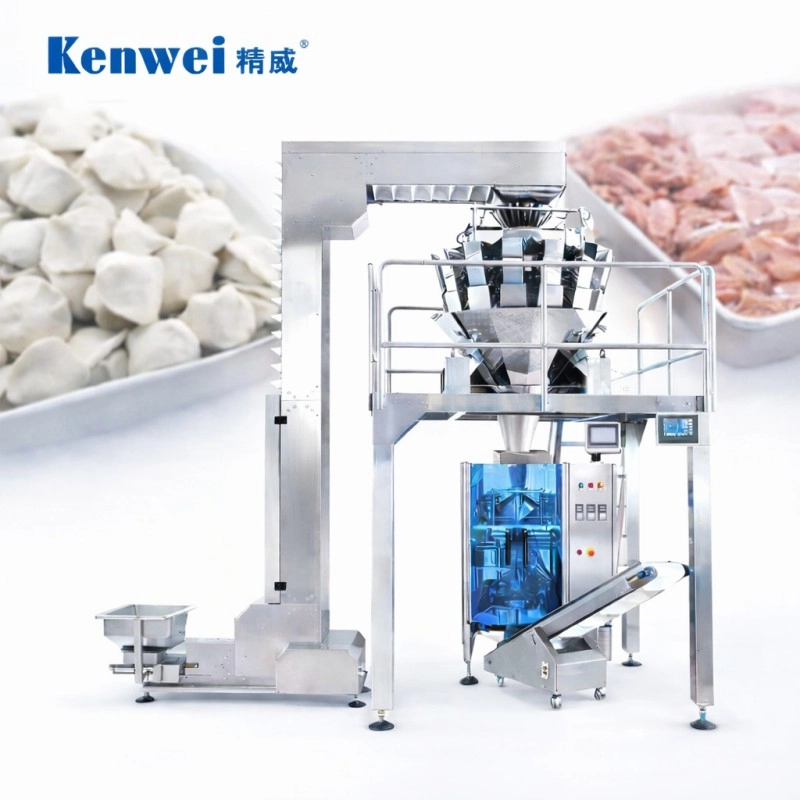
Vertical Frozen Food Packaging Machine for IQF & Frozen Products JW-B1
The Kenwei JW-B1 Vertical Frozen Food Packaging Machine is designed for IQF and frozen products, ensuring efficient, airtight packing. This vertical packing machine boosts productivity with precision sealing, ideal for frozen food packaging needs in the food industry.
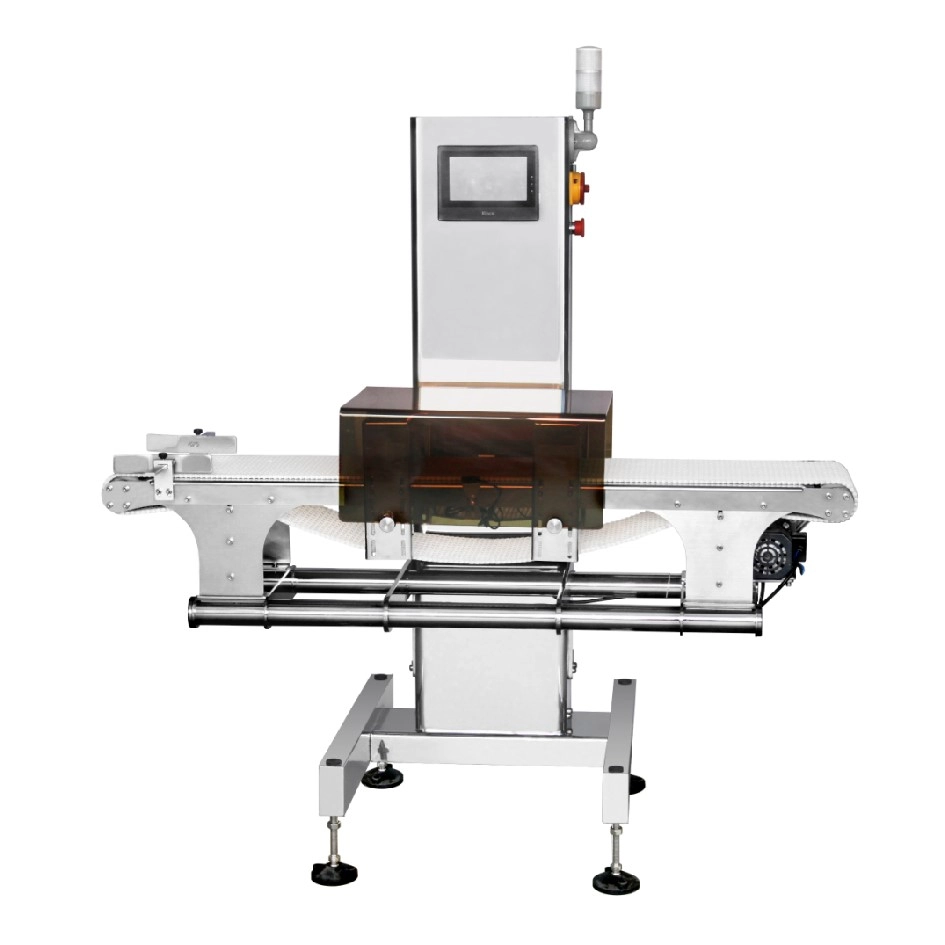
Metal Detector for Aluminum Foil in the Food Industry for Accurate Contamination Detection
The 2415 Metal Detector for Aluminum Foil is equipped with high-sensitivity sensors that effectively filter out signals from aluminum packaging, ensuring precise detection of magnetic metal contaminants. Ideal for detecting foreign bodies in aluminum foil-packaged items such as coffee bags, peanuts, dried meats, chocolate, and more. This versatile metal detector offers adjustable settings, with a maximum width of 24mm and height ranging from 20-150mm, making it suitable for a wide variety of aluminum foil packaging applications.
Get in touch with us
If you have any comments or good suggestions, please leave us a message, later our professional staff will contact you as soon as possible.
Kenwei
Kenwei
Kenwei multi weigh
Kenwei
Kenwei
Kenwei