






Ultimate Guide to Pill Counter Machine 2026:Choosing the Best
Tuesday, 12/23/2025
- Introduction: The Indispensable Role of Pill Counter Machines in Modern Healthcare
- How Pill Counter Machines Work: Unveiling the Core Mechanics
- 1. Feeding and Separation
- 2. Detection Technology
- 3. Dispensing and Verification
- Key Technologies Powering Modern Pill Counters
- Types of Pill Counter Machines: A Comprehensive Overview
- Manual and Portable Counters
- Semi-Automatic Pill Counters
- Fully Automatic Pill Counters
- Beyond Accuracy: Unpacking the Multifaceted Benefits of Pill Counters
- Choosing the Right Pill Counter Machine: A Buyer's Guide 2026
- 1. Operational Needs Assessment
- 2. ROI Calculation
- 3. Key Features Checklist
- Installation, Calibration, & Maintenance: Ensuring Longevity
- Pill Counters in Action: Diverse Applications & Use Cases
- The Future of Pill Counting: Innovations on the Horizon
- Conclusion: The Continued Evolution of Precision Pharmacy
- Frequently Asked Questions
- What is the main difference between manual and automatic pill counters?
- How do pill counting machines ensure accuracy?
- What are the key benefits of investing in an automatic pill counter?
- Can pill counters handle different shapes and sizes of pills or capsules?
- How often should a pill counter machine be calibrated?
- What factors should I consider when calculating the ROI for a pill counter?
- Are there specific regulatory standards for pill counting machines?
- What are the emerging technologies in pill counting?
- References
A comprehensive 2026 guide on pill counter machines, covering their history, working principles, types (manual to fully automatic), and benefits. Includes a buyer's guide with ROI analysis and maintenance tips.
Introduction: The Indispensable Role of Pill Counter Machines in Modern Healthcare
The pharmaceutical industry operates on a foundation of precision. In a sector where a single miscounted dosage can have critical health implications, the pill counter machine has emerged as a cornerstone of patient safety and operational efficiency. Originally, pharmacists relied on the "tray and spatula" method—a manual process prone to human error and fatigue. Today, the landscape has shifted dramatically toward automation.
The evolution of these devices is rooted in the late 1960s. As documented in the history of pharmacy automation, the first portable digital tablet counter was invented by the Kirby brothers in Manchester, England, around 1967, and patented in 1970. This innovation marked the transition from laborious hand-counting to the high-speed, high-accuracy systems we see today. Whether in a bustling hospital or a specialized compounding facility, the modern pharmacy pill counter machine is not just a tool for speed; it is a critical safeguard for inventory integrity and patient trust.

How Pill Counter Machines Work: Unveiling the Core Mechanics
Understanding the mechanics behind an automatic pill counter machine reveals why they are so effective. The process generally follows four stages: feeding, separation, detection, and dispensing.
1. Feeding and Separation
Most machines utilize a hopper that feeds pills onto a vibratory plate or rotary turntable. The vibration aligns the pills into a single file, preventing clumping. This "singulation" is crucial because if two pills pass a sensor simultaneously, the count could be inaccurate. Advanced capsule counter machine models use multi-channel vibratory feeders to handle high volumes while maintaining gentle handling to prevent breakage.
2. Detection Technology
Once separated, the pills fall through a detection zone. Here, sophisticated sensors—typically photoelectric or infrared—create a "light curtain." As a pill breaks the beam, the system registers a count. For translucent soft gels or complex shapes, older sensors often struggled. However, modern units employ advanced vision algorithms capable of distinguishing between a single pill and pill dust or fragments.
3. Dispensing and Verification
After counting, the pills are diverted into the target container. High-end systems include reject mechanisms that automatically divert broken tablets or incorrect counts without stopping the production line. Regular calibration ensures that the timing between detection and gate closure remains precise.
Key Technologies Powering Modern Pill Counters
The technology inside a pill counting machine has advanced far beyond simple mechanical switches. Today's devices leverage several cutting-edge technologies:
· Infrared (IR) Sensors: These are the industry standard for detecting opaque tablets. They work by measuring the interruption of an IR beam.
· Vision Systems: AI-driven cameras can identify pills based on color and shape, offering a higher level of verification than simple counting. This is particularly useful for a capsule counting machine handling mixed lots or verifying prescription accuracy.
· Dual-View Scanning: Some machines scan pills from multiple angles to ensure that two flat tablets sticking together are counted as two, not one.
· PLC and HMI Integration: Programmable Logic Controllers (PLCs) interfaced with Human-Machine Interfaces (HMIs) allow operators to save presets for hundreds of different drugs, making changeovers rapid and error-free.
Types of Pill Counter Machines: A Comprehensive Overview
Selecting the right equipment requires navigating a diverse market. Machines are generally categorized by their level of automation and counting principle.
Manual and Portable Counters
At the entry level, handheld digital counters assist pharmacists by detecting pills poured over a sensor surface. While portable, these should not be confused with other counting devices. For instance, while a portable note counting machine uses friction to separate currency, a portable pill counter must use non-contact sensors to ensure sterile conditions. These are best for low-volume checks.
Semi-Automatic Pill Counters
Ideal for retail pharmacies, these desktop units automate the counting but require an operator to place the bottle and pour the pills into the hopper. They strike a balance between cost and efficiency, significantly reducing the physical strain of manual counting.
Fully Automatic Pill Counters
Designed for manufacturing and high-volume packaging, an automatic capsule counting machine integrates directly into a conveyor line. They can fill hundreds of bottles per minute.
· Slat Counters: These use slats with cavities specific to the pill size. They are incredibly fast but require change-parts for different pills.
· Electronic/Vibratory Counters: These are more versatile, using channels and sensors to count any shape without changing parts, making them the preferred choice for contract packers.
Beyond Accuracy: Unpacking the Multifaceted Benefits of Pill Counters
Investing in a pill dispenser machine or counter offers returns well beyond simple arithmetic accuracy.
· Enhanced Patient Safety: By achieving accuracy rates exceeding 99.9%, these machines virtually eliminate the risk of short-filling or over-filling prescriptions.
· Operational Efficiency: As noted in industry reports, automated counting can be up to 50% faster than manual methods, allowing pharmacists to focus on clinical counseling rather than mechanical tasks.
· Inventory Management: Digital logs create an audit trail. This data is vital for tracking controlled substances and minimizing shrinkage (the loss of inventory).
· Versatility: Modern capsule counter machine designs can handle gelatin capsules, dusty tablets, and even irregular shapes without jamming.
Choosing the Right Pill Counter Machine: A Buyer's Guide 2026
When evaluating options, buyers must look beyond the sticker price. For a deeper dive into selection criteria, you can read our guide on Choosing the Best Pill Counter Machine.
1. Operational Needs Assessment
Calculate your daily volume. A small independent pharmacy filling 100 scripts a day has different needs than a manufacturing plant. Do you need a pharmacy pill counter machine that sits on a benchtop, or a floor-standing unit?
2. ROI Calculation
To determine ROI, factor in labor costs. If a machine saves a technician 2 hours a day, calculate that annual savings against the machine's lifespan. Additionally, factor in the cost of potential errors—what is the cost of a single recall or a lawsuit due to a miscount?
3. Key Features Checklist
· Cleaning: Can the contact parts be removed without tools? (FDA cGMP requirement).
· Connectivity: Does it integrate with your Pharmacy Management System (PMS)?
· Dust Extraction: Essential for uncoated tablets to prevent sensor blinding.
Installation, Calibration, & Maintenance: Ensuring Longevity
Even the best automatic pill counter requires care. According to FDA 21 CFR Part 211, equipment used in the manufacture/processing of drugs must be routinely calibrated, inspected, and checked according to a written program.
· Calibration: Most modern machines have "self-teach" modes, but manual verification should be performed quarterly or whenever pill types change drastically.
· Cleaning: Daily cleaning of sensor eyes is mandatory. Dust accumulation is the #1 cause of miscounts.
· Environment: Ensure the machine is on a stable surface away from direct HVAC drafts, which can affect vibratory feed rates.
Pill Counters in Action: Diverse Applications & Use Cases
· Retail Pharmacies: Use semi-automatic counters to verify stock bottles against prescriptions swiftly.
· Compounding Pharmacies: Rely on high-precision counters for custom batches where every milligram counts.
· Clinical Trials: Use counters to ensure double-blind study kits have exact dosages.
· Veterinary Practices: Often use versatile counters that can handle the wide variance in pill sizes found in animal medicine.
The Future of Pill Counting: Innovations on the Horizon
Looking ahead to 2026 and beyond, we see a trend toward "smart" counting. We are moving towards fully integrated lines. For more on this, read our article on The Future of Pharmaceutical Bottle Counting.
Emerging technologies include IoT-enabled counters that predict when a part will fail before it happens, and AI systems that can detect micro-cracks in tablets during the counting process, acting as both a counter and a quality control inspector.
Conclusion: The Continued Evolution of Precision Pharmacy
From the early days of the Kirby brothers' invention to today's AI-driven systems, the automatic pill counter machine has revolutionized pharmaceutical operations. Whether you are upgrading a capsule counting machine for a production line or seeking a reliable pill counter machine for a local pharmacy, the focus remains the same: precision, safety, and efficiency.
Frequently Asked Questions
What is the main difference between manual and automatic pill counters?
Manual counters rely on human manipulation (tray and spatula), which is slow and error-prone (~12% error rate historically). Automatic counters use sensors and vibration to separate and count pills with >99.9% accuracy at high speeds.
How do pill counting machines ensure accuracy?
They utilize photoelectric or infrared sensors that detect the interruption of a light beam. If the beam is broken, a count is registered. Advanced algorithms account for pill overlap and dust to prevent false counts.
What are the key benefits of investing in an automatic pill counter?
The primary benefits are patient safety (correct dosage), labor reduction (staff can focus on patients), and improved inventory data. They also reduce the physical strain of manual counting.
Can pill counters handle different shapes and sizes of pills or capsules?
Yes. While slat counters are size-specific, modern vibratory electronic counters are "universal" and can handle tablets, gel caps, and irregular shapes with simple setting adjustments.
How often should a pill counter machine be calibrated?
Manufacturers typically recommend verifying calibration daily and performing deep calibration checks quarterly. Regulatory standards like cGMP may dictate specific schedules based on usage volume.
What factors should I consider when calculating the ROI for a pill counter?
Consider the cost of the machine versus the labor hours saved. Also, quantify the "soft" costs of improved accuracy—such as avoided medication errors and the protection of your pharmacy's reputation.
Are there specific regulatory standards for pill counting machines?
Yes. In the US, machines must comply with FDA regulations regarding contact materials (usually 316L stainless steel) and cleanability to prevent cross-contamination. Data integrity for audit trails is also a key standard.
What are the emerging technologies in pill counting?
AI and Machine Learning are being used to identify broken pills and foreign objects in real-time. IoT integration allows for remote diagnostics and predictive maintenance.
References
· Wikipedia: Pharmacy Automation
· FDA: Questions and Answers on Current Good Manufacturing Practices - Equipment
· National Center for Biotechnology Information: Automation in Pharmacy
Recommended for you
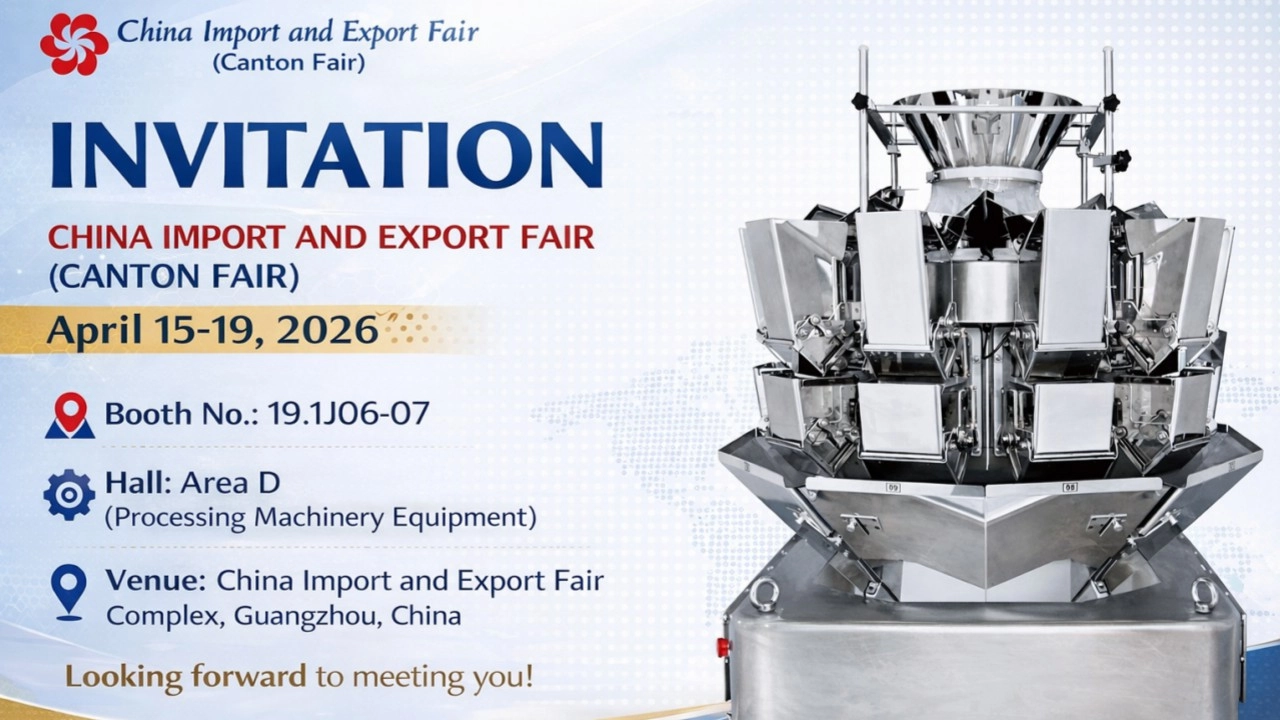
Canton Fair 2026 Weighing & Packing Machines | Multihead Weigher Manufacturer Kenwei

2026 Trends in the Weighing and Packaging Industry

Celebrating International Women’s Day | Honoring the Women of Kenwei

Kenwei to Showcase Intelligent weighing machine at Sino-Pack 2026
Prdoucts Categories
FAQ
About Price and payment
Can I get a detailed quote before making a purchase?
Absolutely! We provide detailed quotes that break down the costs for the machines, customization, shipping, and any additional services. Please contact our sales team with your requirements to receive a customized quote.
About After Sales Support
Can I get remote troubleshooting assistance?
Yes, Kenwei offers remote troubleshooting for certain issues. Our technical team can guide you through diagnostics and help resolve issues via phone, video call, or online messaging.
About Product choice
Are there any additional features available for Kenwei machines?
Yes, we offer a variety of optional features for customization, such as: advanced touchscreen interfaces, multiple language support and so on.
What types of products does Kenwei offer?
Kenwei specializes in high-precision and high-speed automated machinery for weighing, packaging, and quality control. Our main products include: multihead weigher, linear weigher, checkweighers,food metal detector,vertical packing machine and packing machine accessories.
About Solution suggestions
Can Kenwei provide a solution for mixed-product weighing?
Yes, Kenwei’s multi-head weighers are ideal for mixed-product weighing. They can handle a variety of products in different shapes and sizes, ensuring that the correct portions are weighed and packaged quickly.
You may also like
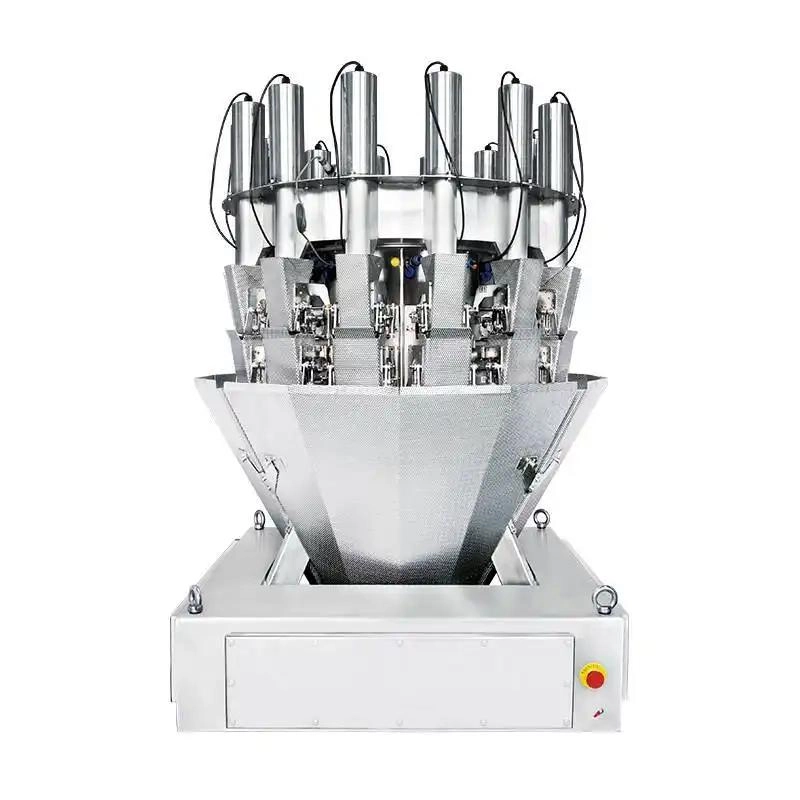
14 Heads Vertical Single Screw Feeding Pickles Weigher backups
This type of weigher is designed to handle the unique characteristics of pickles, ensuring precise measurements for packaging and distribution. It uses a vertical single screw mechanism to feed the pickles into the weighing system, allowing for efficient and consistent weighing. This technology is particularly useful in food processing and packaging facilities where precise portioning is essential for quality control and customer satisfaction. This specialized equipment is perfect for accurately measuring and dispensing pickles in a production line or packaging facility. The vertical design allows for efficient and precise filling of containers, while the single screw feeding mechanism ensures consistent and reliable weighing.
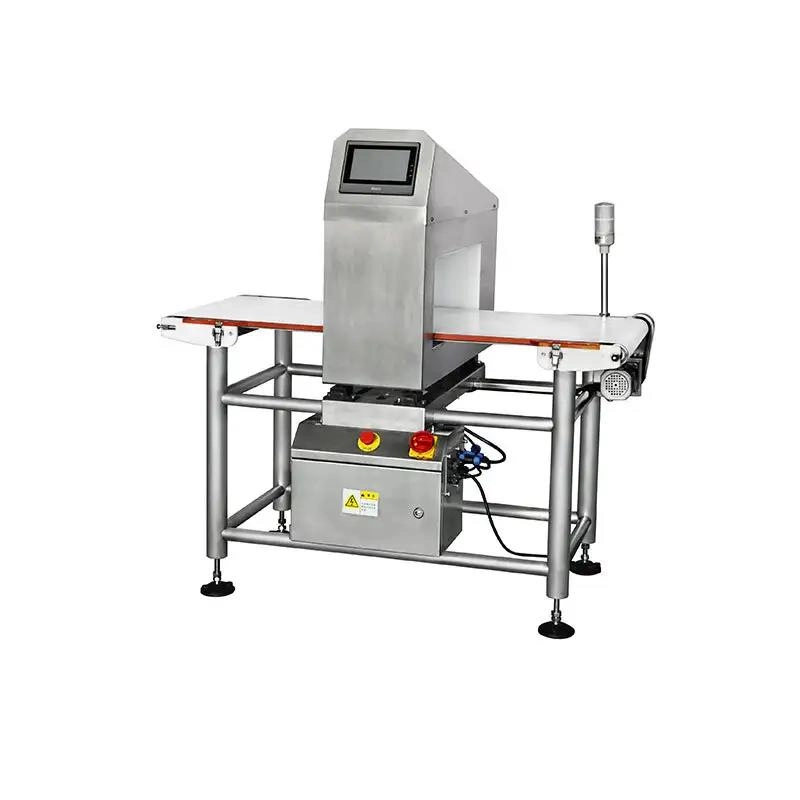
Food Metal Detector Manufacturer For Reject Defective Products G5020
The G5020 multi-frequency metal detector features a specialized conveyor belt designed to reduce contamination risks, ensure smooth operation, and maintain high detection sensitivity. It is easy to disassemble for convenient maintenance. Ideal for detecting metal contaminants in food, pharmaceuticals, spices, plastics, electronics, textiles, toys, handicrafts, and more.
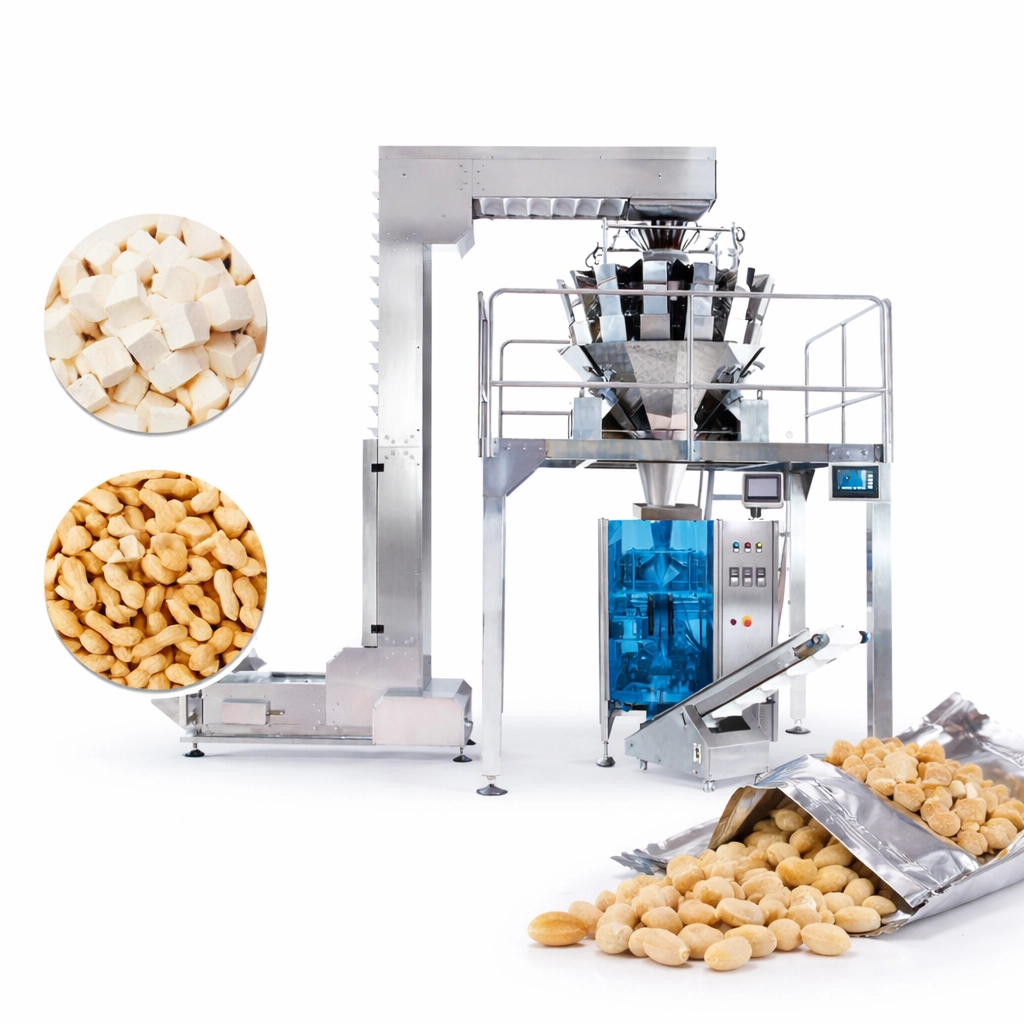
High-Precision Weighing & Packaging for Granular Products
The Granular Food Packing Machine is a fully automated solution designed for accurate weighing, filling, and packaging of various granular food products. Integrated with a multihead weigher and advanced packaging system, it ensures high speed, precision, and hygiene standards for modern food production.
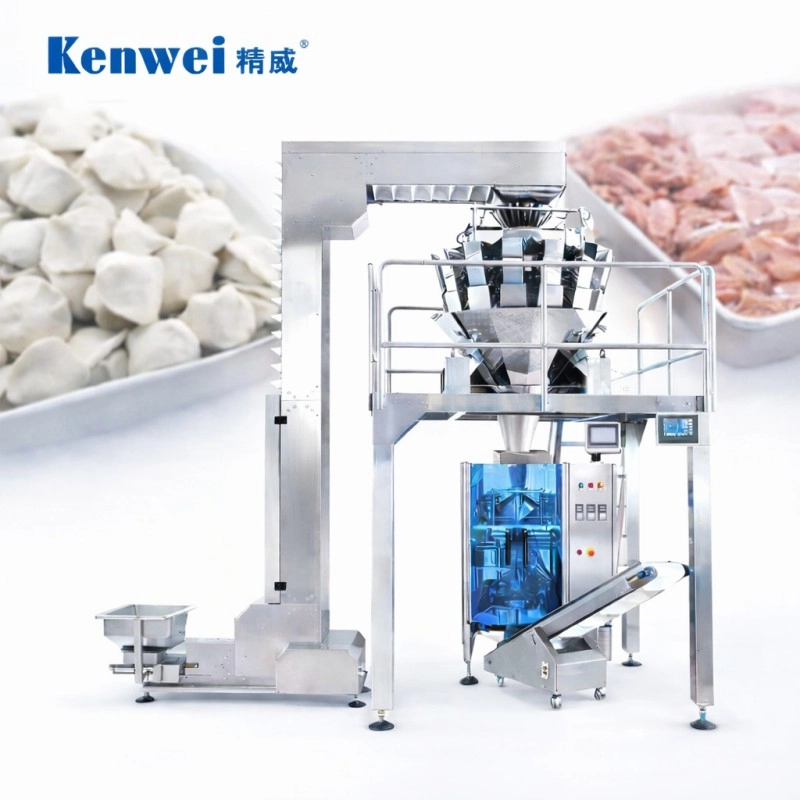
Vertical Frozen Food Packaging Machine for IQF & Frozen Products JW-B1
The Kenwei JW-B1 Vertical Frozen Food Packaging Machine is designed for IQF and frozen products, ensuring efficient, airtight packing. This vertical packing machine boosts productivity with precision sealing, ideal for frozen food packaging needs in the food industry.
Contact Kenwei
Our company is located in areas with convenient transportation and developed economy. Our products are supplied in a timely manner. In the course of business operation, we always focus on customers.Have any questions or concerns about our products? Please leave us a message here, and our team will get back to you promptly.
Kenwei
Kenwei
Kenwei multi weigh
Kenwei
Kenwei
Kenwei