






Top maintenance tips for rotary packing machines and weighers
A practical, search-optimized guide to maintaining rotary packing machines and multihead weighers — focused on preserving accuracy, reducing downtime, and extending the service life of systems like the Double feeder horizontal packaging and weighing system JW-B12. This article covers daily-to-annual maintenance, calibration best practices, troubleshooting common faults, cleaning and hygiene requirements for food-grade lines, spare-parts management, and actionable checklists that plant engineers and maintenance teams can apply immediately.
- Maximizing uptime for high-speed packaging lines
- Understanding why maintenance matters for rotary packing machines
- Key performance indicators to monitor
- Environmental factors that affect rotary systems
- Essential maintenance checklist for rotary packing machines
- Daily routines: quick checks that prevent avoidable stops
- Weekly tasks: preventative adjustments
- Monthly and quarterly inspections
- Advanced troubleshooting and lifecycle management
- Common faults and step-by-step fixes
- Calibration: methods and frequency
- Spare parts strategy and stocking
- Cleaning, hygiene and regulatory compliance
- Cleaning protocols for food-grade lines
- Documentation and traceability
- Safety: lockout/tagout and training
- Quick reference: maintenance schedule table
- Brand advantages and why JW-B12 benefits from disciplined maintenance
- Design features that simplify upkeep
- Service, support, and parts availability
- Why an investment in maintenance pays off
- Frequently Asked Questions (FAQ)
- How often should I fully calibrate the multihead weigher on the JW-B12?
- Can I use non-food-grade lubricants on the bearings?
- What causes sudden increases in fill variance?
- How should I manage spare parts for minimal downtime?
- Is wet cleaning safe for the control panels?

The JW-B12 Double Feeder Horizontal Packaging and Weighing System is designed for high-speed, high-precision packaging of snacks, puffed foods, nuts, candies, hardware, and irregular-shaped materials. With a multihead weigher and dual-feeder setup, it delivers efficient, fully automated feeding, weighing, and bagging for a wide range of products—ensuring secure seals and professional premade bag packaging.
Rotary packing machines and multihead weighers are mission-critical equipment in modern high-speed packaging lines. Proper maintenance minimizes weight variation, prevents contamination, and keeps sealing, indexing, and feeding mechanisms performing to specification. This guide pulls together field-proven routines, calibration protocols, and troubleshooting steps tailored for machines like the JW-B12, helping you maintain throughput, ensure product quality, and comply with food-safety and industry standards (see ISO 22000 https://www.iso.org/iso-22000-food-safety-management. and PMMI resources https://www.pmmi.org/).
Maximizing uptime for high-speed packaging lines
Understanding why maintenance matters for rotary packing machines
Rotary packing machines combine mechanical motion, synchronized indexing, and precise dosing (commonly a multihead weigher) to fill premade bags quickly and consistently. Wear, contamination, and loose mechanical connections cause weight drift, bag misfeeds, and sealing defects. Consistent maintenance directly reduces rejects, increases OEE, and avoids emergency downtime that can disrupt production schedules.
Key performance indicators to monitor
Track these KPIs to evaluate machine health: production yield (% good packs), average fill variance (grams), downtime per shift, seal failure rate, and cycle accuracy of the multihead weigher. Use a simple log or integrate PLC/SCADA data to spot trends. If average fill variance drifts beyond your target tolerance, investigate feeder wear, hopper residues, or scale calibration immediately.
Environmental factors that affect rotary systems
Temperature, humidity, dust, and product characteristics (oily, powdery, sticky) directly influence feeder behavior and sealing integrity. For example, hygroscopic snacks may cake in hoppers under high humidity; oily nuts can cause conveyor and sealing contamination. Control ambient conditions and use appropriate guards, filtration, and dust collection to protect sensors and bearings.
Essential maintenance checklist for rotary packing machines
Daily routines: quick checks that prevent avoidable stops
Daily checks should be timed at shift start/end. Example checklist items:
- Visual inspection for hopper blockages, foreign objects, and product buildup on feeders and chutes.
- Confirm sensors and photoeyes are clean and aligned; wipe lenses with approved cleaning solution.
- Verify sealing jaws are free of debris and that temperature settings match product specs.
- Run a 10-pack sample check for weight accuracy and seal quality; log results.
Weekly tasks: preventative adjustments
Weekly maintenance is slightly deeper and should include:
- Check belt and linkage tension on conveyor and rotary indexer; adjust according to manufacturer torque specs.
- Inspect filling nozzles and vibratory feeder troughs for wear and replace liners if required.
- Clean and lightly lubricate chains, bearings, and cams using food-grade lubricants where appropriate.
- Run calibration drift test on the multihead weigher and re-tare if needed.
Monthly and quarterly inspections
Monthly and quarterly work should be scheduled during planned downtime and recorded in a CMMS (Computerized Maintenance Management System):
- Full calibration of the multihead weigher with certified reference weights; document corrections.
- Thermal check of motors and drives (use a hand-held thermal camera); investigate hotspots.
- Check PLC and HMI backups; update firmware and restore points after successful verification.
- Inspect sealing jaw elements (Teflon, silicone) and replace worn parts to maintain seal integrity.
Advanced troubleshooting and lifecycle management
Common faults and step-by-step fixes
Below are frequent issues and recommended corrective actions:
- Weight inaccuracy or high variance: Check load cell wiring and grounding; verify vibration isolation pads; perform multi-point calibration using certified weights. For industry guidance on weighing practices see Weighing scale (Wikipedia).
- Intermittent feeder jams: Inspect feeder vibratory amplitude and frequency settings; remove residue in feeder lanes; consider adjusting feed funnel geometry or installing anti-bridging devices.
- Poor seal integrity: Confirm jaw temperature uniformity and replace non-stick tapes or silicone pads; ensure film tension and bag position sensors are correct.
- Indexing or timing errors: Check encoder signals and belt timing; inspect sprockets and gear teeth for wear; re-sync the rotary indexer after mechanical repairs.
Calibration: methods and frequency
Calibration frequency depends on production volume and regulatory needs. For food and pharmaceutical lines, perform full calibration monthly or whenever product changes are introduced. Steps:
- Warm-up machine per manufacturer guidelines.
- Use certified test weights, perform multi-point checks across operational range.
- Document results and apply linear/non-linear corrections in the weigher controller.
- Re-run a validation sample of at least 50 packs to confirm in-spec performance.
Spare parts strategy and stocking
Maintain an essential spare parts list to reduce Mean Time To Repair (MTTR). Critical spares include load cells, encoder modules, sealing elements, PLC spare I/O module, belts, touch-screen HMI, and standard mechanical items (bearings, seals). Use a minimum/maximum inventory strategy and record part usage trends in your CMMS to optimize stocking levels.
Cleaning, hygiene and regulatory compliance
Cleaning protocols for food-grade lines
Cleaning must prevent cross-contamination and build-up that can affect weighing accuracy. Best practices:
- Use validated cleaning agents compatible with machine surfaces; consult material compatibility charts.
- Follow wet-clean/dry-clean procedures as recommended: remove product contact parts for CIP or manual cleaning when possible.
- Ensure electrical panels, motors, and sensors are protected or isolated before wet cleaning to prevent damage.
Documentation and traceability
Keep cleaning logs, calibration certificates, and preventive maintenance records to comply with audits and safety regulations. These documents support traceability in case of product quality issues and demonstrate adherence to standards like ISO 22000 and local food safety regulations.
Safety: lockout/tagout and training
All maintenance must follow lockout/tagout (LOTO) procedures. Train operators and maintenance staff on safe isolation, use of appropriate PPE, and safe handling of stored energy (springs, compressed air). Include step-by-step LOTO instructions in your SOPs and ensure they’re accessible at the machine.
Quick reference: maintenance schedule table
| Task | Frequency | Responsible |
|---|---|---|
| Visual inspection & sensor cleaning | Daily | Operator |
| Sample pack weight check (10-50 packs) | Daily | Operator / QA |
| Belt & chain tension; lubrication | Weekly | Maintenance |
| Full multihead weigher calibration | Monthly | Maintenance / QA |
| Firmware/PLC backup & update | Quarterly | Controls Engineer |
| Major overhaul (bearings, motors, seals) | Annually | Service Partner |
Brand advantages and why JW-B12 benefits from disciplined maintenance
Design features that simplify upkeep
The JW-B12 Double Feeder Horizontal Packaging and Weighing System is engineered for accessibility: removable feed hoppers, hygienic surfaces, and modular mechanical assemblies reduce cleaning time and simplify part replacement. The system's multihead weigher architecture provides redundancy, so individual head adjustments can be carried out without halting entire production in many configurations.
Service, support, and parts availability
Our global service network offers rapid-response maintenance contracts, certified field technicians, and original spare parts to keep your rotary packing line productive. Regular training programs for onsite engineers and operators ensure maintenance best practices are embedded into daily operations.
Why an investment in maintenance pays off
Structured preventive maintenance reduces rejects, lowers energy consumption through properly tuned motors and drives, and extends equipment life—reducing TCO. For high-speed applications such as snacks and nuts packaging, marginal improvements in weight accuracy and sealing reliability translate into significant annual savings.
Frequently Asked Questions (FAQ)
How often should I fully calibrate the multihead weigher on the JW-B12?
For most food applications, perform a full calibration monthly. If you operate 24/7 or switch products frequently, increase calibration frequency and validate after each product change. Keep certified reference weights and records for audit purposes.
Can I use non-food-grade lubricants on the bearings?
No. On product-contact or near-product components use only food-grade lubricants certified for incidental food contact. For non-product zones, follow the manufacturer’s recommendations and local regulatory guidance.
What causes sudden increases in fill variance?
Common causes include load cell drift, hopper bridging, feeder amplitude changes, mechanical looseness, or sensor contamination. Run a quick checklist: clean sensors, verify feed consistency, perform a 3-point weight calibration, and inspect mechanical connections.
How should I manage spare parts for minimal downtime?
Maintain critical spares (load cells, sealing elements, belts, encoders) onsite and keep a reorder point in your CMMS. Partnering with an authorized service provider for emergency shipments can greatly reduce MTTR for specialized components.
Is wet cleaning safe for the control panels?
Only if the panels are rated for washdown. Always isolate electrical power, cover/control access per LOTO, and follow the machine manufacturer’s cleaning instructions. For non-washdown rated panels, use dry cleaning or localize wet-clean efforts to product-contact areas.
Stable operation also opens the door to fine-tuning costs, particularly through reducing product giveaway with JW-B12 weighing accuracy strategies.For additional support, spare parts, or to schedule a maintenance audit for your JW-B12 Double feeder horizontal packaging and weighing system, contact our service team or view the product details and full specifications.
Contact our service team | View JW-B12 product page
References and further reading: PMMI industry resources (https://www.pmmi.org/), ISO 22000 food safety guidance (https://www.iso.org/iso-22000-food-safety-management.), and weighing technology background (https://en.wikipedia.org/wiki/Weighing_scale).
Tags
metal detector for food industry
metal detector for food industry
metal detector food industry
metal detector food industry
Automatic linear weigher for packaging
Automatic linear weigher for packaging
packaging machines for food
packaging machines for food
kenwei multihead weigher
kenwei multihead weigher
metal detector
metal detector
Recommended for you
AI Integration with Combination Weighers in 2026
The linear combination weigher Cost Guide
Everything You Need to Know About linear weigher
Packaging Frozen Foods: Food Packing Machine Best Practices
Prdoucts Categories
Question you may concern
About Logistics
How long does logistics delivery take?
Shipping times depend on your location and the shipping method you choose. Generally speaking, international shipping can take anywhere from a few weeks to a few months.
About Cooperation Process
How can I start a cooperation with Kenwei?
To begin a cooperation, simply contact our sales or customer service team via email or phone. You can also fill out the inquiry form on our website. Once we receive your request, a representative will get in touch with you to discuss your specific needs and provide you with a tailored solution.
What information is needed to get a quote from Kenwei?
For us to provide an accurate quote, please provide the following details:
Type of machinery you are interested in (e.g., multi-head weighers, metal detectors, etc.)
Specifications and customization requirements (e.g., capacity, speed, size, etc.)
Your intended application and industry
Quantity of machines required
Delivery location
Can Kenwei customize equipment to meet my specific needs?
Yes! We offer customized solutions for all of our machines. Our team will work closely with you to understand your specific requirements and create a solution that meets your needs in terms of size, functionality, speed, and other factors.
About After Sales Support
How do I claim warranty service?
To claim warranty service, please contact our customer support team with your machine’s product code and a description of the issue. If applicable, we may request photos or videos of the issue to facilitate troubleshooting.
You may also like
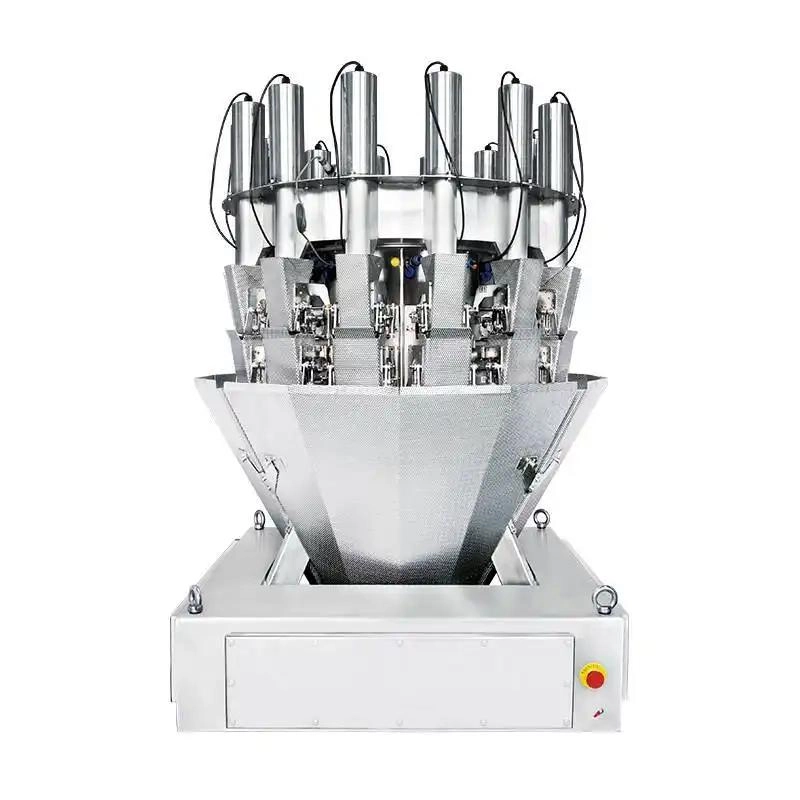
14 Heads Vertical Single Screw Feeding Pickles Weigher backups
This type of weigher is designed to handle the unique characteristics of pickles, ensuring precise measurements for packaging and distribution. It uses a vertical single screw mechanism to feed the pickles into the weighing system, allowing for efficient and consistent weighing. This technology is particularly useful in food processing and packaging facilities where precise portioning is essential for quality control and customer satisfaction. This specialized equipment is perfect for accurately measuring and dispensing pickles in a production line or packaging facility. The vertical design allows for efficient and precise filling of containers, while the single screw feeding mechanism ensures consistent and reliable weighing.
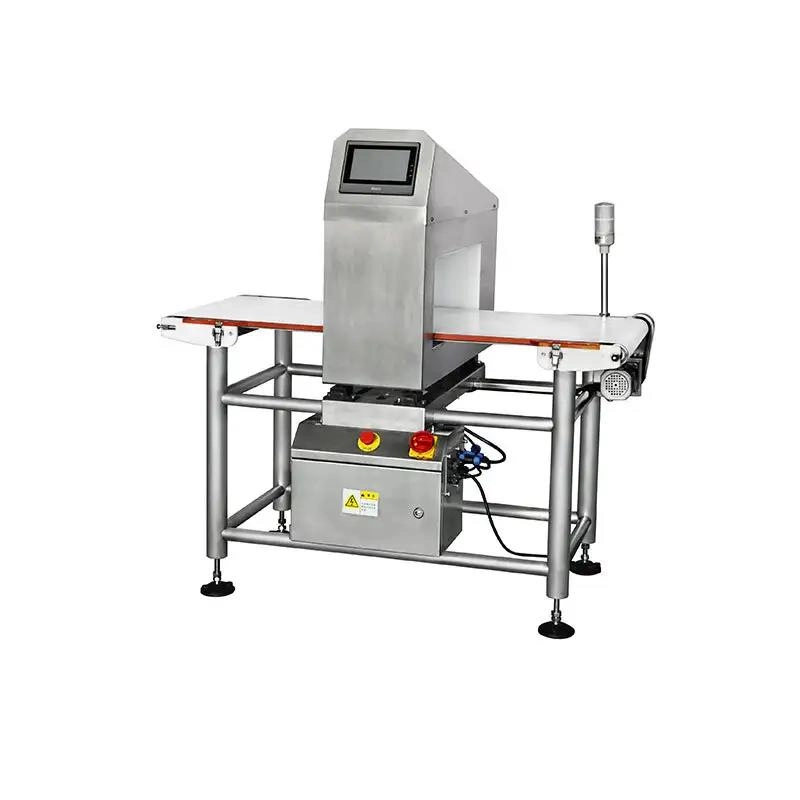
Food Metal Detector Manufacturer For Reject Defective Products G5020
The G5020 multi-frequency metal detector features a specialized conveyor belt designed to reduce contamination risks, ensure smooth operation, and maintain high detection sensitivity. It is easy to disassemble for convenient maintenance. Ideal for detecting metal contaminants in food, pharmaceuticals, spices, plastics, electronics, textiles, toys, handicrafts, and more.
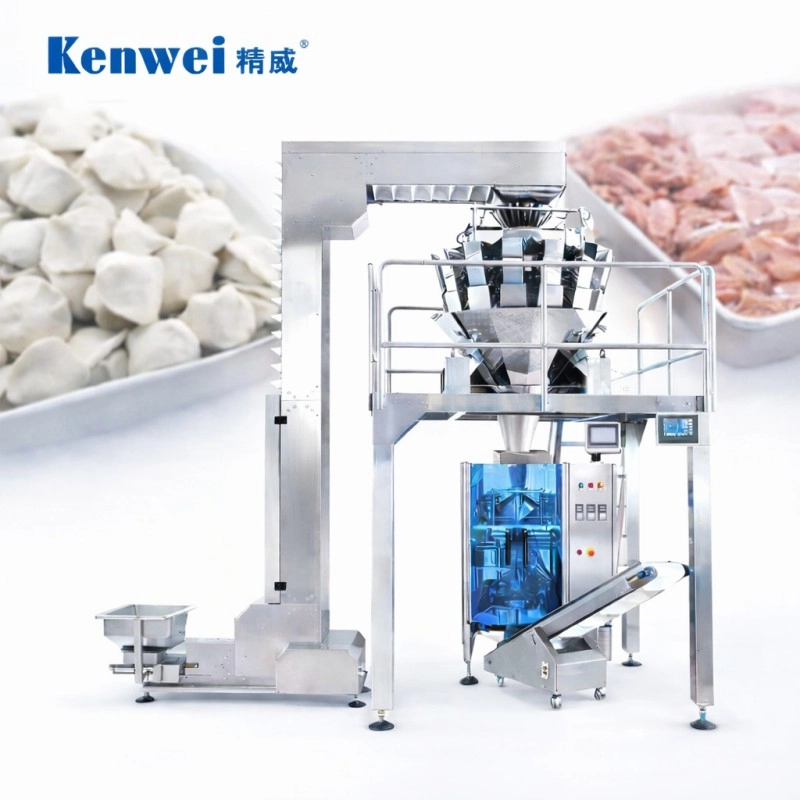
Vertical Frozen Food Packaging Machine for IQF & Frozen Products JW-B1
The Kenwei JW-B1 Vertical Frozen Food Packaging Machine is designed for IQF and frozen products, ensuring efficient, airtight packing. This vertical packing machine boosts productivity with precision sealing, ideal for frozen food packaging needs in the food industry.
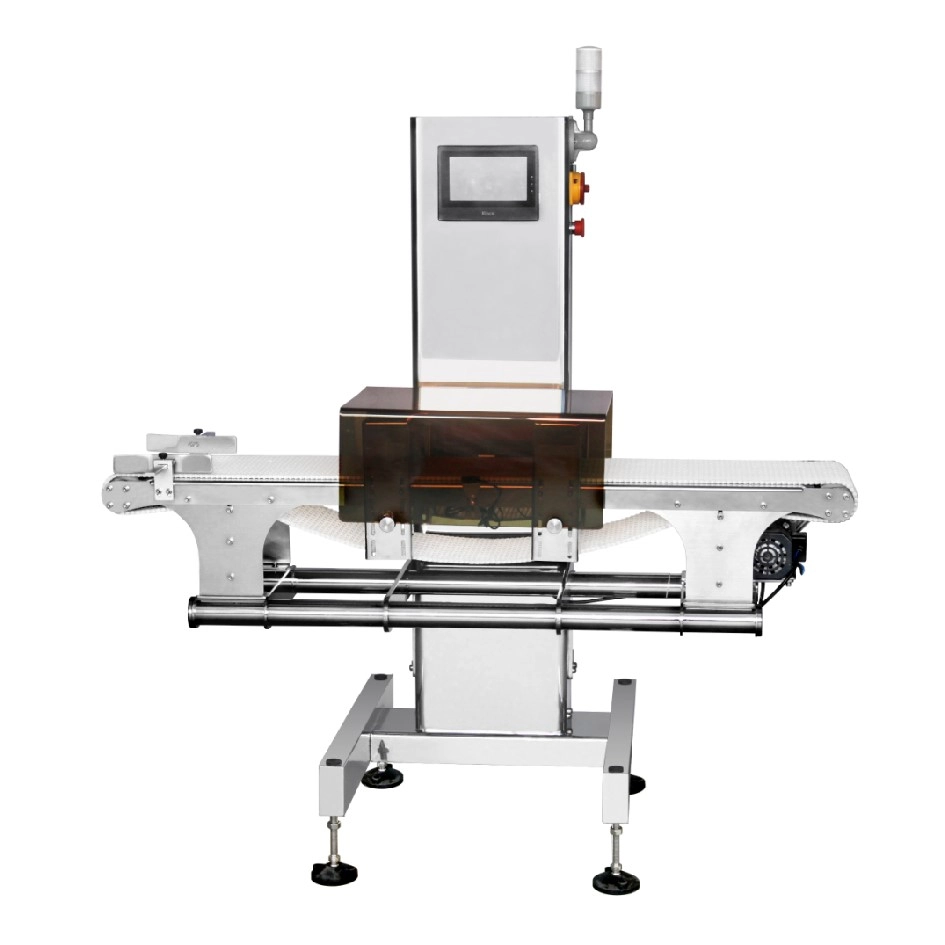
Metal Detector for Aluminum Foil in the Food Industry for Accurate Contamination Detection
The 2415 Metal Detector for Aluminum Foil is equipped with high-sensitivity sensors that effectively filter out signals from aluminum packaging, ensuring precise detection of magnetic metal contaminants. Ideal for detecting foreign bodies in aluminum foil-packaged items such as coffee bags, peanuts, dried meats, chocolate, and more. This versatile metal detector offers adjustable settings, with a maximum width of 24mm and height ranging from 20-150mm, making it suitable for a wide variety of aluminum foil packaging applications.
Get in touch with us
If you have any comments or good suggestions, please leave us a message, later our professional staff will contact you as soon as possible.
Kenwei
Kenwei
Kenwei multi weigh
Kenwei
Kenwei
Kenwei