






Phase balancing explained for food industry detectors
Phase balancing is a critical calibration technique for metal detectors in the food industry, enabling reliable detection of magnetic metal contaminants even in challenging backgrounds like aluminum foil packaging. This article explains how phase balancing works, why foil-immune detectors are necessary, step-by-step setup and verification procedures, troubleshooting tips, regulatory context, and how the 2415 Metal Detector for Aluminum Foil helps food manufacturers achieve accurate contamination control.
- Why phase balancing matters in food metal detection
- Food industry challenges: product effect and packaging
- Impact on safety, quality and cost
- How phase balancing works: principles and techniques
- Coil geometry, transmitter/receiver phase and signal decomposition
- Digital filtering and adaptive algorithms
- Implementing phase balance for aluminum foil-packaged products
- Why aluminum foil is particularly challenging
- 2415 Metal Detector for Aluminum Foil: product overview
- Step-by-step phase balancing and calibration procedure
- Operational best practices, verification and troubleshooting
- Routine verification and control samples
- Troubleshooting common phase balance issues
- When to choose a foil-immune detector vs X-ray
- Compliance, records and E-E-A-T considerations
- Standards, auditing and documentation
- Designing for hygiene and maintenance
- Data integrity and traceability
- Practical checklist: setting up a phase-balanced foil-immune metal detection line
- FAQ
- Q: What is phase balancing and is it the same as calibration?
- Q: Can a metal detector detect contaminants through aluminum foil?
- Q: How often should I verify phase balance and detector sensitivity?
- Q: What should I do if I see frequent false rejects after a packaging change?
- Q: Do regulations mandate specific detection limits?

Phase balancing is an essential adjustment and signal-processing strategy used in modern metal detectors for the food industry to suppress background signals from products and packaging (especially conductive materials like aluminum foil) while preserving sensitivity to hazardous metal contaminants. When correctly applied, phase balance minimizes false rejects and missed contaminants, improving throughput, yield, and food safety compliance across processing lines.
Why phase balancing matters in food metal detection
Food industry challenges: product effect and packaging
Food products and their packaging introduce complex, variable electromagnetic signatures—known as the product effect—that can mask or mimic the signature of metallic contaminants. Items packaged in aluminum foil, metalized films or containing moisture, salt, or varying densities create signals that a standard conveyor metal detector can misinterpret. That is why specialized metal detector for food industry lines must separate the contaminant signal from background noise without unduly raising detection thresholds.
Impact on safety, quality and cost
Poorly configured detectors lead to two costly outcomes: false accepts (missed contaminants) that risk recalls and harm to consumers, and false rejects that waste product and slow production. Effective phase balancing reduces false rejects and improves lowest-detectable-mass performance for ferrous, non-ferrous and stainless-steel contaminants, protecting brand reputation and meeting regulatory expectations such as ISO 22000 and FSMA requirements for preventive controls. See ISO 22000 overview: ISO 22000 and FDA FSMA guidance: FDA FSMA.
How phase balancing works: principles and techniques
Coil geometry, transmitter/receiver phase and signal decomposition
Metal detectors commonly use a transmitter coil that produces an alternating electromagnetic field and one or more receiver coils that detect disturbances caused by metal. The received signal can be decomposed into two orthogonal components (often thought of as in-phase and quadrature). Phase balancing adjusts the relative phase and amplitude of these components so that predictable background responses (product effect, foil packaging) cancel out, while the phase signature of metallic contaminants remains detectable.
Digital filtering and adaptive algorithms
Modern food metal detectors combine hardware phase adjustment with digital algorithms—adaptive filtering, notch filters, and automatic gain control—to continuously track slow changes in product effect (temperature drift, conveyor vibration). These techniques improve stability and reduce the need for frequent manual recalibration. For an overview of detector principles, see the metal detector entry on Wikipedia.
Implementing phase balance for aluminum foil-packaged products
Why aluminum foil is particularly challenging
Aluminum foil and metalized films are highly conductive and create strong, often variable, background signals that can mask the small response from contaminants, particularly non-ferrous or stainless-steel fragments. Specialized solutions—often marketed as foil-immune or foil-reject detectors—use tuned phase balancing and multi-frequency or multi-channel detection to neutralize foil signals while retaining sensitivity to metallic hazards.
2415 Metal Detector for Aluminum Foil: product overview
The 2415 Metal Detector for Aluminum Foil is equipped with high-sensitivity sensors that effectively filter out signals from aluminum packaging, ensuring precise detection of magnetic metal contaminants. Ideal for detecting foreign bodies in aluminum foil-packaged items such as coffee bags, peanuts, dried meats, chocolate, and more. This versatile metal detector offers adjustable settings, with a maximum width of 24mm and height ranging from 20-150mm, making it suitable for a wide variety of aluminum foil packaging applications.
Step-by-step phase balancing and calibration procedure
Follow these steps to set up phase balance for aluminum foil-packaged products using a foil-immune metal detector:
- Warm-up: Run the detector for the manufacturer-recommended warm-up period to stabilize electronics.
- Baseline: Place a representative sample of the filled, sealed product (with aluminum foil packaging) on the conveyor and set it in the normal run position to record the product effect baseline.
- Phase adjustment: Use the detector’s phase balance controls (manual or automatic) to minimize the baseline signal. If the detector supports multi-frequency, run the adaptive balance routine across selected frequencies.
- Verification: Introduce certified test pieces (ferrous, non-ferrous and stainless) at standard insertion points and confirm detection at the required sensitivity levels.
- Lock settings: Once acceptable balance and sensitivity are achieved, save and lock the settings in the control system to prevent unintended changes.
- Document: Record the calibration details and test results for audit and traceability (required for many food safety management systems).
Regulatory frameworks and third-party standards often require documented verification and periodic re-testing; adopt a schedule consistent with your HACCP plan and quality manual (see WHO food safety resources: WHO Food Safety).
Operational best practices, verification and troubleshooting
Routine verification and control samples
Daily or per-shift verification using calibrated test pieces is industry best practice. Use test pieces that reflect the smallest hazardous size you must detect, and run them across the conveyor at the fastest normal operating speed and worst-case product positions. Maintain a log for traceability and regulatory audits. Many food processors embed this into their preventive controls under FSMA and ISO 22000 frameworks.
Troubleshooting common phase balance issues
Common symptoms and corrective actions:
- Frequent false rejects after packaging change: Re-run auto-balance routine; verify multi-frequency configuration and update stored product recipes.
- Missed detection for non-ferrous contaminant: Check detector sensitivity settings and phase balance; test with certified non-ferrous test piece at multiple conveyor positions.
- Drift over time (temperature, humidity): Ensure regular warm-up, environmental shielding, and consider adding temperature compensating routines if available.
- Excessive electrical interference: Isolate sources (motors, VFDs), add grounding and shielding, or use differential receiver configurations to minimize EMI.
When to choose a foil-immune detector vs X-ray
Table: Comparison of metal detectors and X-ray systems for aluminum foil-packaged products
| Technology | Strengths | Limitations |
|---|---|---|
| Foil-immune metal detector (e.g., 2415) | Excellent for magnetic metal contaminants; cost-effective; high throughput; designed to ignore aluminum packaging. | Less effective for detecting low-density contaminants (stone, glass); detection depends on metal conductivity and geometry. |
| Standard metal detector | Good for many packaged products; lower cost. | High false rejects or reduced sensitivity with aluminum/metalized film packaging unless phase balanced. |
| X-ray inspection | Detects a wide range of foreign bodies including glass, stone and dense plastics; independent of product effect. | Higher capital and operating cost; lower sensitivity to small metallic fragments compared to a well-tuned detector for metal; regulatory and maintenance complexity. |
Compliance, records and E-E-A-T considerations
Standards, auditing and documentation
Food manufacturers must maintain evidence of verification, calibration and corrective actions. Align detector calibration and testing with your HACCP plan and quality system. International and national guidance on food safety systems and preventive controls (ISO 22000, FDA FSMA) provide the framework for required documentation and control measures (ISO 22000, FDA FSMA).
Designing for hygiene and maintenance
Choose detectors designed for easy cleaning and minimal ingress points to meet hygienic design expectations (materials, IP rating) and reduce downtime. Many industry design guidance documents (e.g., EHEDG recommendations) cover hygienic engineering practices; consult manufacturer resources and recognized guidelines when integrating detectors into production lines.
Data integrity and traceability
Modern detectors often provide audit logs, event records and network integration to central quality systems. Ensure that test logs, calibration data and rejection statistics are retained per your company and regulatory policies to demonstrate E-E-A-T (Experience, Expertise, Authoritativeness, Trustworthiness) in audits and supplier evaluations.
Practical checklist: setting up a phase-balanced foil-immune metal detection line
- Choose a detector certified or specified for aluminum foil-packaged products (e.g., the 2415 Metal Detector for Aluminum Foil).
- Conduct a product effect study across product variants and packaging types.
- Perform initial calibration and phase balance using representative filled packages and certified test pieces.
- Document calibration, set retention, and verification procedures in SOPs.
- Train operators on routine verification, what to do on detection, and lock-down of critical settings.
- Schedule preventive maintenance and periodic re-verification; log all events for traceability.
FAQ
Q: What is phase balancing and is it the same as calibration?
A: Phase balancing is a signal adjustment process that cancels predictable background signals (product effect) by tuning the detector's phase and amplitude response so that contaminant signatures are preserved. Calibration typically refers to setting and verifying detection sensitivity using known test pieces; both are complementary and necessary for optimal performance.
Q: Can a metal detector detect contaminants through aluminum foil?
A: Yes—if the detector is designed to be foil-immune or is correctly phase balanced to cancel aluminum packaging signals. The 2415 Metal Detector for Aluminum Foil is built specifically to filter out aluminum foil signals while detecting magnetic metal contaminants in a wide range of packaged foods.
Q: How often should I verify phase balance and detector sensitivity?
A: Best practice is to perform verification at the start of every production run or shift, with additional checks after product/packaging changes, maintenance, or unusual detection events. Maintain records for audit purposes.
Q: What should I do if I see frequent false rejects after a packaging change?
A: Re-run the detector's product setup and auto-balance routines with a representative sample of the new packaging. Re-verify with certified test pieces and, if needed, consult the detector vendor for tuning advice or firmware updates.
Q: Do regulations mandate specific detection limits?
A: Regulations generally require that manufacturers implement preventive controls that reduce food safety hazards to acceptable levels; specific detection limits are often set by internal risk assessments, customer requirements, or certification bodies rather than a single global standard. Follow ISO 22000 / HACCP principles and FSMA preventive controls for documentation and verification: ISO 22000, FDA FSMA.
Need help selecting or commissioning a metal detector for foil-packaged products? Contact our team to discuss how the 2415 Metal Detector for Aluminum Foil can be integrated into your line, request a site survey, or arrange a product demo. View the product or contact sales: Contact us / View product.
References and further reading: ISO 22000, FDA FSMA, WHO Food Safety, Wikipedia: Metal detector.
Tags
Counting Machine
Counting Machine
checkweigher
checkweigher
wholesale multihead weigher packing machine
wholesale multihead weigher packing machine
Parallel manipulator
Parallel manipulator
metal detectors for food industry
metal detectors for food industry
Linear weigher for pharmaceutical powders
Linear weigher for pharmaceutical powders
Recommended for you
Top 10 food metal detector Manufacturers and Supplier Brands
The B2B Buyer’s Guide to vertical form fill seal machine
Top 10 multihead combination weigher Manufacturers and Supplier Brands
What Is a Linear Weigher? Complete Beginner’s Guide
Prdoucts Categories
Question you may concern
About Product choice
How do I choose the right product for my business?
Choosing the right machine depends on several factors:
Product Type: Different machines are suited for different products (e.g., powder, granules, etc.).
Production Capacity: Consider the volume of products you need to process and the speed requirements.
Customization: If you have specific needs, such as the need for unique features or sizes, we offer customization options.
What is the difference between a multi-head weigher and a linear weigher?
Multi-head Weigher: Ideal for high-speed and high-precision weighing of products with irregular shapes or varying sizes. It provides multiple weighings in parallel for faster processing.
Linear Weigher: It is suitable for powder and granule. It is typically slower than a multi-head weigher but is effective for certain types of applications that require more continuous flow or controlled weighing.
About Solution suggestions
Can Kenwei solutions be adapted for different product packaging types?
Yes, Kenwei solutions can handle a variety of packaging types, including bags, boxes, pouches, and bottles. We can customize machines to suit your packaging format, ensuring compatibility with your packaging equipment.
Can Kenwei provide a solution for mixed-product weighing?
Yes, Kenwei’s multi-head weighers are ideal for mixed-product weighing. They can handle a variety of products in different shapes and sizes, ensuring that the correct portions are weighed and packaged quickly.
About After Sales Support
Can I get remote troubleshooting assistance?
Yes, Kenwei offers remote troubleshooting for certain issues. Our technical team can guide you through diagnostics and help resolve issues via phone, video call, or online messaging.
You may also like
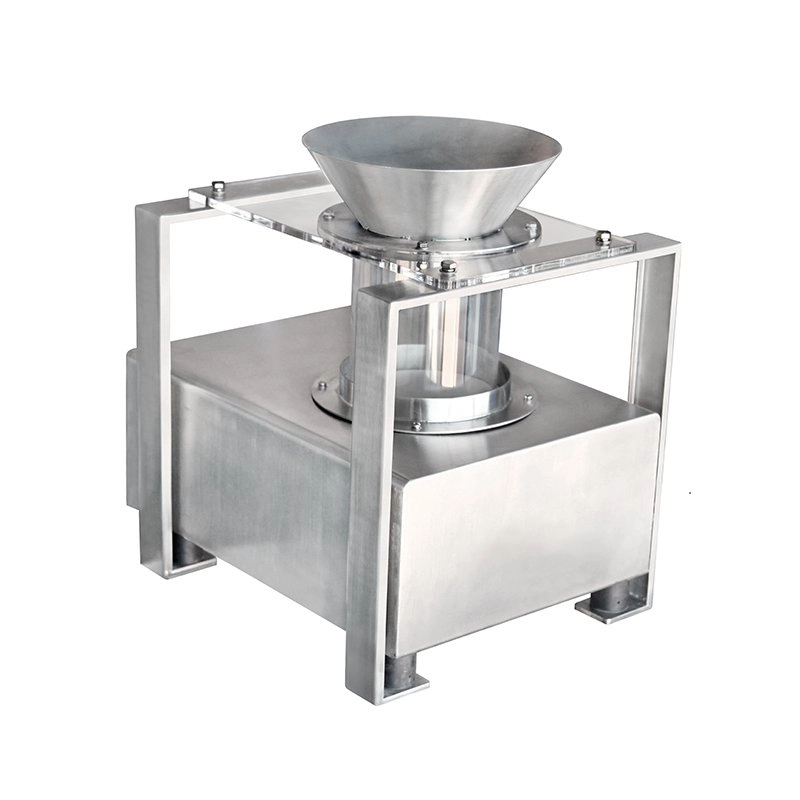
Dropped Metal Detector for Powder Granules For Food Industry
Enhance food safety with Kenwei’s Dropped Metal Detector for Powder Granules. This advanced food metal detector ensures precise detection in the food industry, safeguarding products and maintaining high quality standards throughout processing.
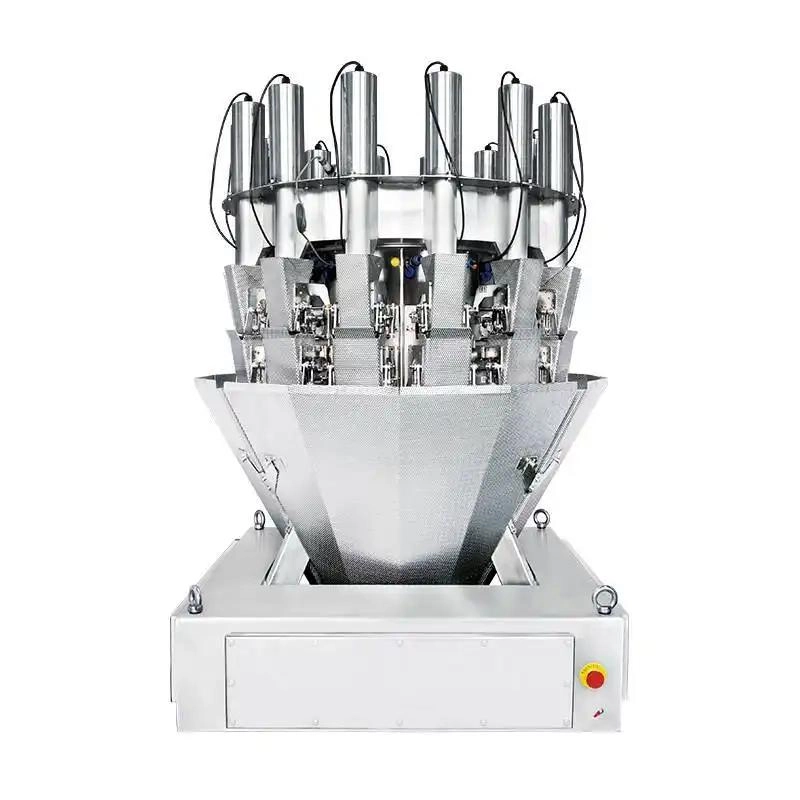
14 Heads Vertical Single Screw Feeding Pickles Weigher backups
This type of weigher is designed to handle the unique characteristics of pickles, ensuring precise measurements for packaging and distribution. It uses a vertical single screw mechanism to feed the pickles into the weighing system, allowing for efficient and consistent weighing. This technology is particularly useful in food processing and packaging facilities where precise portioning is essential for quality control and customer satisfaction. This specialized equipment is perfect for accurately measuring and dispensing pickles in a production line or packaging facility. The vertical design allows for efficient and precise filling of containers, while the single screw feeding mechanism ensures consistent and reliable weighing.
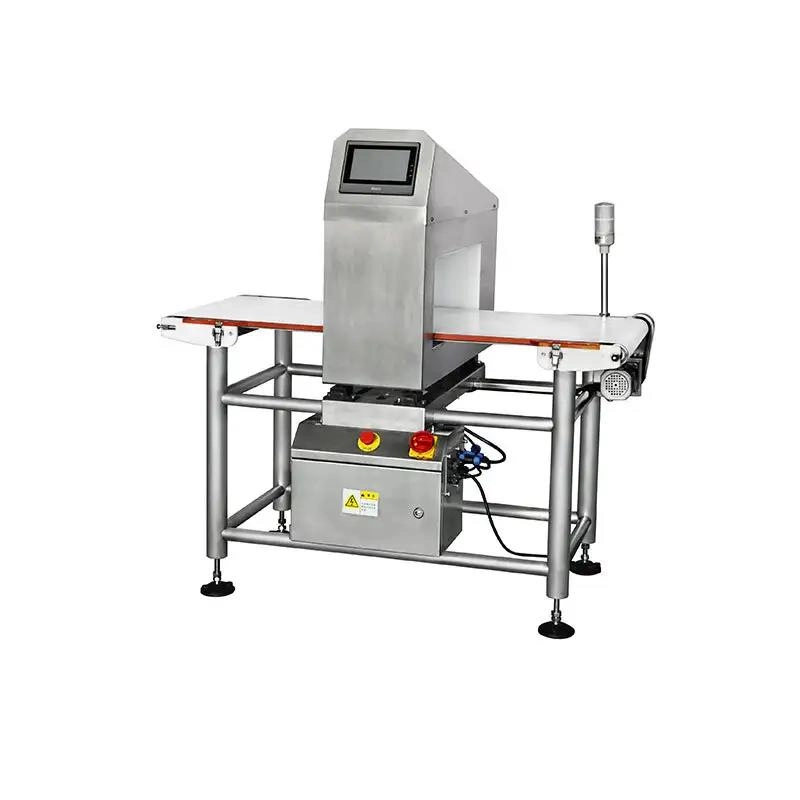
Food Metal Detector Manufacturer For Reject Defective Products G5020
The G5020 multi-frequency metal detector features a specialized conveyor belt designed to reduce contamination risks, ensure smooth operation, and maintain high detection sensitivity. It is easy to disassemble for convenient maintenance. Ideal for detecting metal contaminants in food, pharmaceuticals, spices, plastics, electronics, textiles, toys, handicrafts, and more.
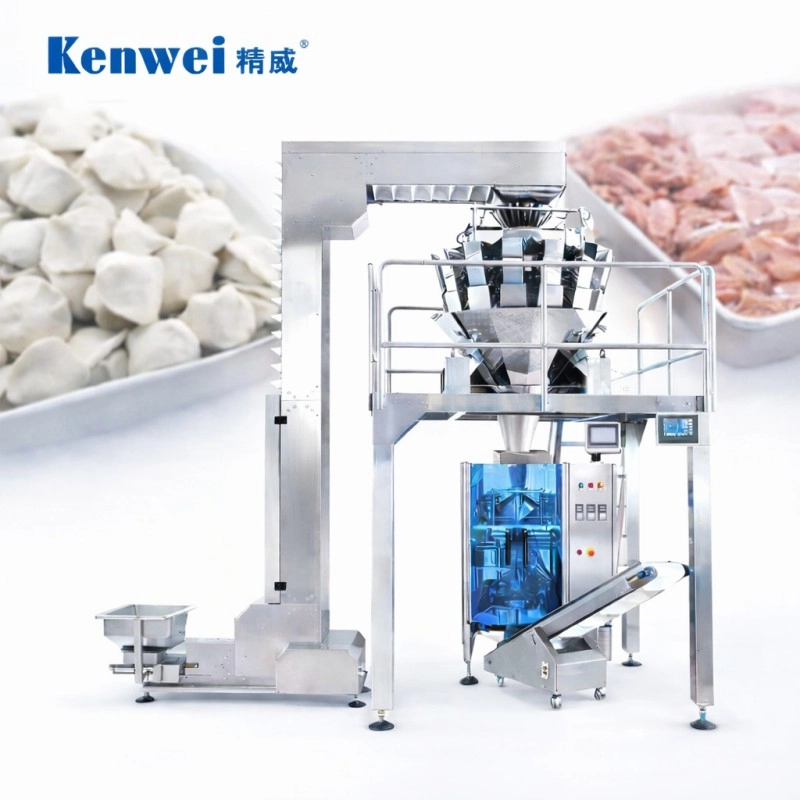
Vertical Frozen Food Packaging Machine for IQF & Frozen Products JW-B1
The Kenwei JW-B1 Vertical Frozen Food Packaging Machine is designed for IQF and frozen products, ensuring efficient, airtight packing. This vertical packing machine boosts productivity with precision sealing, ideal for frozen food packaging needs in the food industry.
Get in touch with us
If you have any comments or good suggestions, please leave us a message, later our professional staff will contact you as soon as possible.
Kenwei
Kenwei
Kenwei multi weigh
Kenwei
Kenwei
Kenwei