






China’s Packaging Machinery Industry: Achievements, Challenges, and Future Prospects
Monday, 12/16/2019
- 1. Achievements in China's Packaging Machinery Development
- 1.1 Rapid Growth in Production and Output Value
- 1.2 Expanding Product Variety and Emerging Innovation
- 2. Key Challenges Facing China's Packaging Machinery Industry
- 2.1 Small Enterprise Scale and Low Specialization
- 2.2 Low Technological Content and Dependence on Imports
- 2.3 Weak Design Innovation and Over-Reliance on Reverse Engineering
- Conclusion: Opportunities and Outlook
Explore the development of Chinese packaging machinery in this article by Kenwei. Gain insights into industry trends, technological advancements, and how innovative packaging machinery is shaping the future of manufacturing.
Over the past 30 years of reform and opening up, China’s packaging machinery industry has made remarkable progress. It has witnessed rapid growth in output value, an increasing variety of equipment, and significant improvements in standards and innovation. However, the sector still faces considerable challenges, such as small enterprise scale, low specialization, limited innovation capabilities, and heavy reliance on imported equipment. Compared with global packaging technology leaders, China must accelerate development to match its status as a packaging powerhouse.
1. Achievements in China's Packaging Machinery Development
1.1 Rapid Growth in Production and Output Value
Since the reform and opening-up era, China's packaging machinery sector has experienced rapid growth due to strong domestic demand and economic expansion. In the 1980s, the average growth rate reached 30%, and it remained above 20% through the 1990s. This outpaced both the broader packaging industry (18%) and the overall machinery industry by 4.7 percentage points.
According to the China Food and Packaging Machinery Industry Association, the average growth rate of the food and packaging machinery sector during the 11th Five-Year Plan was 21.65%. Despite the global financial crisis in 2009, the industry still achieved a total industrial output value of RMB 148.4 billion—a 17.59% year-on-year increase. Packaging machinery accounted for RMB 72.72 billion (up 29.89%), while food machinery (including packaging) reached RMB 75.68 billion (up 2.77%).
Packaging machinery demand remains high, especially for sectors such as food (60% of total demand), pharmaceuticals (20%), and cosmetics. Equipment for packaging products and container processing (e.g., corrugated cardboard and carton machinery) also contributes to the industry’s growth momentum.
Since 2000, many small-scale packaging machines and single-unit container-processing machines have been exported to Africa and the Middle East. From 2005–2008, import-export trade in food and packaging machinery grew at an average rate of 11.66%. However, in 2009, trade volumes dropped due to the financial crisis. Total export value stood at RMB 1.468 billion, with imports reaching RMB 2.706 billion—still heavily reliant on European, American, and Japanese suppliers.
These statistics highlight that, despite rapid development, China's packaging machinery industry still lacks international competitiveness and must address critical gaps in equipment quality and innovation.

1.2 Expanding Product Variety and Emerging Innovation
Although China entered the packaging machinery market later than many global leaders, the industry has seen substantial progress in product diversification and innovation. From basic standalone machines, the industry has evolved to producing full packaging lines.
Today, China offers over 1,300 types of packaging machinery. While still below the 6,000 types available globally, this range adequately supports food, pharmaceutical, cosmetic, and container packaging needs. During the 11th Five-Year Plan, national projects such as “Key Technology Research and Industrialization Development of Food Processing” led to breakthroughs in equipment for grain, oil, fruits, vegetables, livestock, and aquatic products.
These innovations enabled China to develop high-tech packaging machinery capable of complex movements, enhancing the industry's technical capabilities and boosting production efficiency.
2. Key Challenges Facing China's Packaging Machinery Industry
2.1 Small Enterprise Scale and Low Specialization
More than 80% of China’s packaging machinery companies are small and medium-sized enterprises (SMEs). These firms often lack sufficient capital, modern equipment, and advanced management concepts. As a result, they struggle to upgrade technologies or develop new high-tech products—leading to widespread low-level, repetitive production.
Another major weakness is the low level of specialization. Around 57% of Chinese packaging machinery manufacturers also produce unrelated machinery. Only a few coastal regions show higher specialization levels. Many companies pursue a “multi-variety, low-volume” production model, launching multiple products yearly with limited technical depth. In contrast, top global packaging machinery brands focus on “few products, high specialization, large volume,” enabling them to develop world-class, technically advanced solutions.
2.2 Low Technological Content and Dependence on Imports
China's packaging machinery still lacks high-tech integration and automation. Key limitations include:
-
Focus on light industry machines with low technical content
-
Weak capability in producing precision accessories and integrating software systems
-
Short product lifespan and low operational reliability
As a result, high-end equipment—especially complete systems—is heavily dependent on imports from Europe, Japan, and the U.S.
2.3 Weak Design Innovation and Over-Reliance on Reverse Engineering
Historically, much of China’s packaging machinery design has relied on reverse engineering. Many companies cannot design new machines without reference to foreign models. Approximately 80% of technical limitations in Chinese packaging machinery stem from design weaknesses.
This lack of original innovation—often limited to copying physical structures without incorporating supporting software—results in machines with lower performance and competitiveness. The high-end and intelligent segments of the industry remain dominated by imported equipment.
Conclusion: Opportunities and Outlook
While China’s packaging machinery sector has achieved notable progress, major gaps remain in innovation, specialization, and global competitiveness. To fully realize its potential as a global packaging leader, China must overcome reliance on imports, elevate technical standards, and foster original design capabilities.
Looking forward, the global packaging machinery market is set to grow rapidly—presenting both opportunities and challenges. In the next article, we will explore global packaging technology trends and propose strategic responses for China’s future development.
Several Chinese manufacturers are already emerging as future leaders. For instance, Guangdong Kenwei Intellectualized Machinery Co., Ltd. has established a strong position in the combination weigher segment. Its domestic output leads the market, and international sales continue to expand. Although domestic machines are priced significantly lower than German counterparts, further innovation is needed to close the performance and brand perception gap.
Recommended for you
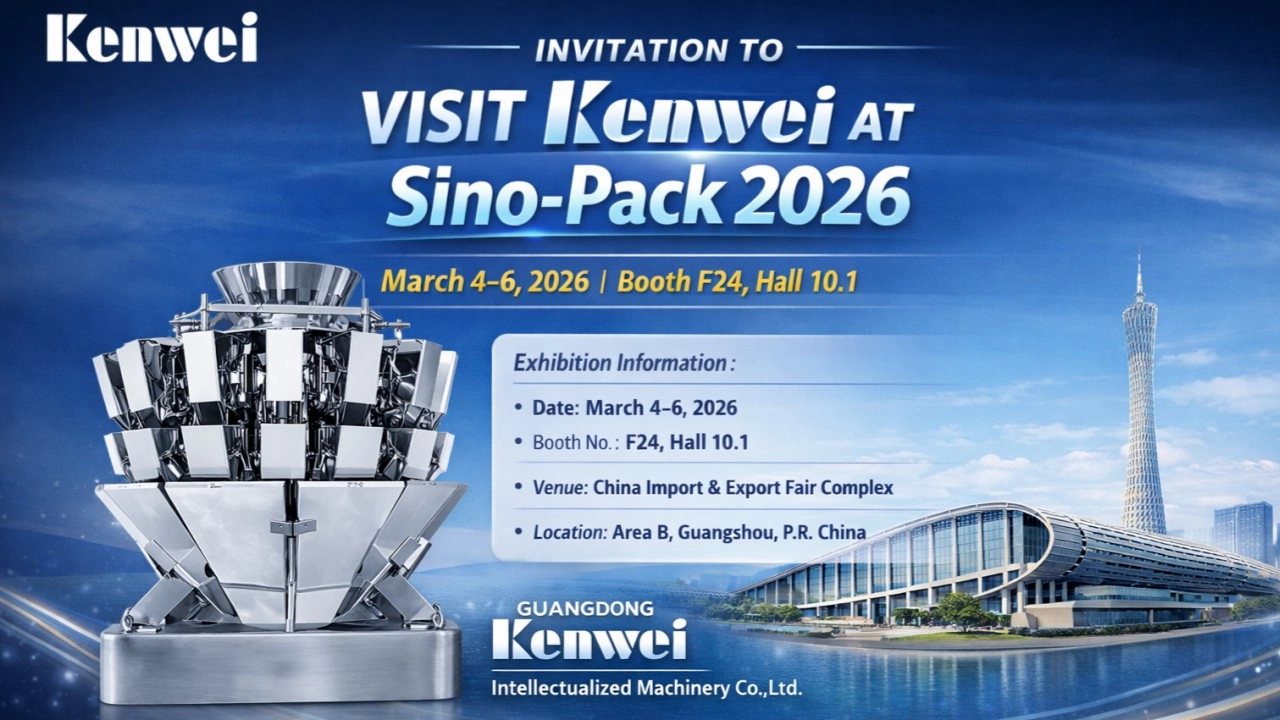
Kenwei to Showcase Intelligent weighing machine at Sino-Pack 2026
Auspicious Start to Work | Guangdong Kenwei 2026
Unite for Transformation · Empower the Future with Intelligence | Guangdong Kenwei 2025 Annual Excellence Awards & Year-End Gala Successfully Held!
Top 10 Food Packaging Machines 2026: Types, Benefits, and Uses
Prdoucts Categories
FAQ
About products customization
How long does it take to deliver a customized Kenwei machine?
The lead time for customized machines can vary based on the complexity of the customization, as well as production schedules. Generally, it takes 4-6 weeks to deliver a fully customized machine after design approval.
About Solution suggestions
How can Kenwei solutions help reduce waste in my production process?
Kenwei solutions improve accuracy in weighing, packaging, and quality control, reducing the chances of overfill or underfill. This leads to less product waste and higher operational efficiency.
Can Kenwei solutions be adapted for different product packaging types?
Yes, Kenwei solutions can handle a variety of packaging types, including bags, boxes, pouches, and bottles. We can customize machines to suit your packaging format, ensuring compatibility with your packaging equipment.
About Cooperation Process
Can Kenwei customize equipment to meet my specific needs?
Yes! We offer customized solutions for all of our machines. Our team will work closely with you to understand your specific requirements and create a solution that meets your needs in terms of size, functionality, speed, and other factors.
About Product choice
What is the difference between a multi-head weigher and a linear weigher?
Multi-head Weigher: Ideal for high-speed and high-precision weighing of products with irregular shapes or varying sizes. It provides multiple weighings in parallel for faster processing.
Linear Weigher: It is suitable for powder and granule. It is typically slower than a multi-head weigher but is effective for certain types of applications that require more continuous flow or controlled weighing.
You may also like
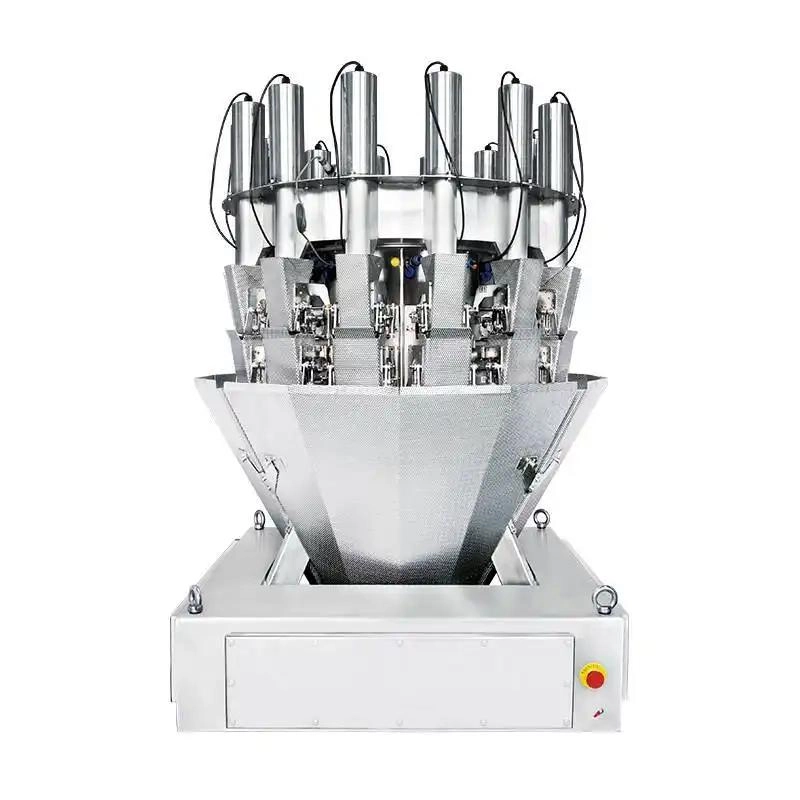
14 Heads Vertical Single Screw Feeding Pickles Weigher backups
This type of weigher is designed to handle the unique characteristics of pickles, ensuring precise measurements for packaging and distribution. It uses a vertical single screw mechanism to feed the pickles into the weighing system, allowing for efficient and consistent weighing. This technology is particularly useful in food processing and packaging facilities where precise portioning is essential for quality control and customer satisfaction. This specialized equipment is perfect for accurately measuring and dispensing pickles in a production line or packaging facility. The vertical design allows for efficient and precise filling of containers, while the single screw feeding mechanism ensures consistent and reliable weighing.
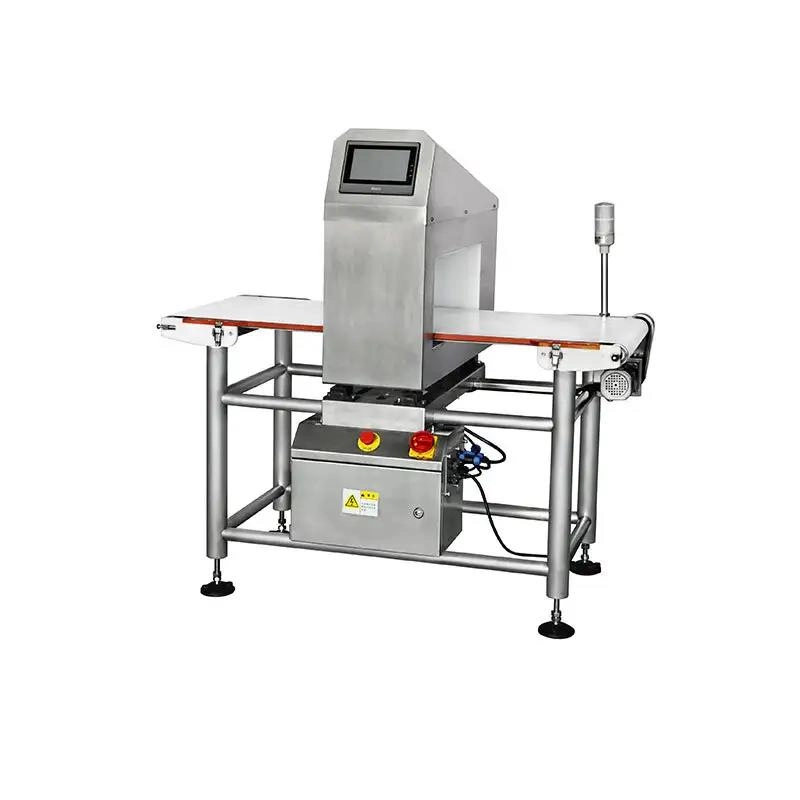
Food Metal Detector Manufacturer For Reject Defective Products G5020
The G5020 multi-frequency metal detector features a specialized conveyor belt designed to reduce contamination risks, ensure smooth operation, and maintain high detection sensitivity. It is easy to disassemble for convenient maintenance. Ideal for detecting metal contaminants in food, pharmaceuticals, spices, plastics, electronics, textiles, toys, handicrafts, and more.
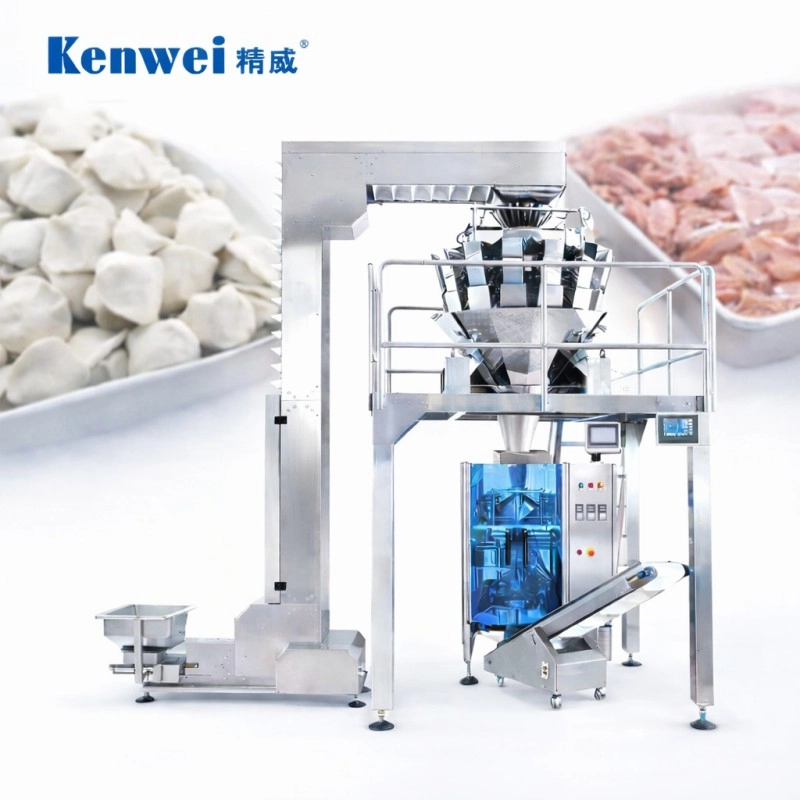
Vertical Frozen Food Packaging Machine for IQF & Frozen Products JW-B1
The Kenwei JW-B1 Vertical Frozen Food Packaging Machine is designed for IQF and frozen products, ensuring efficient, airtight packing. This vertical packing machine boosts productivity with precision sealing, ideal for frozen food packaging needs in the food industry.
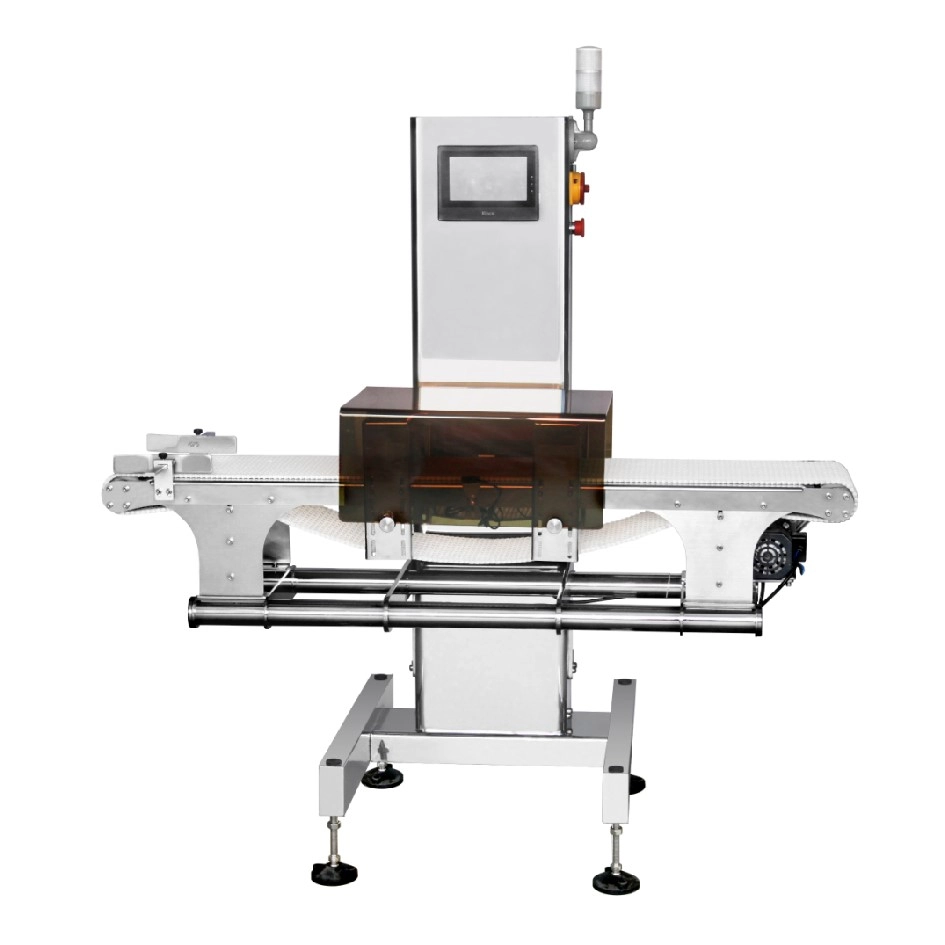
Metal Detector for Aluminum Foil in the Food Industry for Accurate Contamination Detection
The 2415 Metal Detector for Aluminum Foil is equipped with high-sensitivity sensors that effectively filter out signals from aluminum packaging, ensuring precise detection of magnetic metal contaminants. Ideal for detecting foreign bodies in aluminum foil-packaged items such as coffee bags, peanuts, dried meats, chocolate, and more. This versatile metal detector offers adjustable settings, with a maximum width of 24mm and height ranging from 20-150mm, making it suitable for a wide variety of aluminum foil packaging applications.
Contact Kenwei
Our company is located in areas with convenient transportation and developed economy. Our products are supplied in a timely manner. In the course of business operation, we always focus on customers.Have any questions or concerns about our products? Please leave us a message here, and our team will get back to you promptly.
Kenwei
Kenwei
Kenwei multi weigh
Kenwei
Kenwei
Kenwei