






ROI Analysis: Semi Automatic Powder Packing Machines for SMEs
A practical ROI analysis for SMEs considering the Kenwei JW-B20 Semi Automatic Multi-Function Powder Packing Machine. This guide explains costs, benefits, calculation examples, operational considerations, and implementation steps to help small and medium enterprises decide whether a semi-automatic powder packing machine is the right investment.
- ROI Analysis: Semi Automatic Powder Packing Machines for SMEs
- Why SMEs Should Consider a Powder Packing Machine
- Product Overview: Semi Automatic Multi-function Powder Packing Machine
- Key : Powder Packing Machine Benefits for Small Operations
- ROI Framework: What to Include in Your Analysis
- Typical Cost and Benefit Categories for Semi Automatic Machines
- Example ROI Calculation: JW-B20 Case Study (Illustrative)
- Comparing Packing Options: Manual vs Semi-Automatic vs Fully Automatic
- Operational Considerations: Maximizing ROI from your Powder Packing Machine
- Brand Advantage: Why Choose Kenwei JW-B20 for SMEs
- Implementation Checklist Before Purchase
- Common Pitfalls and How to Avoid Them
- FAQ — Frequently Asked Questions
- Q1: How quickly can a semi-automatic powder packing machine pay for itself?
- Q2: Is the Kenwei JW-B20 suitable for fine powders like milk powder?
- Q3: What ongoing costs should I expect?
- Q4: How much labor can I realistically save?
- Q5: Can the machine handle multiple bag types?
- Contact / View Product
- Authoritative References

ROI Analysis: Semi Automatic Powder Packing Machines for SMEs
Why SMEs Should Consider a Powder Packing Machine
Small and medium-sized enterprises (SMEs) in food, chemical, and specialty goods sectors face constant pressure to improve efficiency, maintain product quality, and control costs. A reliable Powder Packing Machine can be a turning point. Semi-automatic solutions bridge the gap between manual packing (high labor cost and variability) and fully automatic lines (high capital expenditure and space needs). This article evaluates the return on investment (ROI) for SMEs considering a semi-automatic option, focusing on the Kenwei JW-B20 Semi Automatic Multi-Function Single Bucket Conveying Powder granule food Packaging Machine With Linear Weigher and similar machines.
Product Overview: Semi Automatic Multi-function Powder Packing Machine
The Kenwei JW-B20 Semi-Automatic Multi-Function Packaging Machine with Linear Weigher is ideal for powders and granules like sugar, salt, rice, coffee, and milk powder. It automates feeding, weighing, and output with high accuracy and efficiency. Compact and cost-effective, it suits various bag types not supported by standard machines, making it perfect for flexible, space-saving packaging needs.
Key : Powder Packing Machine Benefits for Small Operations
When evaluating a Powder Packing Machine, SMEs should focus on measurable commercial benefits: improved weighing accuracy, reduced material waste, consistent pack weights, labor savings, production flexibility, and lower order lead times. Semi-automatic machines like the JW-B20 offer many of these advantages while keeping capital costs relatively low and fitting into constrained floor plans.
ROI Framework: What to Include in Your Analysis
To calculate ROI realistically, break down both costs and benefits into components you can measure or reasonably estimate:
- Capital expenditure (CapEx): purchase price, shipping, installation, and initial tooling.
- Operating expenditure (OpEx): electricity, consumables, routine maintenance, spare parts, and operator time.
- Benefits (annualized): labor cost reductions, material savings due to improved accuracy, throughput increase, reduction in rework/returns, and potential quality-driven price High Qualitys or new customer wins.
- Intangible/strategic benefits: improved brand quality, compliance, and scalability for future growth.
Typical Cost and Benefit Categories for Semi Automatic Machines
Below is a practical breakdown to guide your inputs for a business case:
- Machine price range: depends on configuration — typical semi-automatic powder packing machines often range from low thousands to tens of thousands USD. (Use vendor quotes for accuracy.)
- Installation & training: usually a one-time cost equal to 5–15% of machine price.
- Labor savings: calculate operator hours saved per shift and wage rates.
- Material savings: higher weighing accuracy reduces giveaway per pack.
- Throughput gains: packs per hour improvement vs manual packing.
Example ROI Calculation: JW-B20 Case Study (Illustrative)
The table below provides a hypothetical scenario to demonstrate how an SME might calculate ROI for the Kenwei JW-B20. Adjust each input to match your prices, wages, and production goals.
| Item | Assumption (Annual) | Value (USD) | Notes |
|---|---|---|---|
| Machine purchase (CapEx) | One-time | 12,000 | Estimated price for JW-B20 configured for powders |
| Installation & Training | One-time | 1,200 | ~10% of machine price |
| Annual Maintenance & Parts | Annual | 1,000 | Routine spare parts and minor servicing |
| Electricity & Consumables | Annual | 500 | Power, small wear parts |
| Labor savings | Annual | 10,000 | Assumes 1.5 full-time equivalent (FTE) reduction @ $6,667 per FTE annually |
| Material giveaway reduction | Annual | 3,000 | High accuracy reduces average giveaway by 0.5% on 600,000 USD annual throughput |
| Throughput-related incremental revenue | Annual | 2,000 | Faster pack times allow additional orders |
| Annual Net Benefit | 13,500 (Labor + material + throughput - OpEx) | ||
| Simple Payback | (CapEx + install) 13,200 / 13,500 = ~0.98 years | ||
Interpretation: in this illustrative case, the JW-B20 pays for itself in less than one year. Your actual payback will vary by purchase price, local labor rates, production volumes, and the machine's configuration.
Comparing Packing Options: Manual vs Semi-Automatic vs Fully Automatic
SMEs must compare alternatives to validate the choice. The table below summarizes trade-offs across key decision criteria.
| Criteria | Manual | Semi-Automatic (JW-B20) | Fully Automatic |
|---|---|---|---|
| CapEx | Low | Medium | High |
| Throughput | Low | Medium-High | Very High |
| Footprint | Small | Compact | Large |
| Weighing accuracy | Variable | High | Highest |
| Flexibility for different bag types | High (manual change) | High (multi-function) | Medium (complex changeover) |
| Payback period (typical) | N/A | Months–2 years | 2–5+ years |
Operational Considerations: Maximizing ROI from your Powder Packing Machine
To achieve the ROI shown in examples, follow these best practices:
- Use realistic production targets and measure baseline metrics (current throughput, giveaway, defect rate).
- Train operators thoroughly—semi-automatic machines depend on correct operator interaction.
- Implement a preventive maintenance schedule to avoid unplanned downtime and preserve weighing accuracy.
- Match hopper and conveying options to your powder/granule characteristics to prevent bridging or segregation.
- Keep spare wear parts on hand for rapid repair and short mean time to repair (MTTR).
Brand Advantage: Why Choose Kenwei JW-B20 for SMEs
For SMEs, brand and vendor support matter as much as hardware. The Kenwei JW-B20 offers several SME-friendly advantages:
- Compact footprint and multi-function design reduce the need for multiple machines.
- Linear weigher technology provides high accuracy for powders and granules, reducing giveaways.
- Flexible bag compatibility covers pouches and bags not supported by standard systems—useful for producers with varied SKUs.
- Lower upfront cost versus full automation while delivering substantial labor and material savings.
- Vendor-level support, spare parts availability, and operator training reduce lifecycle risk.
Implementation Checklist Before Purchase
Use this short checklist to validate that a semi-automatic Powder Packing Machine will deliver expected ROI:
- Document current production metrics (throughput, labor hours, giveaway percentage).
- Obtain a formal vendor quote including shipping, installation, training, and warranty.
- Request a demonstration with your product or similar powders to confirm performance.
- Calculate conservative ROI using your local wage rates and material costs.
- Plan for space, utilities, and safety/compliance requirements.
Common Pitfalls and How to Avoid Them
Even good machines fail to deliver ROI if the project is poorly executed. Common pitfalls include:
- Poor changeover planning: ensure the machine can handle your SKU range with minimal downtime.
- Underestimating operator training needs: allocate time and budget for hands-on sessions.
- No baseline metrics: without pre-install measurements, ROI claims are speculative.
- Ignoring material characteristics: powders behave differently; check feed and anti-bridging options.
FAQ — Frequently Asked Questions
Q1: How quickly can a semi-automatic powder packing machine pay for itself?
A1: Payback depends on the machine price, labor cost savings, and production volume. In many SME cases the payback can be under 1–2 years. Use a conservative estimate for your company’s inputs to calculate payback precisely.
Q2: Is the Kenwei JW-B20 suitable for fine powders like milk powder?
A2: Yes. The JW-B20 is designed for a range of powders and granules including milk powder, sugar, salt, and coffee. Proper hopper and conveying choices are important to avoid bridging and maintain accuracy.
Q3: What ongoing costs should I expect?
A3: Expect electricity, occasional spare parts (belts, sensors), periodic calibration, and minimal consumables. Annual maintenance can be a small fraction of CapEx if preventive routines are followed.
Q4: How much labor can I realistically save?
A4: Labor savings vary. Many SMEs report saving 1–3 full-time equivalents when switching from manual or semi-manual lines, depending on volume and shift patterns. Evaluate your current operator tasks to estimate impact.
Q5: Can the machine handle multiple bag types?
A5: The JW-B20 supports a variety of bag types and sizes not always compatible with standard machines, making it useful for companies with mixed SKUs or limited production runs.
Contact / View Product
When ROI expectations are validated, decision-makers move toward execution using a structured procurement guide: evaluating JW-B20 powder packing machine.To evaluate the Kenwei JW-B20 for your operations, request a quote or book a product demo with your powder sample. Contact our sales team to get a tailored ROI calculation and see the machine in action.
Authoritative References
- Packaging machine — Wikipedia: https://en.wikipedia.org/wiki/Packaging_machine
- Weighing scale — Wikipedia: https://en.wikipedia.org/wiki/Weighing_scale
- SME definition and role — OECD: https://www.oecd.org/cfe/smes/
- Automation and productivity insights — McKinsey & Company (automation benefits overview): https://www.mckinsey.com/featured-insights/digital-disruption/automation-can-boost-productivity
Note: The numerical examples in this article are illustrative. For an accurate ROI for your business, provide your production volumes, local costs, and product characteristics to a vendor for a customized calculation.
Tags
food industry metal detectors
food industry metal detectors
china linear weigher
china linear weigher
automatic packaging machine
automatic packaging machine
china food packing machinery
china food packing machinery
food grade metal detector
food grade metal detector
vffs packaging equipment
vffs packaging equipment
Recommended for you
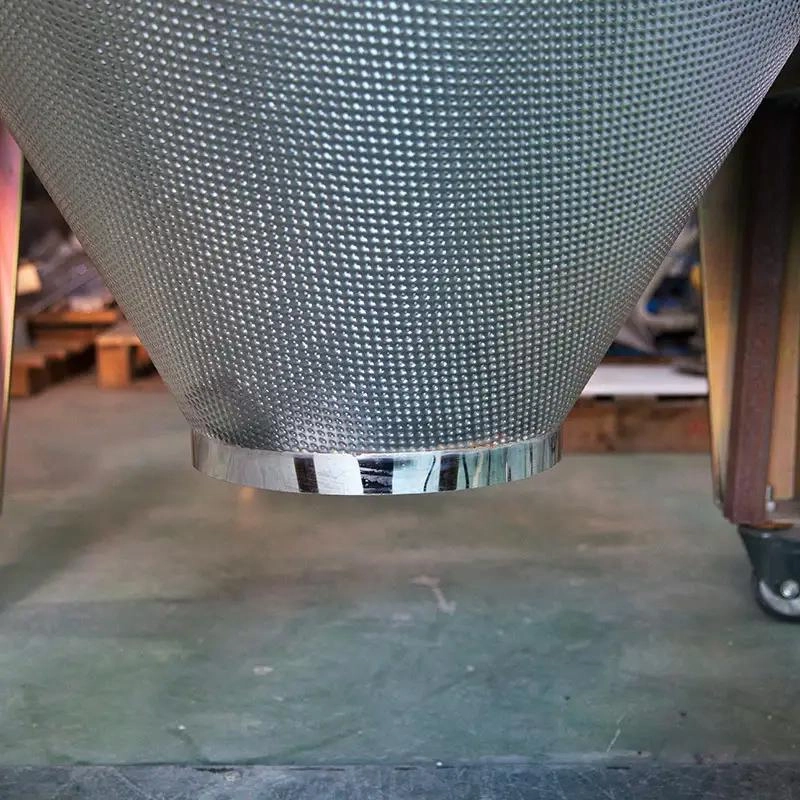
How 14 Heads Vertical Single-Screw Feeding Pickles Weigher backups work

Calibration Tips for Accurate Metal Detection in Food Lines
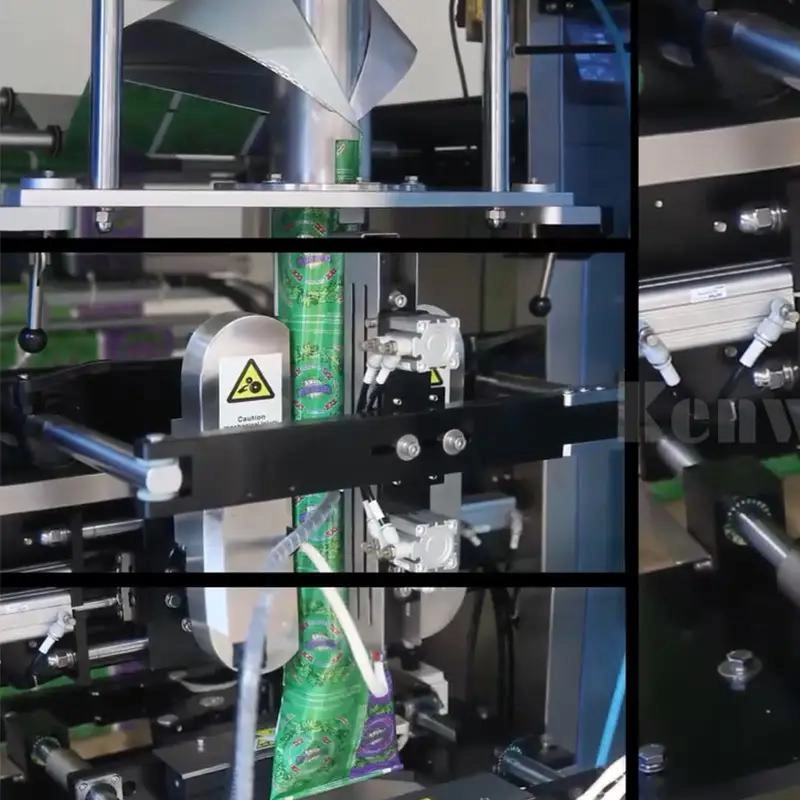
How to Choose a Vertical Packaging Machine for High Throughput
Automating Your Food Packing Machine with Industry 4.0
Prdoucts Categories
Question you may concern
About products customization
Can Kenwei machines be customized for different industries?
Yes,According to the material characteristics and requirements of different industries, we developed various machine types for counting (small pouches into big bag), noodles, frozen foods, peppers, stick-shaped products, product -mixing, cheeses, salads and so on.
About After Sales Support
Can I get remote troubleshooting assistance?
Yes, Kenwei offers remote troubleshooting for certain issues. Our technical team can guide you through diagnostics and help resolve issues via phone, video call, or online messaging.
About Product choice
What is the average lifespan of Kenwei products?
Kenwei machines are built for durability and longevity. With proper maintenance, our products are designed to last for many years, even under heavy usage. We offer maintenance services and support to help extend the lifespan of your machines.
How do I choose the right product for my business?
Choosing the right machine depends on several factors:
Product Type: Different machines are suited for different products (e.g., powder, granules, etc.).
Production Capacity: Consider the volume of products you need to process and the speed requirements.
Customization: If you have specific needs, such as the need for unique features or sizes, we offer customization options.
About Solution suggestions
What are Kenwei’s primary solutions for industrial weighing and packaging?
Kenwei provides comprehensive solutions for automated weighing and packaging, including multi-head weighers, linear weighers, check weighers, metal detectors, and packing machines. These solutions are tailored to improve speed, accuracy, and efficiency in various industries such as food, pharmaceuticals, and chemicals.
You may also like
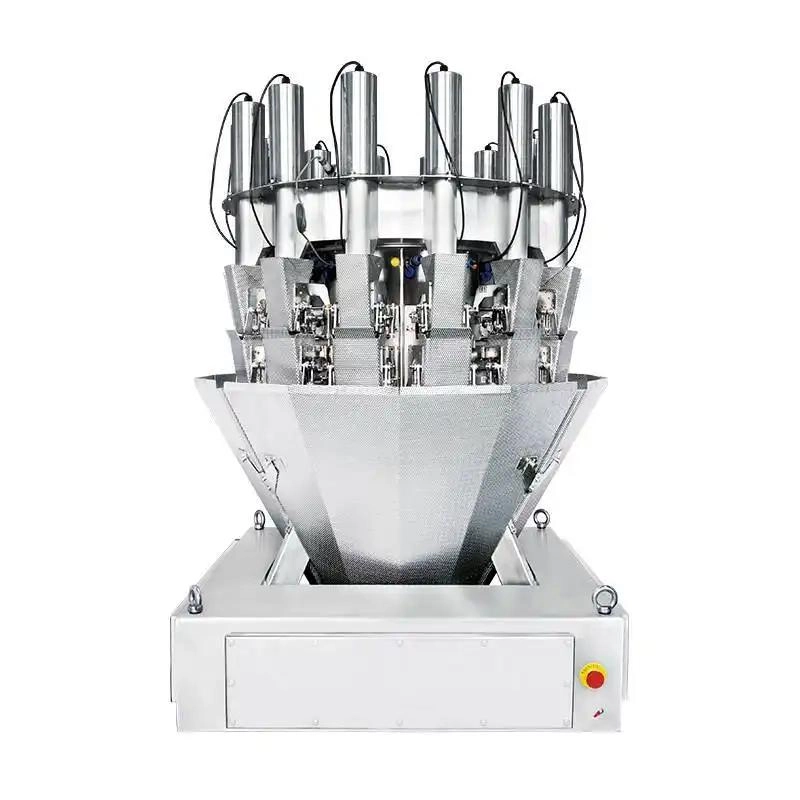
14 Heads Vertical Single Screw Feeding Pickles Weigher backups
This type of weigher is designed to handle the unique characteristics of pickles, ensuring precise measurements for packaging and distribution. It uses a vertical single screw mechanism to feed the pickles into the weighing system, allowing for efficient and consistent weighing. This technology is particularly useful in food processing and packaging facilities where precise portioning is essential for quality control and customer satisfaction. This specialized equipment is perfect for accurately measuring and dispensing pickles in a production line or packaging facility. The vertical design allows for efficient and precise filling of containers, while the single screw feeding mechanism ensures consistent and reliable weighing.
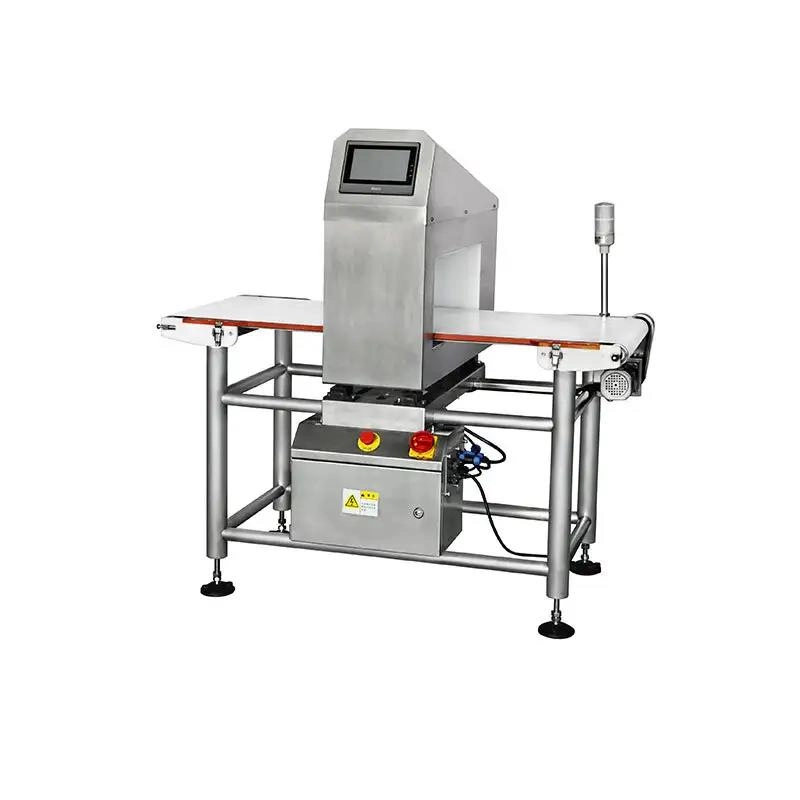
Food Metal Detector Manufacturer For Reject Defective Products G5020
The G5020 multi-frequency metal detector features a specialized conveyor belt designed to reduce contamination risks, ensure smooth operation, and maintain high detection sensitivity. It is easy to disassemble for convenient maintenance. Ideal for detecting metal contaminants in food, pharmaceuticals, spices, plastics, electronics, textiles, toys, handicrafts, and more.
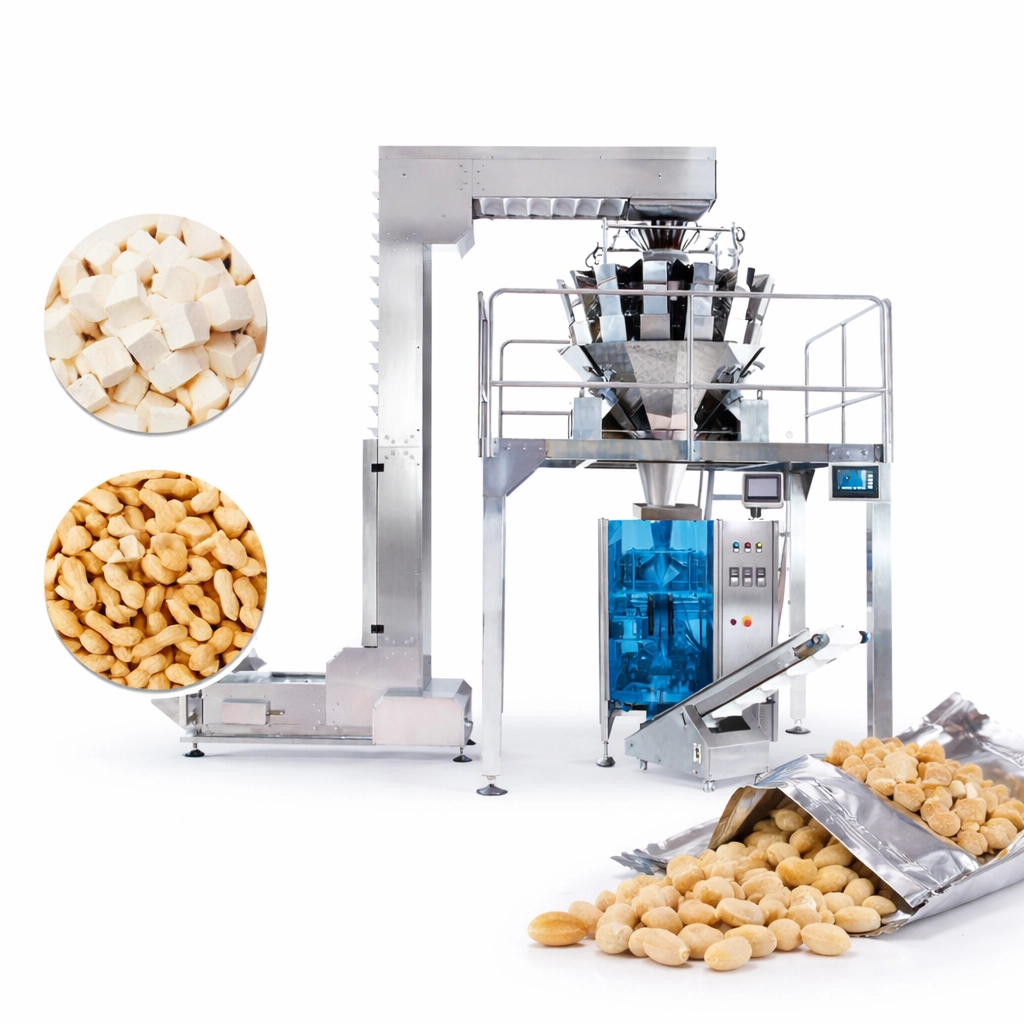
High-Precision Weighing & Packaging for Granular Products
The Granular Food Packing Machine is a fully automated solution designed for accurate weighing, filling, and packaging of various granular food products. Integrated with a multihead weigher and advanced packaging system, it ensures high speed, precision, and hygiene standards for modern food production.
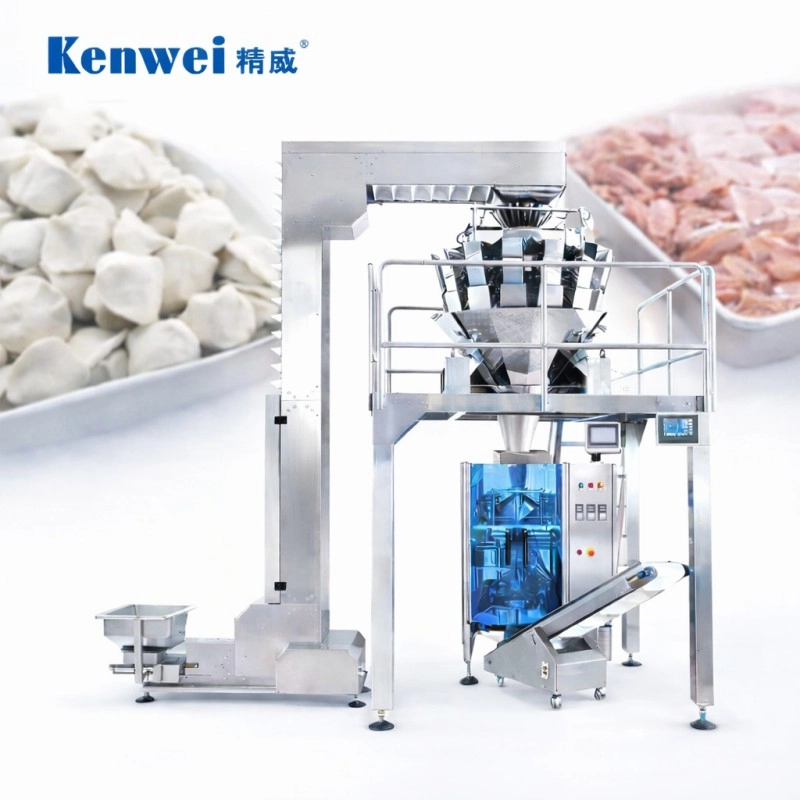
Vertical Frozen Food Packaging Machine for IQF & Frozen Products JW-B1
The Kenwei JW-B1 Vertical Frozen Food Packaging Machine is designed for IQF and frozen products, ensuring efficient, airtight packing. This vertical packing machine boosts productivity with precision sealing, ideal for frozen food packaging needs in the food industry.
Get in touch with us
If you have any comments or good suggestions, please leave us a message, later our professional staff will contact you as soon as possible.
Kenwei
Kenwei
Kenwei multi weigh
Kenwei
Kenwei
Kenwei