






Metal detector sensitivity vs. aluminum foil thickness
A practical, region-aware guide to understanding how aluminum foil packaging affects metal detector sensitivity on food production lines worldwide. Explains physics, measurable impacts by foil thickness, calibration best practices, testing protocols and the advantages of the Metal Detector for Aluminum Foil in the Food Industry for Accurate Contamination Detection.
- Optimizing metal detection for foil-packaged foods
- Why specialized detection is needed for aluminum foil
- Key features to look for
- Regulatory and operational context
- How aluminum foil affects metal detector sensitivity
- Basic physics: conductivity, thickness and signal shielding
- Practical sensitivity impacts by foil thickness
- Product effect and multi-layer packaging
- Choosing and calibrating a metal detector for the food industry
- Selecting the right detector
- Calibration and verification best practices
- Advanced settings: multi-frequency and auto-learn
- Installation, testing and operational best practices
- Placement and conveyor integration
- Routine testing protocol
- Troubleshooting common issues
- Evidence and standards supporting best practices
- Case example
- When to involve third-party testing
- FAQ — Metal detector sensitivity vs. aluminum foil thickness
- Q: Does aluminum foil always reduce metal detector sensitivity?
- Q: How do I know what size contaminant my line can reliably detect?
- Q: Will switching to a higher detector frequency improve detection through foil?
- Q: How often should I verify detector performance?
- Q: Is the 2415 Metal Detector suitable if we change bag designs often?

Used by food factories and packaging lines across North America, Europe and Asia, understanding the relationship between metal detector sensitivity and aluminum foil thickness is critical for regulatory compliance and consumer safety. This guide explains how foil and multi-layer packaging influence detection performance, shows practical test results and calibration strategies for metal detector for food industry applications, and highlights solutions that minimize false rejects while maintaining high contaminant catch-rates.
Optimizing metal detection for foil-packaged foods
Product spotlight:
The 2415 Metal Detector for Aluminum Foil is equipped with high-sensitivity sensors that effectively filter out signals from aluminum packaging, ensuring precise detection of magnetic metal contaminants. Ideal for detecting foreign bodies in aluminum foil-packaged items such as coffee bags, peanuts, dried meats, chocolate, and more. This versatile metal detector offers adjustable settings, with a maximum width of 24mm and height ranging from 20-150mm, making it suitable for a wide variety of aluminum foil packaging applications.
Why specialized detection is needed for aluminum foil
Aluminum is non-ferrous and conductive, creating an interference signal in most metal detection systems. In foil-packaged products the packaging itself can produce a background signal that masks small metallic contaminants, increasing the chance of escapes or producing false rejects. A metal detector for food industry use must therefore distinguish between packaging signals and genuine foreign-metal signatures while maintaining sensitivity for the contaminants of concern.
Key features to look for
For foil-filled production lines, prioritize detectors that offer: high-sensitivity coils, product signal suppression or auto-learn algorithms, multiple frequency options, and adjustable reject logic. The 2415 model is designed with foil-filtering capabilities and adjustable aperture dimensions (max width 24mm, height 20–150mm), making it well-suited for slim, vertical sealed packages like coffee bags or chocolate bars.
Regulatory and operational context
Food producers must balance safety, yield and compliance. Systems such as ISO 22000 and regional regulations (e.g., FDA FSMA in the U.S.) expect robust preventive controls and verification of foreign-body controls. Refer to ISO 22000 for food safety management system requirements (ISO 22000) and FSMA preventive controls guidance for industry expectations (FDA FSMA).
How aluminum foil affects metal detector sensitivity
Basic physics: conductivity, thickness and signal shielding
Aluminum is a good electrical conductor and forms eddy currents when exposed to an alternating magnetic field from the detector coil. These eddy currents generate their own magnetic fields which can partially cancel or mask the signal from a metallic contaminant. The thicker the foil (or the closer it is to the coil), the stronger the eddy currents and the larger the background signal — which reduces the margin between background and contaminant signals.
Practical sensitivity impacts by foil thickness
Detection capability is often expressed as the minimum detectable metallic sphere diameter (or minimum spherical diameter, MSD) for ferrous, non-ferrous and stainless contaminants. The table below summarizes typical, indicative impacts of varying aluminum foil thicknesses on detection thresholds for a general-purpose metal detector configured for food industry use. Values are illustrative approximations — actual results depend on detector model, frequency, product effect, and calibration.
| Aluminum foil thickness | Typical packaging example | Approx. MSD ferrous (mm) | Approx. MSD non-ferrous (mm) | Approx. MSD stainless (mm) |
|---|---|---|---|---|
| 10–20 µm | single thin foil, some coffee inner-liner | 0.8–1.2 | 1.0–1.6 | 1.8–2.8 |
| 30–50 µm | standard multi-layer coffee/gusset bags | 1.0–1.6 | 1.6–2.4 | 2.5–3.5 |
| 60–100 µm | heavy-duty foil layers, laminated pouches | 1.4–2.0 | 2.0–3.0 | 3.0–4.5 |
Note: These figures are conservative estimates to illustrate the relationship. A metal detector configured specifically for aluminum foil (like the 2415 with foil suppression modes) will outperform generic detectors in similar conditions.
Product effect and multi-layer packaging
Besides the foil layer itself, the product inside (coffee grounds, nuts, chocolate) creates its own “product effect” which may be conductive or dielectric. When product effect and foil effect interact, the total background can become complex and frequency-dependent. Multi-frequency detectors or dedicated foil modes help separate contaminant signatures from combined product/foil backgrounds.
Choosing and calibrating a metal detector for the food industry
Selecting the right detector
When selecting a metal detector for food industry lines handling aluminum-foil packages, evaluate:
- Sensitivity at different frequencies — some contaminants are easier to detect at low vs. high frequencies;
- Foil suppression or auto-learn features — reduces nuisance rejects from foil packaging;
- Conveyor/aperture dimensions — match aperture to your package size; the 2415’s adjustable height (20–150mm) suits a wide range of foil pouch sizes;
- Reject type and validation recording — ensure documented verification for audits.
Calibration and verification best practices
Calibration should be product-specific and include representative packaging. Typical verification steps:
- Establish a baseline by running empty packages and measuring background signal;
- Introduce calibrated test pieces (ferrous, non-ferrous, stainless) of known dimensions inside sealed foil samples to find the detection threshold;
- Adjust frequency and sensitivity while monitoring reject rates and false positives;
- Document routine verification (daily/shift) and record test logs to satisfy regulatory audits.
Manufacturers and regulators often recommend using certified test pieces and following a documented test protocol. See industry guidance on metal detection basics for verification methods (Food Safety Magazine — Metal Detection: The Basics).
Advanced settings: multi-frequency and auto-learn
Multi-frequency capability enables the detector to assess the product/foil mix across frequencies to identify the best operating point. Auto-learn or adaptive balancing systems can continuously compensate for small shifts caused by temperature, humidity or batch variation — reducing downtime for manual recalibration.
Installation, testing and operational best practices
Placement and conveyor integration
Install the detector where product is stable and consistently oriented. Minimize metal structures and other sources of electromagnetic interference nearby. Where foil bags are tall or have gussets, ensure vertical clearance matches the detector’s aperture — the 2415’s height range (20–150mm) accommodates many foil pouch profiles.
Routine testing protocol
Implement a practical testing protocol that includes:
- Shift-start verification using certified test pieces inside representative sealed foil;
- Random in-line verification for process control;
- Immediate re-calibration after changeovers (different bag thicknesses or product recipes).
Keep records in a format that supports audits and trend analysis. Many modern detectors offer built-in logging or networked reporting for easy traceability.
Troubleshooting common issues
Common issues and fixes:
- High false-reject rates: check for nearby metal, verify foil orientation consistency, and reduce sensitivity or refine foil-suppression settings;
- Low detection of non-ferrous contaminants: try lower-frequency settings or increase sensitivity (careful to avoid false positives);
- Drift or intermittent signals: inspect cabling, ensure stable power and consider environmental shielding.
Evidence and standards supporting best practices
Food safety systems emphasize preventive controls for foreign-body contamination. Authoritative resources include ISO 22000 (ISO) and regulatory guidance from the U.S. Food and Drug Administration (FDA FSMA). For practical testing and inspection guidance, industry technical articles provide useful operational detail (Food Safety Magazine).
Case example
A mid-size coffee bagging line switched to a foil-aware detector and reduced false rejects by 45% while improving detection of non-ferrous particles smaller than 1.5 mm. Key changes included using a dedicated foil suppression mode, calibrating on representative bags, and introducing shift-start verification logs.
When to involve third-party testing
If detection performance is marginal despite best efforts, consider independent laboratory validation or manufacturer site support. Third-party tests can quantify detection limits across product and packaging variations and provide data for regulatory records.
FAQ — Metal detector sensitivity vs. aluminum foil thickness
Q: Does aluminum foil always reduce metal detector sensitivity?
A: It almost always complicates detection because foil produces a background signal; however, the extent depends on foil thickness, number of layers, product effect and detector design. Specialized detectors with foil-suppression modes can largely mitigate the impact.
Q: How do I know what size contaminant my line can reliably detect?
A: Perform product-specific verification using certified test pieces (ferrous, non-ferrous, stainless) inside sealed, representative foil packages. Record the minimum spherical diameter (MSD) that triggers reliable detection at your chosen settings.
Q: Will switching to a higher detector frequency improve detection through foil?
A: Not necessarily. Higher frequencies can be more sensitive to small ferrous particles, while lower frequencies can be better for larger non-ferrous items. Multi-frequency detectors or trial runs across frequencies are recommended to find the optimal setting for your product and foil type.
Q: How often should I verify detector performance?
A: At minimum, verify at the start of each shift and after any changeover. Many plants perform additional random verifications during shifts and maintain documented records for audits.
Q: Is the 2415 Metal Detector suitable if we change bag designs often?
A: Yes — the 2415 is designed for adjustable settings and has an operational aperture that covers many foil-packed product profiles (width up to 24mm, height 20–150mm). For frequent changeovers, use saved presets and perform rapid verification tests after each change.
If you have specific product samples or need on-site verification, contact our technical team for a tailored test and demo. Learn more or request a quote for the Metal Detector for Aluminum Foil in the Food Industry for Accurate Contamination Detection — the 2415 — by contacting sales or viewing the product page.
Contact us: For configuration, on-site testing or to request a product demo, please contact our sales team or view the product details and datasheet.
Tags
combination weigher machine
combination weigher machine
premade pouch packing machine supplier
premade pouch packing machine supplier
best multihead weigher
best multihead weigher
Counting Machine
Counting Machine
packaging machines
packaging machines
Working Platform Packaging Machine
Working Platform Packaging Machine
Recommended for you
Everything You Need to Know About automatic check weigher
ROI: Cost Savings from Installing Food Metal Detectors
Choosing the Right Linear Weigher for Your Product: A Practical Buying Guide
Common Multihead Weigher Problems and Fixes 2026
Prdoucts Categories
Question you may concern
About Cooperation Process
What information is needed to get a quote from Kenwei?
For us to provide an accurate quote, please provide the following details:
Type of machinery you are interested in (e.g., multi-head weighers, metal detectors, etc.)
Specifications and customization requirements (e.g., capacity, speed, size, etc.)
Your intended application and industry
Quantity of machines required
Delivery location
Does Kenwei offer installation and training?
Yes, Kenwei provides installation services and comprehensive training to ensure that your team can operate the machinery efficiently. Our engineers can travel to your facility for on-site installation, and we also offer remote training options if needed.
About products customization
Can I customize the size of Kenwei machines?
Yes, we can tailor the dimensions of our machines to fit your available space and production layout. Whether you need compact machines or larger equipment, we can accommodate your size requirements.
How long does it take to deliver a customized Kenwei machine?
The lead time for customized machines can vary based on the complexity of the customization, as well as production schedules. Generally, it takes 4-6 weeks to deliver a fully customized machine after design approval.
About Solution suggestions
Can Kenwei solutions be used for both manual and automated packing lines?
Yes, Kenwei machines can be used in both manual and automated packing lines. We can provide integrated systems that work alongside manual labor or fully automated systems depending on your production requirements.
You may also like
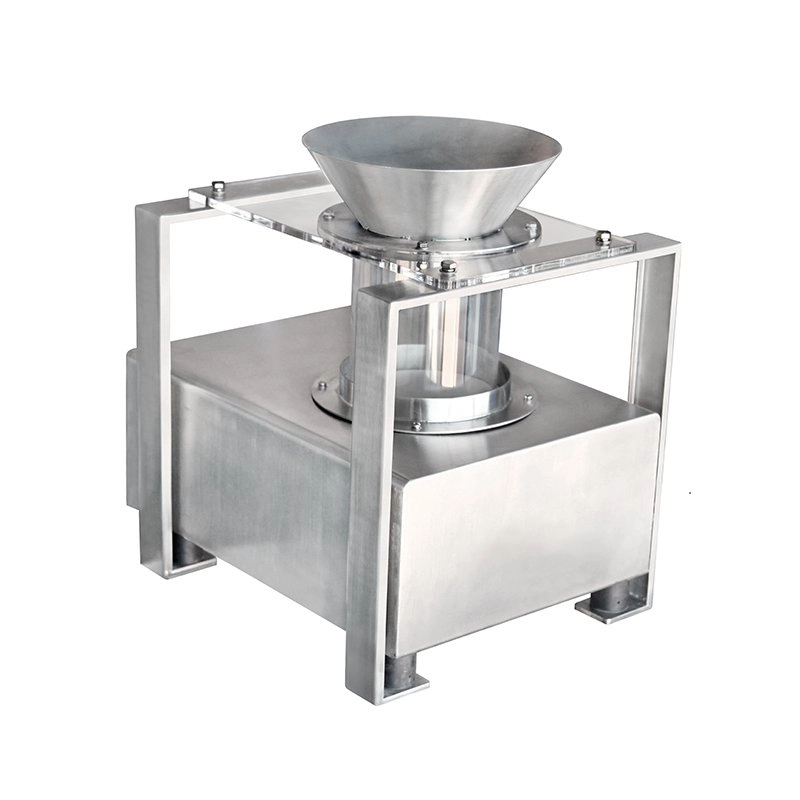
Dropped Metal Detector for Powder Granules For Food Industry
Enhance food safety with Kenwei’s Dropped Metal Detector for Powder Granules. This advanced food metal detector ensures precise detection in the food industry, safeguarding products and maintaining high quality standards throughout processing.
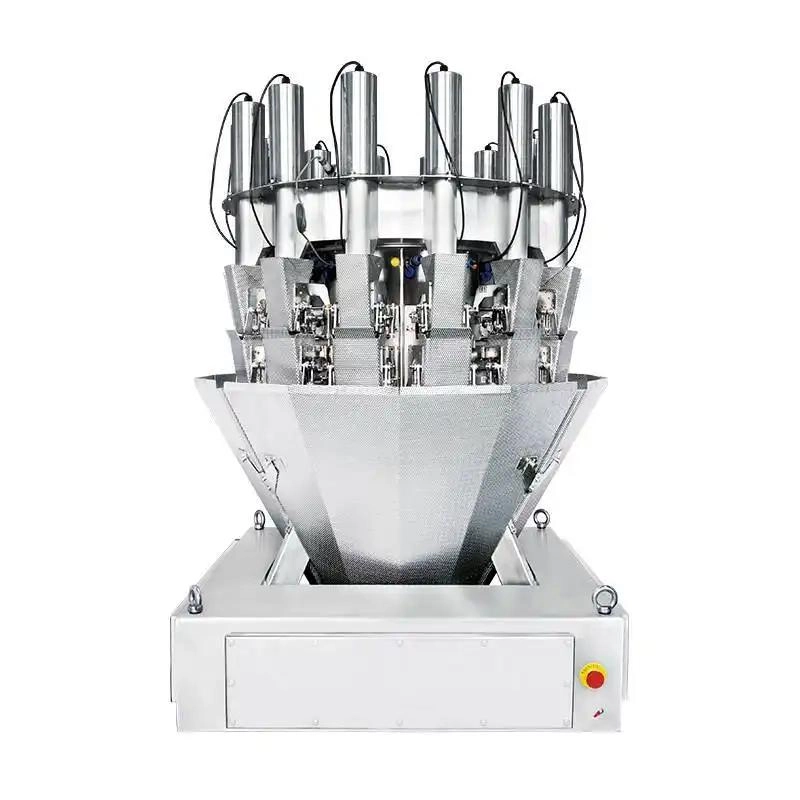
14 Heads Vertical Single Screw Feeding Pickles Weigher backups
This type of weigher is designed to handle the unique characteristics of pickles, ensuring precise measurements for packaging and distribution. It uses a vertical single screw mechanism to feed the pickles into the weighing system, allowing for efficient and consistent weighing. This technology is particularly useful in food processing and packaging facilities where precise portioning is essential for quality control and customer satisfaction. This specialized equipment is perfect for accurately measuring and dispensing pickles in a production line or packaging facility. The vertical design allows for efficient and precise filling of containers, while the single screw feeding mechanism ensures consistent and reliable weighing.
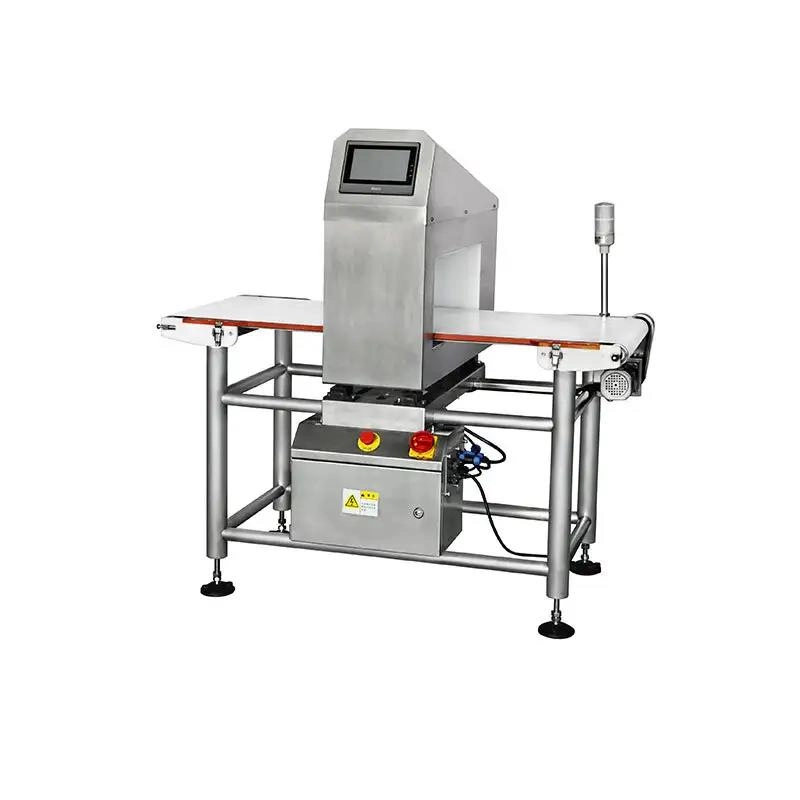
Food Metal Detector Manufacturer For Reject Defective Products G5020
The G5020 multi-frequency metal detector features a specialized conveyor belt designed to reduce contamination risks, ensure smooth operation, and maintain high detection sensitivity. It is easy to disassemble for convenient maintenance. Ideal for detecting metal contaminants in food, pharmaceuticals, spices, plastics, electronics, textiles, toys, handicrafts, and more.
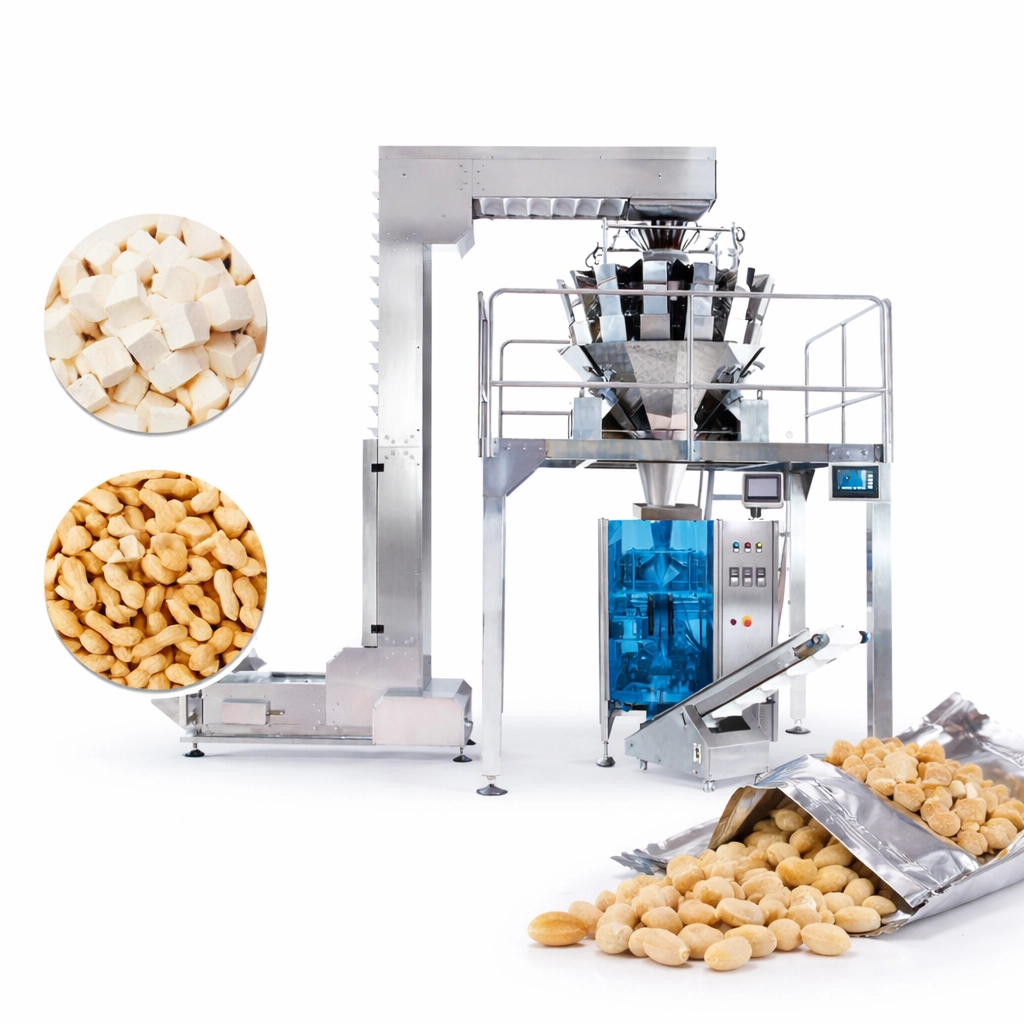
High-Precision Weighing & Packaging for Granular Products
The Granular Food Packing Machine is a fully automated solution designed for accurate weighing, filling, and packaging of various granular food products. Integrated with a multihead weigher and advanced packaging system, it ensures high speed, precision, and hygiene standards for modern food production.
Get in touch with us
If you have any comments or good suggestions, please leave us a message, later our professional staff will contact you as soon as possible.
Kenwei
Kenwei
Kenwei multi weigh
Kenwei
Kenwei
Kenwei