






Compliance Matters: Food Safety for Powder Packing Machines
This article explains critical food safety and compliance requirements for powder packing machines, focusing on hygienic design, materials, cleaning, calibration, and documentation. It shows how the Kenwei JW-B20 Semi-Automatic Multi-Function Packaging Machine with Linear Weigher helps manufacturers meet regulatory and industry standards for powders and granules.
- Compliance Matters: Food Safety for Powder Packing Machines
- Why compliance and food safety are critical for Powder Packing Machine operations
- About the product: Semi Automatic Multi-function Single Bucket Conveying Powder granule food Packaging Machine With Linear Weigher JW-B20
- Regulatory landscape affecting Powder Packing Machine compliance
- Practical implications for operations using a Powder Packing Machine
- Hygienic design principles for powder packaging equipment
- How JW-B20 aligns with hygienic design goals
- Cleaning strategies and allergen control for powder lines
- Operational controls and written procedures
- Calibration, weighing accuracy, and how linear weighers aid compliance
- Best practices for calibration and verification
- Validation and verification: proving your Powder Packing Machine is compliant
- Record-keeping and traceability
- Maintenance, spare parts, and lifecycle considerations for Powder Packing Machine compliance
- Training and personnel hygiene
- Comparative overview: JW-B20 vs. typical standard powder packing machines
- Audit readiness and responding to regulators
- Brand advantages when choosing compliant equipment like the JW-B20
- FAQ — Compliance and Food Safety for Powder Packing Machines
- Q: What are the most common contamination risks with powder packing?
- Q: How often should I calibrate the linear weigher on my Powder Packing Machine?
- Q: Can the JW-B20 handle allergen-sensitive production?
- Q: What cleaning method is recommended for powders that react to water (e.g., milk powder)?
- Q: What documentation should I keep to demonstrate compliance for a Powder Packing Machine?
- Contact sales / View the product
- Authoritative references

Compliance Matters: Food Safety for Powder Packing Machines
Why compliance and food safety are critical for Powder Packing Machine operations
Manufacturers that package powders and granules face unique contamination and regulatory risks. Product cross-contamination, microbial growth in rehydrated powders, foreign material ingress, and allergen carryover can cause recalls, regulatory fines, and brand damage. For businesses using a Powder Packing Machine, such as the Kenwei JW-B20, understanding compliance requirements—and designing operations around hygiene, traceability, and validation—is essential to protect consumers and maintain market access. After ensuring safety compliance, buyers typically compare equipment structures, leading to comparing single bucket vs multihead powder packing solutions based on throughput and budget.
About the product: Semi Automatic Multi-function Single Bucket Conveying Powder granule food Packaging Machine With Linear Weigher JW-B20
The Kenwei JW-B20 Semi-Automatic Multi-Function Packaging Machine with Linear Weigher is ideal for powders and granules like sugar, salt, rice, coffee, and milk powder. It automates feeding, weighing, and output with high accuracy and efficiency. Compact and cost-effective, it suits various bag types not supported by standard machines, making it perfect for flexible, space-saving packaging needs.
Regulatory landscape affecting Powder Packing Machine compliance
Understanding applicable regulations is the first step to compliance. Key frameworks and standards include ISO 22000 (food safety management), HACCP principles (Codex Alimentarius), the U.S. Food Safety Modernization Act (FSMA), EU food contact regulations (EC 1935/2004), and local food safety authorities (FDA, EFSA, etc.). Compliance means designing equipment, procedures, and documentation that meet these frameworks—especially in contamination control, traceability, and cleaning verification.
Practical implications for operations using a Powder Packing Machine
Operators must ensure equipment materials are food-contact safe, seals and enclosures prevent ingress of foreign matter, and calibration/verification schedules are documented. For powders, static, dust management, and dust-tight enclosures are especially important to prevent cross-contamination and to meet occupational safety rules for airborne particulates.
Hygienic design principles for powder packaging equipment
Hygienic equipment design reduces harborage points for contamination and simplifies cleaning. For Powder Packing Machines, prioritize the following:
- Material selection: food-grade stainless steel (304 or 316L depending on corrosiveness and product acidity).
- Smooth, crevice-free surfaces with sanitary welds; avoid exposed insulation and porous surfaces.
- Easy disassembly: components that contact product (feed buckets, chutes, hoppers) should be removable without tools for inspection and cleaning.
- Enclosures and dust control: sealed housings, local exhaust ventilation, and HEPA or cartridge filters where needed to control airborne powder and protect fill points.
- Cleanability: design for dry-clean or validated wet-clean procedures depending on product properties; avoid dead-legs and horizontal ledges where powder can accumulate.
How JW-B20 aligns with hygienic design goals
The JW-B20’s compact architecture and removable product-contact components make it suitable for facilities that require frequent cleaning or product changeovers. Its linear weigher design supports high-accuracy dosing with minimal product retention, reducing contamination risk and simplifying verification.
Cleaning strategies and allergen control for powder lines
Cleaning a powder line is different from wet-food lines. Dry-cleaning and validated cleaning protocols are common for powders that react with water (e.g., milk powder). Key elements include:
- Validated dry cleaning: vacuuming with industrial HEPA-filtered units, compressed air only where safe and controlled, and mechanical brushing for crevices.
- Segmented allergen zones: define dedicated lines or rigorous changeover protocols for allergen-containing products.
- Scheduled deep-cleaning: periodic wet-cleaning (if product allows) for complete sanitization and microbiological testing to confirm cleanliness.
Operational controls and written procedures
Every cleaning approach must be codified in written standard operating procedures (SOPs) with step-by-step instructions, responsible person, frequency, and acceptance criteria. Documentation demonstrates compliance to auditors and regulators and supports traceability in a recall scenario.
Calibration, weighing accuracy, and how linear weighers aid compliance
Accuracy is both a food safety and regulatory issue—incorrect fill weights can lead to economic fraud allegations or poor product performance. For Powder Packing Machines, weighers must be calibrated and validated regularly. Linear weighers, like the JW-B20’s, offer these advantages:
- High repeatable accuracy suitable for powders and granules.
- Faster multi-head or linear feeding which reduces product dwell time and reduces risk of segregation or compaction errors.
- Built-in diagnostics and alarms to flag out-of-tolerance fills immediately.
Best practices for calibration and verification
Implement a documented calibration schedule using traceable weights, trained technicians, and statistical trending. Keep calibration certificates and logbooks for regulatory inspections. Use in-line check-weighing and metal detectors where applicable for continual quality assurance.
Validation and verification: proving your Powder Packing Machine is compliant
Validation confirms that the machine and procedures produce the intended safe outcome; verification ensures continued performance. For powder packaging, this includes:
- Installation Qualification (IQ): confirm equipment installed per manufacturer instructions.
- Operational Qualification (OQ): verify machine operates across intended parameters (speeds, temperatures, humidity ranges for hygroscopic powders).
- Performance Qualification (PQ): demonstrate the system meets process requirements with real product runs, including weight accuracy, sealing quality, and dust controls.
Record-keeping and traceability
Maintain batch records, calibration logs, cleaning logs, and deviation reports. For FSMA and EU compliance, data must be accessible for inspections. Electronic record systems with audit trails improve integrity and support rapid recall actions when necessary.
Maintenance, spare parts, and lifecycle considerations for Powder Packing Machine compliance
Planned maintenance prevents unexpected contamination risks associated with wear or failure. Key activities include inspection of seals, bearings, feeders, vibratory plates, and filter elements. Use OEM-approved spare parts to ensure material compatibility and hygienic fit.
Training and personnel hygiene
Even the best machine fails when operators are not trained. Training should cover hygienic handling, PPE for powder handling, allergen management, cleaning procedures, and emergency stop/containment actions. Personnel hygiene—gloves, hairnets, and restricted access—reduces the human vector for contamination.
Comparative overview: JW-B20 vs. typical standard powder packing machines
The table below highlights practical differences that matter for compliance, validation, and operational efficiency.
| Feature | Typical Standard Powder Packing Machine | Kenwei JW-B20 Semi-Automatic |
|---|---|---|
| Weighing method | Basic auger or simple volumetric filler | Linear weigher with high accuracy for powders and granules |
| Suitable bag types | Limited bag formats; often requires change parts | Supports various bag types including those not supported by standard machines |
| Cleanability | Often harder to disassemble; more dead zones | Compact, removable contact parts for easier cleaning |
| Footprint and flexibility | Larger footprint; less flexible | Space-saving, ideal for small to mid-size production lines |
| Automation level | Less automated for feeding/weighing | Automates feeding, weighing, and output—semi-automatic integration |
| Cost-effectiveness | May require higher capex for multi-format needs | Cost-effective for flexible, low-to-mid volume applications |
Audit readiness and responding to regulators
To be audit-ready, maintain an up-to-date HACCP plan, ISO or food safety management certificates, training records, cleaning and calibration logs, supplier declarations for contact materials, and validated SOPs. If a regulator queries your Powder Packing Machine line, provide IQ/OQ/PQ documentation, deviation logs, and corrective action reports promptly.
Brand advantages when choosing compliant equipment like the JW-B20
Choosing equipment designed with food safety in mind reduces risk, speeds validation, and cuts downtime. The JW-B20 provides practical advantages for compliance-focused businesses:
- High-accuracy linear weighing reduces product variance and supports compliance with labeling/weight laws.
- Compact design simplifies sanitary layout and reduces cleaning time.
- Flexible bag format support lowers the need for multiple machines, simplifying validation efforts.
- Cost-effective purchase and operation help small-to-medium producers implement compliant processes without excessive capital outlay.
FAQ — Compliance and Food Safety for Powder Packing Machines
Q: What are the most common contamination risks with powder packing?
A: Common risks include foreign material ingress (metal, plastic, wood), cross-allergen contamination, microbial contamination (usually from moisture intrusion), and dust-related airborne contamination. Proper machine enclosures, filtration, changeover protocols, and cleaning reduce these risks.
Q: How often should I calibrate the linear weigher on my Powder Packing Machine?
A: Calibration frequency depends on usage intensity and regulatory expectations. A best practice is a documented routine: daily or per-shift check-weighs, weekly traceable calibration checks, and full calibration after significant maintenance or product changes. Maintain certificates for compliance audits.
Q: Can the JW-B20 handle allergen-sensitive production?
A: Yes—as long as segregated production schedules, validated cleaning procedures, and strict personnel controls are in place. For high-risk allergens, dedicated lines are recommended, but JW-B20’s easy disassembly and compact footprint facilitate thorough changeovers when segregation is not feasible.
Q: What cleaning method is recommended for powders that react to water (e.g., milk powder)?
A: For hygroscopic or water-reactive powders, validated dry-cleaning procedures—industrial vacuuming with HEPA filters, mechanical brushing—are preferred. Periodic controlled wet cleaning after full emptying and drying may be appropriate but must be validated to prevent clumping or microbiological issues.
Q: What documentation should I keep to demonstrate compliance for a Powder Packing Machine?
A: Keep SOPs for cleaning and changeovers, IQ/OQ/PQ records, calibration certificates, batch records, maintenance logs, allergen control plans, HACCP plan, and personnel training records. Electronic records with audit trails are beneficial.
Contact sales / View the product
To evaluate the Kenwei JW-B20 for your production line or request documentation (IQ/OQ/PQ, material declarations, cleaning guides), contact our sales team or request a product datasheet. Our specialists can advise on validation planning, spare parts, and training tailored to your compliance needs.
Product brief:
The Kenwei JW-B20 Semi-Automatic Multi-Function Packaging Machine with Linear Weigher is ideal for powders and granules like sugar, salt, rice, coffee, and milk powder. It automates feeding, weighing, and output with high accuracy and efficiency. Compact and cost-effective, it suits various bag types not supported by standard machines, making it perfect for flexible, space-saving packaging needs.
Authoritative references
- World Health Organization — Food Safety: https://www.who.int/health-topics/food-safety
- Codex Alimentarius (FAO/WHO) — HACCP and food safety guidance: https://www.fao.org/fao-who-codexalimentarius/en/
- ISO — ISO 22000 Food safety management: https://www.iso.org/iso-22000-food-safety-management.
- European Union — Regulation (EC) No 1935/2004 on materials and articles intended to come into contact with food: https://eur-lex.europa.eu/eli/reg/1935/2004/oj
- U.S. Food and Drug Administration (FDA) — Food safety and FSMA: https://www.fda.gov/food/food-safety-modernization-act-fsma
- European Food Safety Authority (EFSA): https://www.efsa.europa.eu/
- NSF International — Food equipment and safety standards: https://www.nsf.org/
Tags
vffs packaging machines
vffs packaging machines
multihead weigher
multihead weigher
industrial multihead weighers
industrial multihead weighers
commercial food packaging machine
commercial food packaging machine
food packaging machine
food packaging machine
high speed linear weigher
high speed linear weigher
Recommended for you
Top 10 food packing machine Manufacturers and Supplier Brands in America
Top 10 pouch packaging machine Manufacturers and Supplier Brands
Where to Buy food industry metal detectors
Vendor Evaluation: Key KPIs for Buying an Economic VFFS
Prdoucts Categories
Question you may concern
About Logistics
Do I need to prepare my facility for the delivery of large machines?
Yes, large machines often require special preparations for delivery, including ensuring adequate space for unloading and installation.
About Solution suggestions
What are Kenwei’s primary solutions for industrial weighing and packaging?
Kenwei provides comprehensive solutions for automated weighing and packaging, including multi-head weighers, linear weighers, check weighers, metal detectors, and packing machines. These solutions are tailored to improve speed, accuracy, and efficiency in various industries such as food, pharmaceuticals, and chemicals.
About After Sales Support
How about the after-sales service?
Warranty :2 years
How can I get technical support for my Kenwei machine?
You can contact Kenwei's technical support team via email, phone, or through our website.
About Product choice
How do I choose the right product for my business?
Choosing the right machine depends on several factors:
Product Type: Different machines are suited for different products (e.g., powder, granules, etc.).
Production Capacity: Consider the volume of products you need to process and the speed requirements.
Customization: If you have specific needs, such as the need for unique features or sizes, we offer customization options.
You may also like
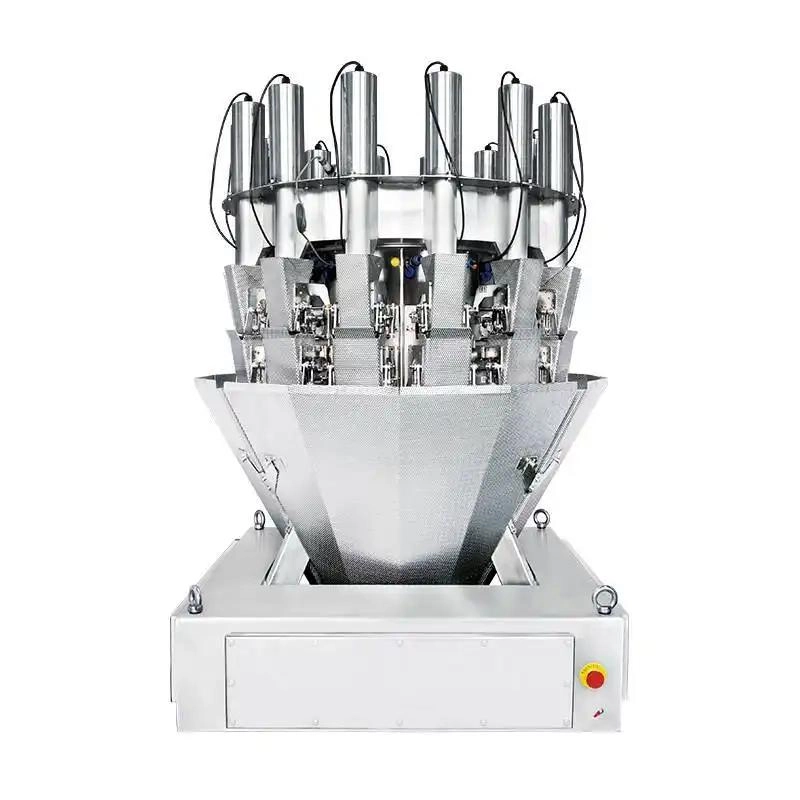
14 Heads Vertical Single Screw Feeding Pickles Weigher backups
This type of weigher is designed to handle the unique characteristics of pickles, ensuring precise measurements for packaging and distribution. It uses a vertical single screw mechanism to feed the pickles into the weighing system, allowing for efficient and consistent weighing. This technology is particularly useful in food processing and packaging facilities where precise portioning is essential for quality control and customer satisfaction. This specialized equipment is perfect for accurately measuring and dispensing pickles in a production line or packaging facility. The vertical design allows for efficient and precise filling of containers, while the single screw feeding mechanism ensures consistent and reliable weighing.
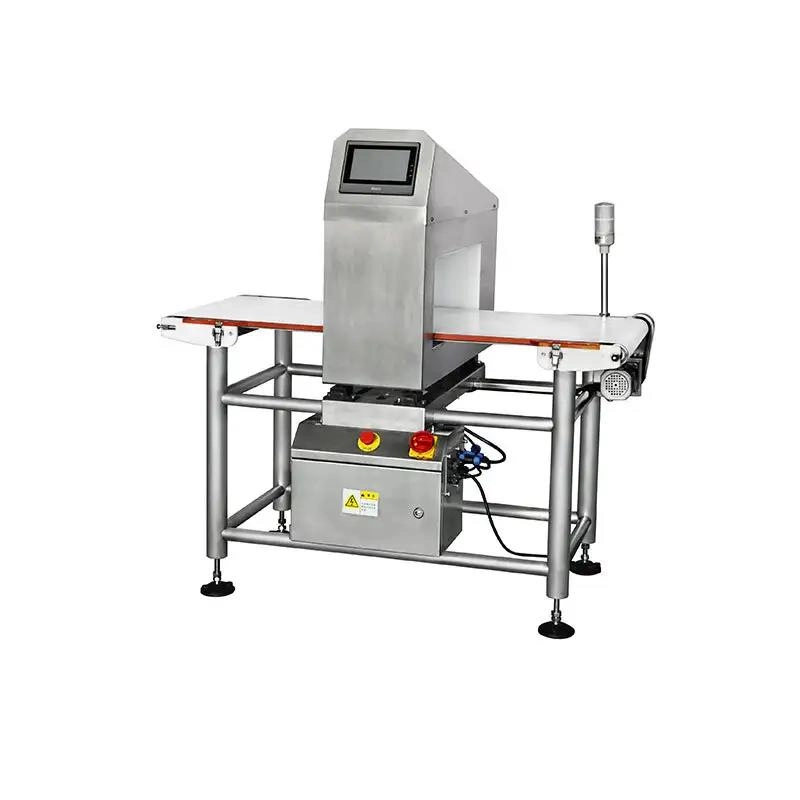
Food Metal Detector Manufacturer For Reject Defective Products G5020
The G5020 multi-frequency metal detector features a specialized conveyor belt designed to reduce contamination risks, ensure smooth operation, and maintain high detection sensitivity. It is easy to disassemble for convenient maintenance. Ideal for detecting metal contaminants in food, pharmaceuticals, spices, plastics, electronics, textiles, toys, handicrafts, and more.
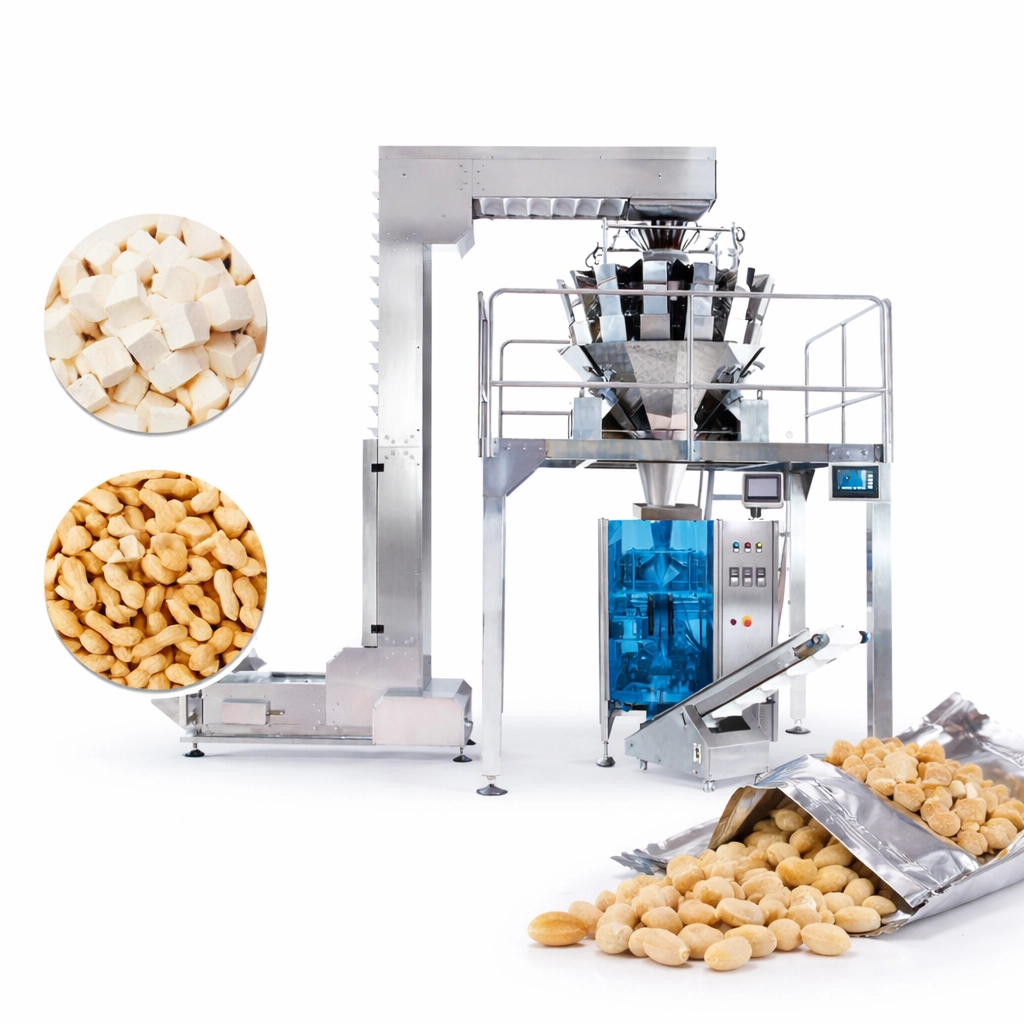
High-Precision Weighing & Packaging for Granular Products
The Granular Food Packing Machine is a fully automated solution designed for accurate weighing, filling, and packaging of various granular food products. Integrated with a multihead weigher and advanced packaging system, it ensures high speed, precision, and hygiene standards for modern food production.
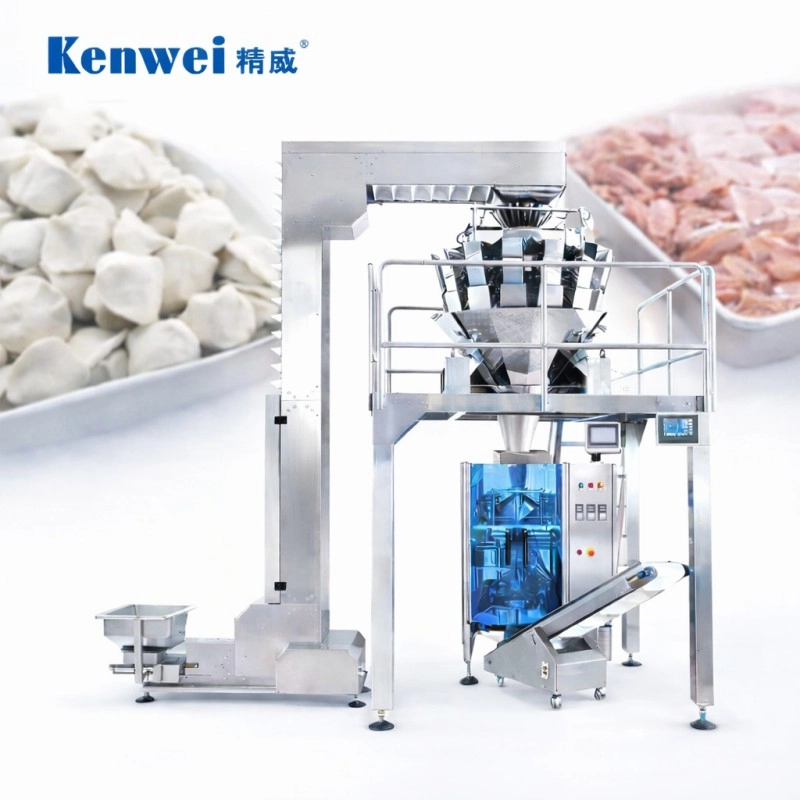
Vertical Frozen Food Packaging Machine for IQF & Frozen Products JW-B1
The Kenwei JW-B1 Vertical Frozen Food Packaging Machine is designed for IQF and frozen products, ensuring efficient, airtight packing. This vertical packing machine boosts productivity with precision sealing, ideal for frozen food packaging needs in the food industry.
Get in touch with us
If you have any comments or good suggestions, please leave us a message, later our professional staff will contact you as soon as possible.
Kenwei
Kenwei
Kenwei multi weigh
Kenwei
Kenwei
Kenwei