






Choosing detectors that pass industry contamination audits
Selecting a reliable metal detector for the food industry is essential to pass contamination audits and protect brand safety. This guide explains how detectors handle aluminum foil packaging, audit criteria (ISO/FDA), performance specs, calibration, installation, and validation best practices—featuring the Metal Detector for Aluminum Foil in the Food Industry for Accurate Contamination Detection.
- Understanding audit requirements and the role of metal detection
- What auditors look for in contamination control
- Why the right metal detector matters for audit success
- Regulatory and industry references
- Technical selection: choosing a metal detector for food industry and aluminum foil packaging
- Key performance criteria for foil-packaged products
- Product spotlight: Metal Detector for Aluminum Foil in the Food Industry for Accurate Contamination Detection
- Comparing detector types and suitability
- Validation, calibration and routine monitoring to pass audits
- Designing a validation protocol
- Routine calibration and verification
- Integration with preventive controls and CCPs
- Practical installation, operations and troubleshooting
- Installation best practices to reduce false rejects
- Operator training and documentation
- Troubleshooting common problems
- Case study and performance benchmarks
- Representative detection performance for foil-packaged products
- Documenting performance for audits
- References and deeper reading
- Frequently Asked Questions (FAQ)
- Q: Can metal detectors reliably detect metal through aluminum foil packaging?
- Q: How often should I validate and verify my metal detector?
- Q: What documentation do auditors expect regarding metal detection?
- Q: What if my foil-packaged product still causes many false rejects?
- Q: Are there industry standards for acceptable detection sizes?

The following article provides a concise, audit-focused overview of selecting and validating metal detection systems that meet industry contamination-audit requirements. It highlights technical, operational, and regulatory considerations so food manufacturers can choose a metal detector for food industry applications that reliably detects contaminants in challenging aluminum foil-packaged products while minimizing false rejects and preserving yield.
Understanding audit requirements and the role of metal detection
What auditors look for in contamination control
Contamination audits assess whether a food facility can consistently prevent, detect, and remove foreign bodies. Auditors evaluate documented hazard analyses, preventive controls, equipment suitability, validation records, and routine monitoring. Often they reference international standards such as ISO 22000 for food safety management and regulatory guidance from agencies like the U.S. Food and Drug Administration (FDA). For a concise overview of ISO food safety standards, see ISO's official page ISO 22000. For FDA food safety principles and regulation context, see the FDA's food page U.S. FDA - Food.
Why the right metal detector matters for audit success
A properly specified and validated metal detector is tangible evidence of a functioning preventive control. Auditors expect equipment that is appropriate to the product, packaging, and production environment, with validation records showing detection capability, routine checks (daily/shift), sensitivity verification using test pieces, and corrective action logs. Using a detector designed for the specific challenge of aluminum-foil packaging reduces false positives and ensures true positives are found—key for both consumer safety and audit outcomes.
Regulatory and industry references
Auditors often accept guidance and benchmarks from recognized organizations. In addition to ISO and FDA, industry groups like the Institute of Food Technologists (IFT) and technical resources such as the metal detector overview on Wikipedia (Metal detector (Wikipedia)) provide useful background. When planning for audits, align equipment selection, validation, and documentation with these references.
Technical selection: choosing a metal detector for food industry and aluminum foil packaging
Key performance criteria for foil-packaged products
Aluminum foil and metallized films create significant signal noise for conventional detectors. Choosing a metal detector for food industry use with foil-packaged items requires sensors and signal-processing that can ignore the background conductive signal of the packaging while still detecting small ferrous or non-ferrous metal fragments. Important specs include sensitivity to small ferrous and non-ferrous pieces, product effect compensation (signal phase and amplitude filtering), adjustable rejection thresholds, and stable performance at your production line speed.
Product spotlight: Metal Detector for Aluminum Foil in the Food Industry for Accurate Contamination Detection
Metal Detector for Aluminum Foil in the Food Industry for Accurate Contamination Detection
The 2415 Metal Detector for Aluminum Foil is equipped with high-sensitivity sensors that effectively filter out signals from aluminum packaging, ensuring precise detection of magnetic metal contaminants. Ideal for detecting foreign bodies in aluminum foil-packaged items such as coffee bags, peanuts, dried meats, chocolate, and more. This versatile metal detector offers adjustable settings, with a maximum width of 24mm and height ranging from 20-150mm, making it suitable for a wide variety of aluminum foil packaging applications.
Comparing detector types and suitability
Below is a practical comparison of detector approaches to help you decide. This table focuses on suitability for aluminum foil-packaged food:
| Detector Type | Strengths | Limitations | Suitability for Aluminum Foil |
|---|---|---|---|
| Standard Coil Metal Detector | Cost-effective, simple | High false rejects with foil; poor compensation | Low |
| Advanced Phase-Shift/Signal Processing Detector | Good foil compensation, higher sensitivity | Higher cost; requires tuning | High |
| Dual-Frequency / Multi-Frequency Detector | Optimized for mixed materials and foil; best detection balance | Most complex and expensive | Very High |
For many aluminum foil-packaged products, an advanced detector such as the 2415 model—designed specifically with high-sensitivity sensors and foil-signal filtering—provides a practical balance of performance and operational usability.
Validation, calibration and routine monitoring to pass audits
Designing a validation protocol
Auditors expect a documented validation showing the detector can reliably find the smallest specified metal threat for a given product and packaging. A basic validation protocol includes:
- Defining the threat size (e.g., 1.0 mm ferrous, 1.5 mm non-ferrous) based on product risk assessment;
- Using realistic test pieces placed in normal packaging positions across production runs;
- Testing multiple product orientations and common packaging variants (e.g., different foil thicknesses);
- Recording pass/fail results and sensitivity settings, with at least 95% detection confirmation across repeated tests;
- Including environmental condition records (temperature, humidity) when relevant.
- Test-piece dimensions and material;
- Location and orientation used during verification;
- Operator performing the check and timestamp;
- Results and any corrective actions taken for failures.
- Mount the detector on a stable frame isolated from heavy mechanical vibration.
- Maintain consistent conveyor speed and centering; inconsistent presentation increases variation.
- Keep cable runs away from motors, frequency inverters, and other EMI sources; if unavoidable, use shielded cables and grounding best practices.
- Set adequate product effect compensation for foil packaging during commissioning to suppress packaging signal while retaining contaminant sensitivity.
- Frequent false rejects: check conveyor stability, change product presentation, re-run product effect compensation.
- Missed detections: verify calibration with known test pieces, inspect coils for damage, review rejection timing (mechanical reject must align with detection signal).
- Intermittent operation: check for EMI sources or power supply variation; examine connectors and grounding.
Maintain these validation records for auditors and amend validation when product or packaging changes occur.
Routine calibration and verification
Routine verification frequency is typically daily or per shift, depending on throughput and risk. Verification should use standardized test pieces and follow a written procedure that documents:
Calibration should be performed by trained technicians and recorded. Many food safety auditors look for routine control charts or logs that demonstrate long-term stability.
Integration with preventive controls and CCPs
Metal detection is commonly designated as a Critical Control Point (CCP) or a strong preventive control depending on your HACCP plan. Integrate detector verification into your HACCP or Food Safety Plan, aligning tolerances, reject action plans, and product diversion rules with your risk assessment. For HACCP framework references, consult authoritative sources such as the FDA and ISO food standards referenced earlier.
Practical installation, operations and troubleshooting
Installation best practices to reduce false rejects
Correct installation reduces sensitivity drift and false rejects caused by vibration, electromagnetic interference (EMI), or conveyor misalignment. Key points:
Operator training and documentation
Well-trained operators reduce human error during verification and responding to rejects. Training should cover daily verification, how to safely introduce test pieces, interpreting logs, and immediate corrective actions if the detector trips unexpectedly. Keep operating procedures and quick-reference checklists at the line for audit and continuity.
Troubleshooting common problems
Common issues and rapid checks:
Case study and performance benchmarks
Representative detection performance for foil-packaged products
Below is an illustrative benchmark table showing detection performance for common contaminants and foil-packaged products when using an advanced detector tuned for foil compensation (results are representative and will vary by product mass, packaging thickness, and detector model):
| Product Type | Test Piece | Detection Rate (target) | Notes |
|---|---|---|---|
| Ground coffee in aluminized bags | 1.0 mm ferrous | ≥95% | Requires tight phase adjustment due to dense product effect |
| Chocolate bars in foil wrap | 1.5 mm non-ferrous | ≥90% | Multi-frequency improves non-ferrous detection |
| Dried meat in vacuum foil pouches | 1.0 mm ferrous | ≥95% | Vacuum compaction can change presentation—validate accordingly |
Documenting performance for audits
When preparing for audits, provide:
- Validation reports including test methods, raw results, and acceptance criteria;
- Routine verification logs with timestamps and operator signatures;
- Maintenance history and calibration certificates;
- HACCP/Food Safety Plan sections tying the detector to preventive controls and corrective actions.
References and deeper reading
For more technical and regulatory context, consult these resources:
- ISO 22000 food safety management overview: ISO 22000
- U.S. Food and Drug Administration (general food guidance): FDA - Food
- General metal detector technical background: Metal detector (Wikipedia)
Frequently Asked Questions (FAQ)
Q: Can metal detectors reliably detect metal through aluminum foil packaging?
A: Yes—when the detector uses high-sensitivity sensors and advanced signal processing specifically designed for conductive packaging. Devices like the 2415 Metal Detector for Aluminum Foil implement foil-signal filtering to suppress packaging interference and retain sensitivity to metal contaminants.
Q: How often should I validate and verify my metal detector?
A: Perform a full validation when the detector is installed or when you change product/packaging. Routine verification should be done daily or per shift based on your risk assessment and audit expectations. Always document results and corrective actions.
Q: What documentation do auditors expect regarding metal detection?
A: Auditors expect documented validation protocols and results, daily/shift verification logs, maintenance and calibration records, SOPs for test-piece use, and integration of metal detection into your HACCP or Food Safety Plan (showing CCP designation or equivalent preventive control).
Q: What if my foil-packaged product still causes many false rejects?
A: Review installation stability, product presentation, and detector tuning. Consider upgrading to a detector with multi-frequency or improved phase compensation, retraining operators on verification procedures, and reviewing packaging materials and thickness variance that may change the product effect.
Q: Are there industry standards for acceptable detection sizes?
A: Acceptable detection sizes are determined by your hazard analysis and product risk assessment rather than a single universal number. Auditors expect a documented rationale linking chosen detection limits to consumer safety and product risk. Use recognized references and standards (e.g., ISO 22000) to support your decisions.
If you need a detector tailored for aluminum foil packaging, explore the Metal Detector for Aluminum Foil in the Food Industry for Accurate Contamination Detection (model 2415) for high-sensitivity, foil-compensation performance. For consultation, demonstration, or to request specifications and compliance documentation, please contact our sales team or view the product page.
Tags
food packing machine for sale
food packing machine for sale
Parallel manipulator
Parallel manipulator
metal detector sensitivity food industry
metal detector sensitivity food industry
Finished Product Conveyor
Finished Product Conveyor
dry food packaging machine
dry food packaging machine
granular snack packing machine for chips nuts seeds
granular snack packing machine for chips nuts seeds
Recommended for you
How to Integrate a Food Metal Detector with Multihead Weighers
Common Multihead Weigher Problems and Fixes 2026
Calibrating a Multihead Weigher: Simple Steps to Improve Accuracy
The B2B Buyer’s Guide to metal detectors for food industry
Prdoucts Categories
Question you may concern
About Product choice
What is the difference between a multi-head weigher and a linear weigher?
Multi-head Weigher: Ideal for high-speed and high-precision weighing of products with irregular shapes or varying sizes. It provides multiple weighings in parallel for faster processing.
Linear Weigher: It is suitable for powder and granule. It is typically slower than a multi-head weigher but is effective for certain types of applications that require more continuous flow or controlled weighing.
Are there any additional features available for Kenwei machines?
Yes, we offer a variety of optional features for customization, such as: advanced touchscreen interfaces, multiple language support and so on.
About Solution suggestions
Can Kenwei provide a solution for mixed-product weighing?
Yes, Kenwei’s multi-head weighers are ideal for mixed-product weighing. They can handle a variety of products in different shapes and sizes, ensuring that the correct portions are weighed and packaged quickly.
Can Kenwei solutions be used for both manual and automated packing lines?
Yes, Kenwei machines can be used in both manual and automated packing lines. We can provide integrated systems that work alongside manual labor or fully automated systems depending on your production requirements.
About After Sales Support
How do I claim warranty service?
To claim warranty service, please contact our customer support team with your machine’s product code and a description of the issue. If applicable, we may request photos or videos of the issue to facilitate troubleshooting.
You may also like
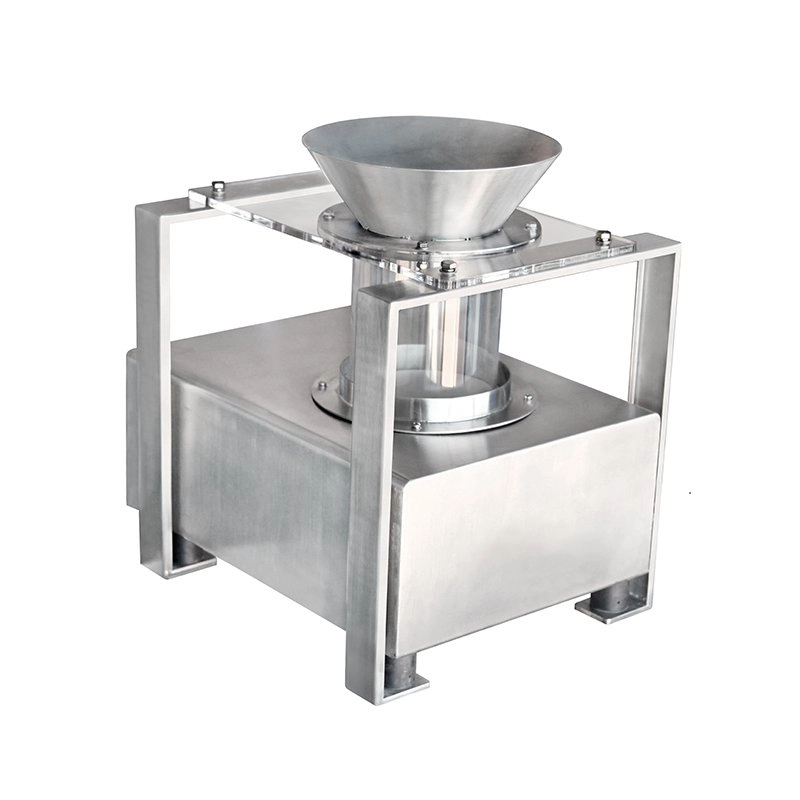
Dropped Metal Detector for Powder Granules For Food Industry
Enhance food safety with Kenwei’s Dropped Metal Detector for Powder Granules. This advanced food metal detector ensures precise detection in the food industry, safeguarding products and maintaining high quality standards throughout processing.
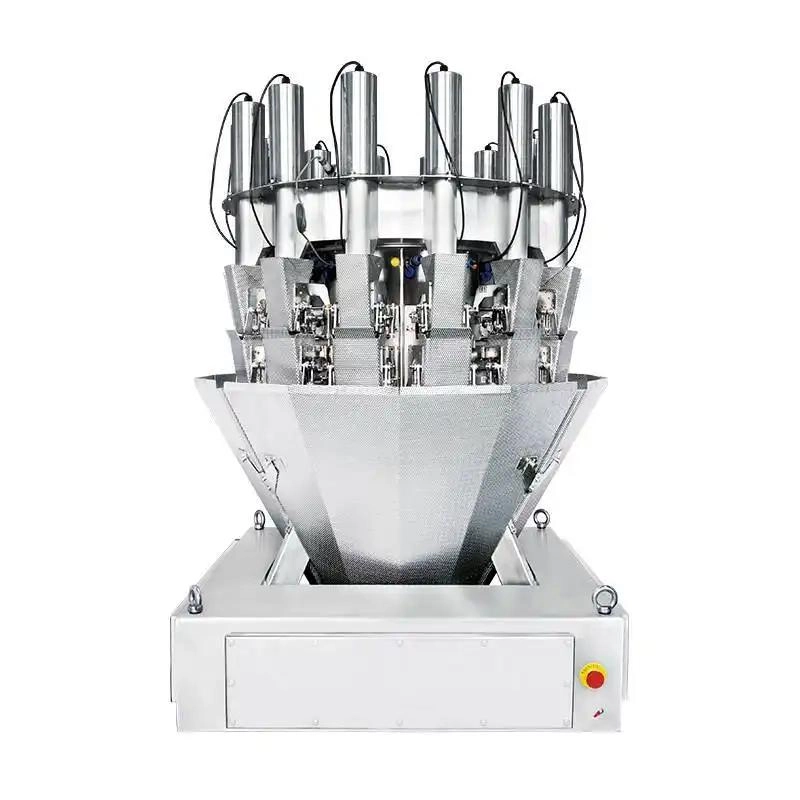
14 Heads Vertical Single Screw Feeding Pickles Weigher backups
This type of weigher is designed to handle the unique characteristics of pickles, ensuring precise measurements for packaging and distribution. It uses a vertical single screw mechanism to feed the pickles into the weighing system, allowing for efficient and consistent weighing. This technology is particularly useful in food processing and packaging facilities where precise portioning is essential for quality control and customer satisfaction. This specialized equipment is perfect for accurately measuring and dispensing pickles in a production line or packaging facility. The vertical design allows for efficient and precise filling of containers, while the single screw feeding mechanism ensures consistent and reliable weighing.
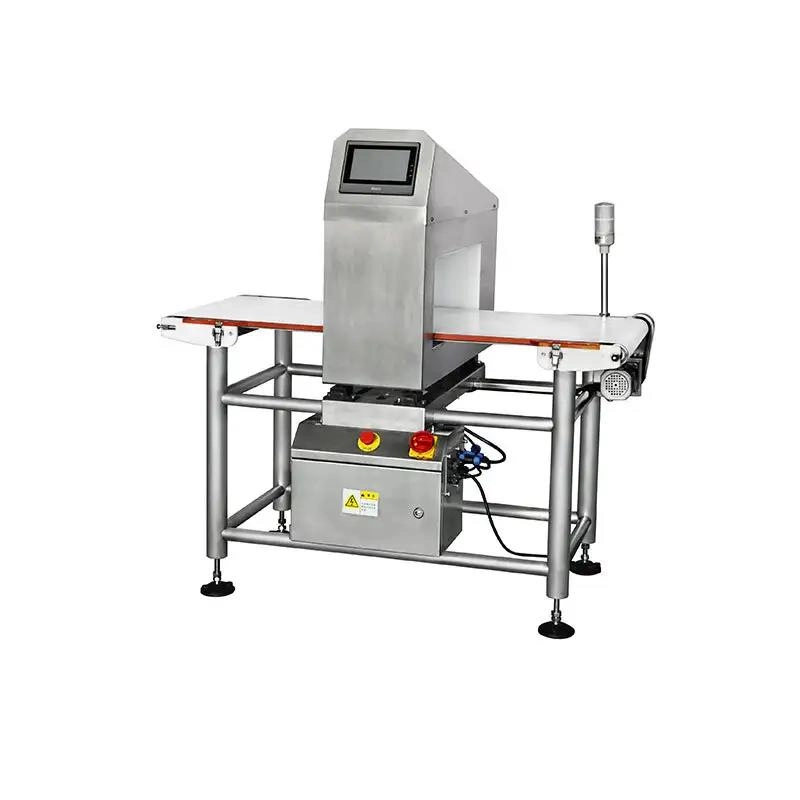
Food Metal Detector Manufacturer For Reject Defective Products G5020
The G5020 multi-frequency metal detector features a specialized conveyor belt designed to reduce contamination risks, ensure smooth operation, and maintain high detection sensitivity. It is easy to disassemble for convenient maintenance. Ideal for detecting metal contaminants in food, pharmaceuticals, spices, plastics, electronics, textiles, toys, handicrafts, and more.
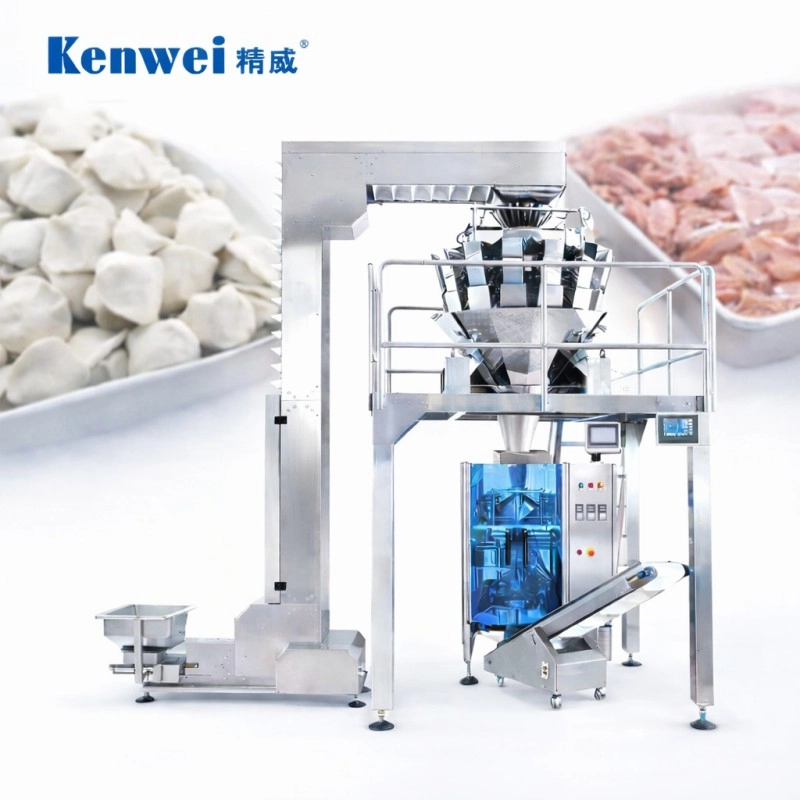
Vertical Frozen Food Packaging Machine for IQF & Frozen Products JW-B1
The Kenwei JW-B1 Vertical Frozen Food Packaging Machine is designed for IQF and frozen products, ensuring efficient, airtight packing. This vertical packing machine boosts productivity with precision sealing, ideal for frozen food packaging needs in the food industry.
Get in touch with us
If you have any comments or good suggestions, please leave us a message, later our professional staff will contact you as soon as possible.
Kenwei
Kenwei
Kenwei multi weigh
Kenwei
Kenwei
Kenwei