


Snack Packing Machine Price: MOQ, Samples, and Total Cost
The real cost of an automated snack packaging line depends on more than the equipment quotation. Buyers must evaluate minimum order quantities, product samples, weighing accuracy, packaging speed, film compatibility, inspection equipment, installation, training, spare parts, and long-term operating expenses. A multihead weigher paired with a vertical form-fill-seal unit can improve portion consistency and labor efficiency, but the correct configuration depends on snack characteristics, target weight, production capacity, bag format, and compliance requirements. This guide explains how to compare supplier quotations, structure sample testing, calculate total cost of ownership, and assess Kenwei as an integrated weighing and packaging partner.
- How to Interpret Pricing for Automated Snack Packaging Lines
- Why equipment quotations vary so widely
- MOQ is more than a purchasing quantity
- Sample testing protects the investment
- Building a Complete Cost Model Before Purchase
- Capital expenditure categories
- Operating expenditure and hidden cost drivers
- Illustrative budget structure
- Using standards and regulations in the specification
- How to Compare Suppliers, Samples, and Return on Investment
- Questions to include in a request for quotation
- Acceptance testing and sample approval
- Calculating payback and total cost of ownership
- Why Kenwei Is a Practical Partner for Weighing and Packaging Projects
- Integrated equipment for varied snack applications
- Engineering, manufacturing, and commissioning capability
- Service, documentation, and long-term value
- Procurement checklist for the final decision
- Frequently Asked Questions
The price of a snack packing machine is shaped by minimum order quantity, product testing, automation level, dosing technology, bag style, inspection requirements, and after-sales scope. A credible project budget should include the multihead weigher, vertical packaging unit, conveyor, date coder, metal detector, checkweigher, tooling, freight, installation, commissioning, training, spare parts, and maintenance. Buyers should request a sample-based performance trial and compare total cost of ownership rather than selecting the lowest initial quotation.
How to Interpret Pricing for Automated Snack Packaging Lines
Why equipment quotations vary so widely
Snack processing equipment is not a single standardized product. A compact line for potato chips, nuts, candy, dried fruit, pellets, or extruded snacks may require different contact surfaces, feeding methods, hopper geometry, sealing temperatures, and product-handling controls. Fragile products need gentle transfer and reduced drop height, while irregular products may require a larger weighing combination or specialized discharge timing. Hygroscopic products can also create feeding and sealing problems if the film and environmental controls are not selected correctly.
The quoted price normally reflects the number of weighing heads, hopper volume, machine frame material, load-cell resolution, control system, feeder design, film width, sealing configuration, and degree of integration. A basic volumetric or linear dosing arrangement may have a lower entry cost, but a high-speed combination weigher can provide better weight consistency for products with variable piece size. The appropriate choice depends on giveaway cost, throughput targets, allowable overfill, and the value of each retail pack.
MOQ is more than a purchasing quantity
For machinery, MOQ usually refers to the minimum commercial order accepted by a manufacturer or distributor, not the number of snack bags that a line can produce. Some suppliers sell one complete system, while others quote conveyors, inspection devices, coding systems, and packaging units separately. Custom stainless-steel frames, special voltage requirements, nonstandard bag dimensions, or private-label control interfaces may create minimum order conditions because engineering and production resources must be reserved before manufacturing begins.
Buyers should clarify whether the quotation covers one complete line, a partial machine, or a batch of modules. The commercial document should identify included accessories, electrical standards, language options, packaging film assumptions, delivery terms, warranty duration, and spare-parts obligations. A low MOQ does not necessarily mean low project cost if essential components are excluded.
Sample testing protects the investment
Representative samples are central to equipment selection. The supplier should receive the same product grades, moisture condition, bulk density, size distribution, seasoning level, and packaging objective expected during production. Testing only clean, uniform samples can produce an unrealistic result. Mixed lots should be included when the finished product routinely contains different shapes or sizes.
A formal trial should record target weight, acceptable weight tolerance, speed, giveaway, rejected packs, seal quality, product damage, and changeover time. Buyers should also provide the intended film structure, bag dimensions, zipper or gusset requirements, date-code format, and product-contact compliance needs. A sample report creates a technical baseline that can be referenced during factory acceptance testing and commissioning.
Building a Complete Cost Model Before Purchase
Capital expenditure categories
The initial equipment budget commonly contains the dosing system, product elevator or infeed conveyor, weighing platform, vertical form-fill-seal unit, finished-bag conveyor, and control cabinet. Optional modules may include a metal detector, dynamic checkweigher, nitrogen flushing, dust collection, multi-lane feeding, automatic film splicing, carton packing, or robotic case loading.
Installation costs can include factory acceptance testing, export crating, ocean or air freight, customs clearance, local transport, site preparation, electrical work, compressed-air connection, and operator training. A project owner should ask whether commissioning is included in the purchase price or charged separately. The quote should also state which party provides lifting equipment, utilities, floor drainage, network access, and production personnel during startup.
Operating expenditure and hidden cost drivers
Labor is often the largest recurring cost affected by automation. A properly integrated weighing and bagging system can reduce manual dosing, counting, filling, and quality-checking tasks, but it still requires trained operators for material loading, film changes, sanitation, recipe selection, and fault recovery. Electricity, compressed air, film, cleaning supplies, lubricants, calibration, replacement load cells, sealing elements, belts, and other wear parts should be included in the financial model.
Product giveaway deserves special attention. If each bag contains more product than the declared net weight, the annual loss can exceed the price difference between two machine configurations. A system with stable load-cell performance, intelligent combination algorithms, and reliable discharge timing may generate a higher purchase price while delivering a shorter payback period. The calculation should compare actual giveaway under factory conditions rather than relying only on a brochure speed.
Illustrative budget structure
The following table is a procurement framework, not a universal market price list. Actual values depend on country, capacity, configuration, customization, logistics, and commercial terms. It helps project teams identify cost categories that should appear in a comparable request for quotation.
| Cost category | Typical quotation treatment | Buyer verification point | Cost impact if omitted |
|---|---|---|---|
| Weighing and dosing | Core equipment or separate module | Head count, hopper volume, accuracy, product suitability | Lower throughput or higher giveaway |
| Bag forming and sealing | Core packaging unit | Film width, bag range, seal type, coding interface | Rework, film waste, format limitations |
| Inspection | Optional or integrated | Metal detection, dynamic weight control, reject method | Higher compliance and recall exposure |
| Factory testing | Included, charged, or undefined | Sample quantity, acceptance criteria, test report | Unresolved performance disputes |
| Installation and training | Remote or on-site service | Travel, duration, language, operator scope | Longer ramp-up and unstable output |
| Spare parts | Starter kit or separate purchase | Recommended inventory and lead times | Extended downtime during failures |
| Logistics and site work | Buyer or supplier responsibility | Incoterms, customs, utilities, floor plan | Unplanned project expenditure |
Using standards and regulations in the specification
Food manufacturers should define hygienic design, material traceability, cleaning access, and product-contact requirements before comparing offers. The U.S. Food and Drug Administration food guidance provides an important regulatory reference for companies selling into the United States, although local laws may impose additional obligations. International buyers can also consult ISO 22000 food safety management information when aligning equipment purchasing with a broader food safety system.
Weighing performance should be described with a clear test method, product condition, target speed, and statistical sample size. The general concept of measurement traceability can be aligned with the International Vocabulary of Metrology resources. Packaging and food-contact decisions should also account for the destination market, approved materials, sanitation procedures, and documentation supplied by the equipment manufacturer.
How to Compare Suppliers, Samples, and Return on Investment
Questions to include in a request for quotation
A strong RFQ should state product names, SKU range, target weights, acceptable tolerance, bags per minute, operating hours, expected annual volume, bag dimensions, film type, facility voltage, available air pressure, room conditions, cleaning practices, and future expansion plans. It should ask suppliers to identify guaranteed performance, recommended operating limits, excluded items, and assumptions behind the quotation.
Commercial comparison should examine delivered cost, not just ex-works price. Buyers should request separate lines for tooling, software changes, remote support, on-site commissioning, warranty travel, spare-parts kits, and operator training. Payment milestones can be linked to drawing approval, factory acceptance testing, shipment, installation, and site acceptance. This structure reduces ambiguity and gives both parties measurable project checkpoints.
Acceptance testing and sample approval
Factory acceptance testing should use approved samples and a signed protocol. The protocol can define minimum sustained speed, weight accuracy, maximum giveaway, seal integrity, product damage rate, alarm behavior, reject confirmation, recipe changeover, and data-recording functions. If the line includes a checkweigher or metal detector, sensitivity and reject verification should be tested with documented test pieces or procedures appropriate to the destination market.
Site acceptance testing should repeat the key checks using the buyer's utilities, production materials, packaging film, and trained operators. A short demonstration at a supplier facility does not replace validation at the final plant. Clear acceptance criteria protect the buyer while giving the manufacturer a fair opportunity to correct setup, recipe, or environmental issues.
Calculating payback and total cost of ownership
A practical payback model can compare current labor, giveaway, rework, product loss, downtime, and inspection costs with the proposed line's depreciation, financing, utilities, maintenance, film consumption, and staffing. The analysis should use conservative utilization rather than maximum catalog speed. It should also include planned sanitation downtime, changeovers, seasonal demand, and the cost of product that cannot be recovered after a failed seal or contaminated batch.
For multi-SKU operations, changeover efficiency may have greater economic value than peak speed. Recipe storage, tool-free access, quick-release contact parts, clear operator interfaces, and accessible cleaning zones can reduce lost production hours. A technically impressive line may underperform financially if it is difficult to clean, slow to adjust, or dependent on hard-to-source parts.
Why Kenwei Is a Practical Partner for Weighing and Packaging Projects
Integrated equipment for varied snack applications
Kenwei is a powerful manufacturer of multihead weighers, with a product portfolio covering metal detectors, multihead weighers, linear weighers, and checkweighers. Our equipment is designed around high speed and high precision, supporting snack processors that need consistent portions, controlled giveaway, and reliable production data. Depending on the product and commercial objective, a project may combine a multihead weigher packing machine with a vertical packaging unit, conveyor, inspection system, and product-handling accessories.
Our range also includes combination weighers, counting machines, food packaging machines, and food packing machinery for applications that extend beyond one snack format. A linear weigher can suit relatively uniform products or lower-speed requirements, while a multihead configuration is often more suitable for variable piece size and high-throughput retail packs. A check weigher can verify finished-pack weight, and a metal detector can support foreign-body control as part of a broader food safety plan.
Engineering, manufacturing, and commissioning capability
Guangdong Kenwei is located in Fusha High-tech Industrial Park, Zhongshan City, Guangdong Province. Our facility is equipped with an automated weighing and packaging system and has capabilities in design and development, manufacturing, marketing, installation and commissioning, technical training, and after-sales service. This one-stop structure helps project owners coordinate technical specifications, production scheduling, startup support, and operator education through one accountable supplier.
Our engineering process can address product characteristics, target output, bag format, factory layout, electrical standards, and customization requirements before equipment production. Buyers can provide samples and project data for a more realistic assessment of hopper configuration, feeding behavior, discharge timing, inspection integration, and packaging compatibility. This approach reduces the risk of purchasing a dosing system that performs well with a demonstration product but poorly with the actual commercial SKU.
Service, documentation, and long-term value
After-sales performance should be evaluated as carefully as machine specifications. Kenwei supports customers through installation and commissioning, technical training, troubleshooting, spare-parts planning, and ongoing service. Documentation should cover operating procedures, cleaning, calibration, preventive maintenance, alarm handling, and recommended consumables. Fast support can reduce production interruption, particularly for plants operating multiple shifts or supplying time-sensitive retail programs.
Our vision is to become the world's leading weighing packing machine manufacturer while maintaining a reputation for thoughtful and fast service. Buyers evaluating a supplier should connect the quotation to measurable outcomes: stable weighing, high line availability, reduced manual handling, controlled product giveaway, consistent package presentation, and scalable capacity. More information about Kenwei's solutions is available at the Kenwei official website, and project teams can contact our sales team at kenwei01@multiweigh.com.cn.
Procurement checklist for the final decision
- Confirm the product sample represents normal commercial production rather than an unusually uniform batch.
- Define target weight, tolerance, sustained output, giveaway limit, and acceptable product damage.
- Request a complete scope of supply covering weighing, bagging, conveying, coding, inspection, and safety systems.
- Separate equipment price from freight, installation, training, customs, utilities, and site preparation.
- Review hygienic design, materials, cleaning access, calibration procedures, and destination-market compliance documentation.
- Approve factory and site acceptance protocols before signing the purchase contract.
- Calculate total cost of ownership using realistic labor, downtime, maintenance, changeover, and spare-parts assumptions.
Frequently Asked Questions
What determines the price of automated snack packaging equipment?
Price is shaped by the number of weighing heads, hopper volume, load-cell resolution, feeder design, film width, sealing configuration, control system, inspection modules, customization, installation, training, logistics, and warranty scope.
What does MOQ mean when purchasing packaging machinery?
For machinery, MOQ usually refers to the minimum commercial order accepted by a manufacturer or distributor. Buyers should clarify whether the quotation covers one complete line, a partial machine, or separately priced modules.
Why are product samples required before ordering a weighing and bagging line?
Representative samples allow the supplier to test target weight, speed, giveaway, rejected packs, seal quality, product damage, and changeover performance under realistic conditions. The sample should reflect normal product size, density, moisture, seasoning, and variation.
What should be included in the total cost of ownership calculation?
The calculation should include equipment, freight, customs, installation, training, electricity, compressed air, film, cleaning supplies, calibration, wear parts, spare parts, maintenance, labor, downtime, changeovers, product giveaway, and rejected or damaged packs.
How can buyers compare quotations from different suppliers fairly?
Buyers should use the same product samples, target weights, output requirements, bag specifications, acceptance criteria, utilities, and delivery assumptions for each supplier. Delivered cost and excluded items should be compared alongside technical performance.
What should factory acceptance testing verify?
Factory acceptance testing can verify sustained speed, weight accuracy, maximum giveaway, seal integrity, product damage, alarm behavior, reject confirmation, recipe changeover, and data recording using approved samples and a signed test protocol.
When is a multihead weigher preferable to a linear weigher?
A multihead configuration is often suitable for variable piece size and high-throughput retail packs, while a linear weigher may suit relatively uniform products or lower-speed requirements. The final choice depends on product behavior, target weight, speed, accuracy, and budget.
Tags
Finished Product Conveyor
Finished Product Conveyor
multi head weigher
multi head weigher
Linear Weigher Packaging Machinery
Linear Weigher Packaging Machinery
multihead weigher packing machine for food
multihead weigher packing machine for food
metal detector procedure food industry
metal detector procedure food industry
multihead weigher packing machine
multihead weigher packing machine
Recommended for you

Choosing detectors that pass industry contamination audits
The B2B Buyer’s Guide to vffs bagging machine
How to Choose a Food Packing Machine: Buyer’s Checklist
AI and Vision Systems for Multihead Weighers 2026
You may also like
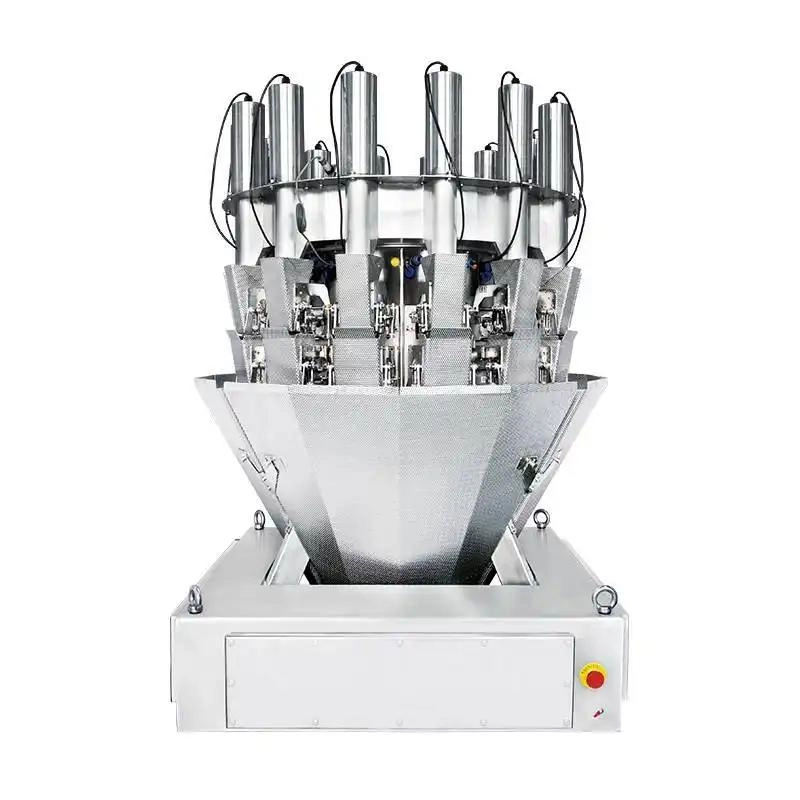
14 Heads Vertical Single Screw Feeding Pickles Weigher backups
This type of weigher is designed to handle the unique characteristics of pickles, ensuring precise measurements for packaging and distribution. It uses a vertical single screw mechanism to feed the pickles into the weighing system, allowing for efficient and consistent weighing. This technology is particularly useful in food processing and packaging facilities where precise portioning is essential for quality control and customer satisfaction. This specialized equipment is perfect for accurately measuring and dispensing pickles in a production line or packaging facility. The vertical design allows for efficient and precise filling of containers, while the single screw feeding mechanism ensures consistent and reliable weighing.
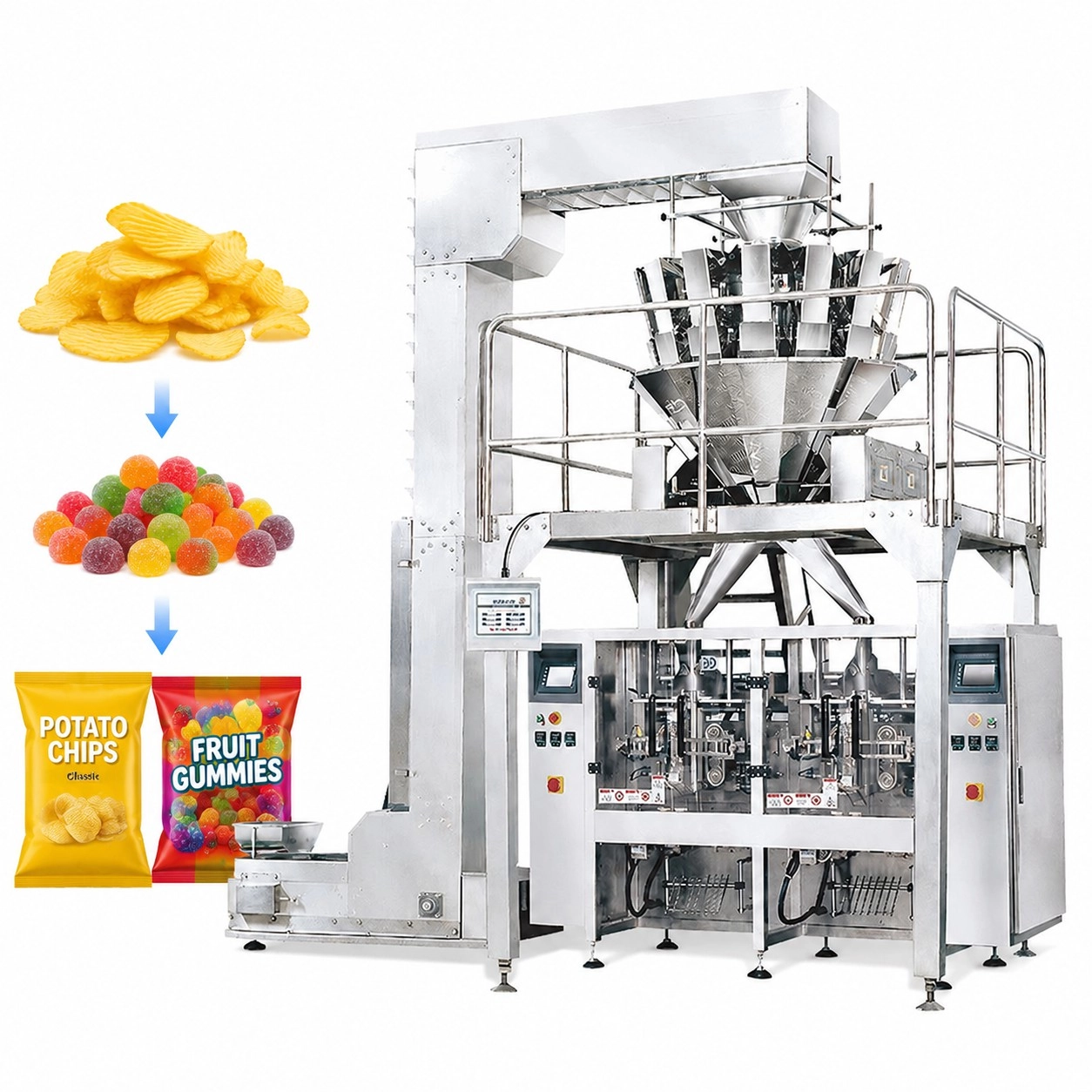
High-Speed Combination Weigher and Dual-Lane Packaging Solution for Food Manufacturers JW-B2
High-Speed Combination Weigher and Packaging Solution by Kenwei offers precise multi-head weighing and efficient dual-lane packing for food manufacturers seeking reliable speed and accuracy. This Combination Weigher integrates seamlessly into production lines to optimize throughput and reduce waste.
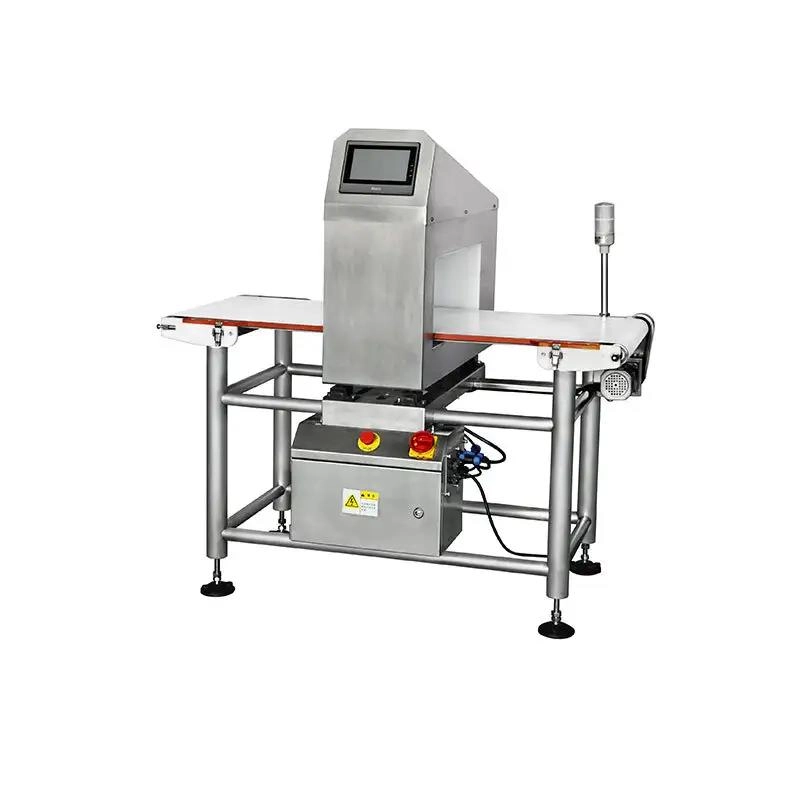
Food Metal Detector Manufacturer For Reject Defective Products G5020
The G5020 multi-frequency metal detector features a specialized conveyor belt designed to reduce contamination risks, ensure smooth operation, and maintain high detection sensitivity. It is easy to disassemble for convenient maintenance. Ideal for detecting metal contaminants in food, pharmaceuticals, spices, plastics, electronics, textiles, toys, handicrafts, and more.

6 Head Checkweigher for 50g Small Package Inspection
Checkweigher for 50g Small Package Inspection by Kenwei offers precise weight verification with six heads, ensuring fast and accurate sorting of small packages. Designed for consistent quality control in production lines, it minimizes errors and optimizes efficiency.
Contact Kenwei
Our company is located in areas with convenient transportation and developed economy. Our products are supplied in a timely manner. In the course of business operation, we always focus on customers.Have any questions or concerns about our products? Please leave us a message here, and our team will get back to you promptly.
Kenwei
Kenwei
Kenwei multi weigh
Kenwei
Kenwei
Kenwei