


Snack Packing Machine Lead Times, Shipping, and Spare Parts
A practical procurement guide to snack packing machine lead times, international shipping, commissioning, spare parts planning, and lifecycle support. It explains how product characteristics, automation scope, factory acceptance testing, customs documentation, installation readiness, and critical component inventories affect project schedules and total cost of ownership. The guide also outlines how Kenwei supports snack manufacturers with multihead weighers, linear weighers, check weighers, metal detectors, and integrated weighing and packaging systems.
- Planning the Delivery Timeline for Snack Packaging Equipment
- What determines manufacturing lead time?
- Indicative project milestones
- Shipping, Customs, and Site Readiness for Weighing and Packing Lines
- Choosing the appropriate logistics method
- Preparing the facility before arrival
- Spare Parts Strategy and Lifecycle Cost Control
- Which components should be stocked?
- Reducing downtime through documentation and maintenance
- Why Kenwei Supports More Predictable Packaging Projects
- Integrated weighing and inspection capability
- One-stop project execution and after-sales support
- Frequently Asked Questions
Lead time, shipping, and spare-parts availability are often more decisive to a snack production project than the headline price of the equipment. A complete procurement plan must account for product trials, weighing accuracy, packaging format, electrical standards, factory acceptance testing, export documentation, transit, customs clearance, installation, operator training, and preventive maintenance. For buyers evaluating a snack packing machine, the most reliable approach is to separate manufacturing time from logistics time, define acceptance criteria before purchase, and secure a component strategy for both commissioning and long-term operation. A multihead weigher, bagmaker, metal detector, checkweigher, conveyor system, and packing machine should be treated as one coordinated production cell rather than as unrelated items.
Planning the Delivery Timeline for Snack Packaging Equipment
What determines manufacturing lead time?
Equipment lead time begins when the supplier has received the confirmed technical specification, approved drawings, product samples, packaging film information, electrical requirements, and commercial deposit. A standard configuration may move through engineering, component procurement, fabrication, assembly, software configuration, testing, and packing within a predictable planning window. A highly customized line may require considerably more time because the supplier must validate unusual product characteristics, create special contact parts, adapt discharge chutes, integrate upstream or downstream machinery, and test additional operating recipes.
Common variables include the number of weighing heads, target speed, allowable weight deviation, product fragility, oil or seasoning content, particle size, bulk density, bag dimensions, seal type, nitrogen-flushing requirements, date coding, reject handling, and inspection equipment. A potato chip line, for example, may need gentler product handling and specialized discharge geometry, while pellet snacks or nuts can impose different requirements on hopper design and feeding control. Buyers should request a milestone schedule rather than accepting a single estimated delivery date.
Indicative project milestones
The following ranges are planning benchmarks, not universal guarantees. Actual timing depends on configuration, factory workload, component availability, inspection requirements, and the destination country.
| Project stage | Typical planning range | Buyer action that protects the schedule |
|---|---|---|
| Technical clarification and product review | 1–3 weeks | Provide samples, film specifications, recipes, target weights, and utility data |
| Engineering and configuration approval | 1–3 weeks | Approve layout, electrical standard, interfaces, and performance criteria |
| Manufacturing and assembly | 6–14 weeks | Confirm payment milestones and avoid late design changes |
| Factory testing and corrective actions | 1–3 weeks | Attend remotely or in person and document acceptance results |
| Export preparation and ocean freight | 3–8 weeks | Confirm Incoterms, port, customs broker, and required documents |
| Installation, commissioning, and training | 1–3 weeks on site | Complete utilities, flooring, staffing, and safety preparation |
These stages can overlap, but compressing one stage does not always shorten the total project. For example, urgent shipment cannot compensate for unapproved packaging film or an unprepared electrical supply. A realistic schedule should include contingency for factory modifications, vessel changes, port congestion, customs queries, and commissioning adjustments.
Shipping, Customs, and Site Readiness for Weighing and Packing Lines
Choosing the appropriate logistics method
Ocean freight is generally suitable for complete production lines because it offers lower cost per unit of cargo, although the calendar time is longer and sailing schedules can change. Air freight can be useful for urgent spare parts, sensors, PLC modules, sealing components, and small replacement assemblies, but it is rarely economical for a full automated line. Road and rail options may be practical for regional deliveries. The commercial quotation should state whether pricing is based on EXW, FOB, CIF, DAP, or another Incoterm, because responsibility for freight, insurance, unloading, import clearance, and destination charges changes with the selected term.
Buyers should verify the packed dimensions, gross weight, number of wooden cases, container loading plan, lifting points, and center of gravity before dispatch. Oversized equipment can create unexpected handling charges or require special permits. A professional export package normally includes a commercial invoice, packing list, bill of lading or airway bill, certificate of origin when applicable, insurance documents where required, and technical documentation. Import requirements vary by jurisdiction, so the buyer’s customs broker should review tariff classification, electrical compliance, food-contact requirements, labeling, and local machinery-safety obligations before shipment.
Preparing the facility before arrival
Site readiness is a major source of avoidable delay. The facility should have a confirmed layout, adequate floor loading, accessible doors, suitable lifting equipment, stable electrical power, compressed air where required, ventilation, lighting, drainage, and a clean environment for food production. The engineering team should identify the locations of the infeed conveyor, weighing platform, vertical bagger, metal detector, checkweigher, finished-goods conveyor, reject station, and operator access zones.
Sanitary design also deserves early attention. The FDA HACCP guidance emphasizes preventive control of food-safety hazards, while ISO 22000 provides a framework for food-safety management systems. These references do not prescribe one specific packaging machine, but they reinforce the need for hygienic construction, controlled cleaning procedures, traceability, and documented operating practices. Food-contact surfaces, product residue points, access panels, and changeover procedures should be reviewed during design approval.
Spare Parts Strategy and Lifecycle Cost Control
Which components should be stocked?
A spare-parts program should distinguish between consumables, wear parts, critical electrical items, and long-lead assemblies. Consumables may include sealing elements, heater cartridges, Teflon cloth, gaskets, belts, fuses, and lubricants approved for the application. Wear parts can include hopper gates, contact surfaces, discharge components, bearings, and conveyor belts. Critical electrical stock may include photoelectric sensors, proximity switches, relays, solenoid valves, encoder components, temperature controllers, and selected PLC or HMI modules.
The correct quantity depends on operating hours, environmental conditions, local service access, product abrasiveness, changeover frequency, and the consequences of downtime. A facility operating multiple shifts should normally hold more critical items than a small seasonal producer. The purchase order should request a recommended spare-parts list with part numbers, descriptions, compatibility, shelf-life information, unit pricing, and estimated dispatch time. Parts should be identified by machine serial number and revision level to prevent ordering an obsolete or incompatible component.
Reducing downtime through documentation and maintenance
Downtime is not caused only by failed components. Incorrect cleaning, poor calibration, loose connections, unsuitable film tension, blocked product paths, and inadequate operator training can produce unstable weighing or sealing results. A supplier should provide preventive-maintenance intervals, lubrication guidance, electrical schematics, pneumatic diagrams, troubleshooting logic, calibration instructions, and recommended cleaning methods. Operators should record alarms, rejected packs, weight deviations, and component replacements so that recurring problems can be identified before they become production interruptions.
Measurement control is especially important for regulated food production. ISO 9001 promotes a quality-management approach based on controlled processes and continual improvement, while the OIML R 76 recommendation addresses non-automatic weighing instruments. Local legal metrology rules may differ, so buyers should confirm whether the checkweigher or weighing function requires specific approval, verification, or calibration records in the destination market.
Why Kenwei Supports More Predictable Packaging Projects
Integrated weighing and inspection capability
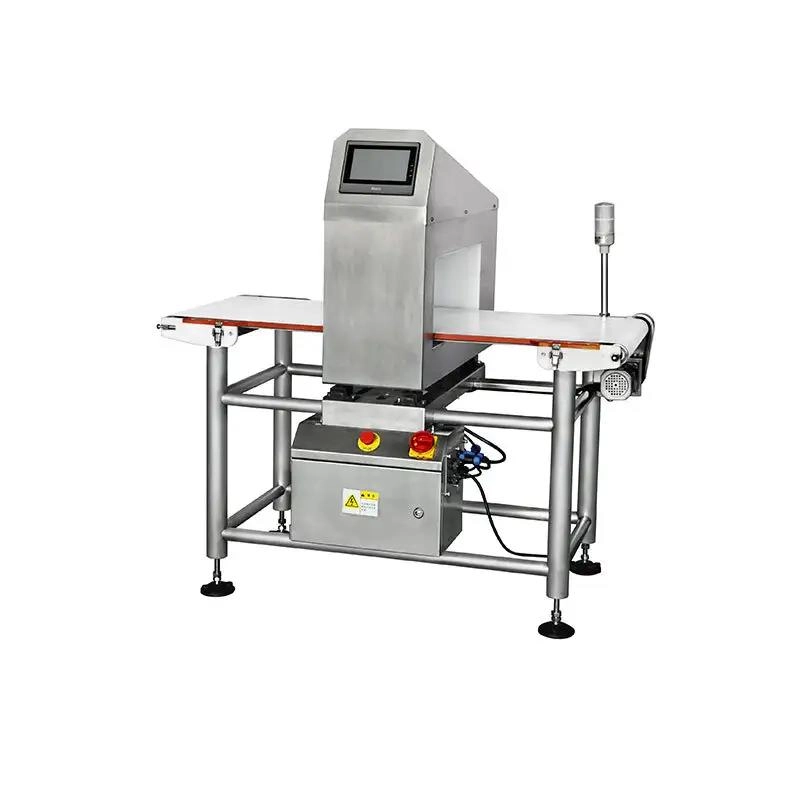
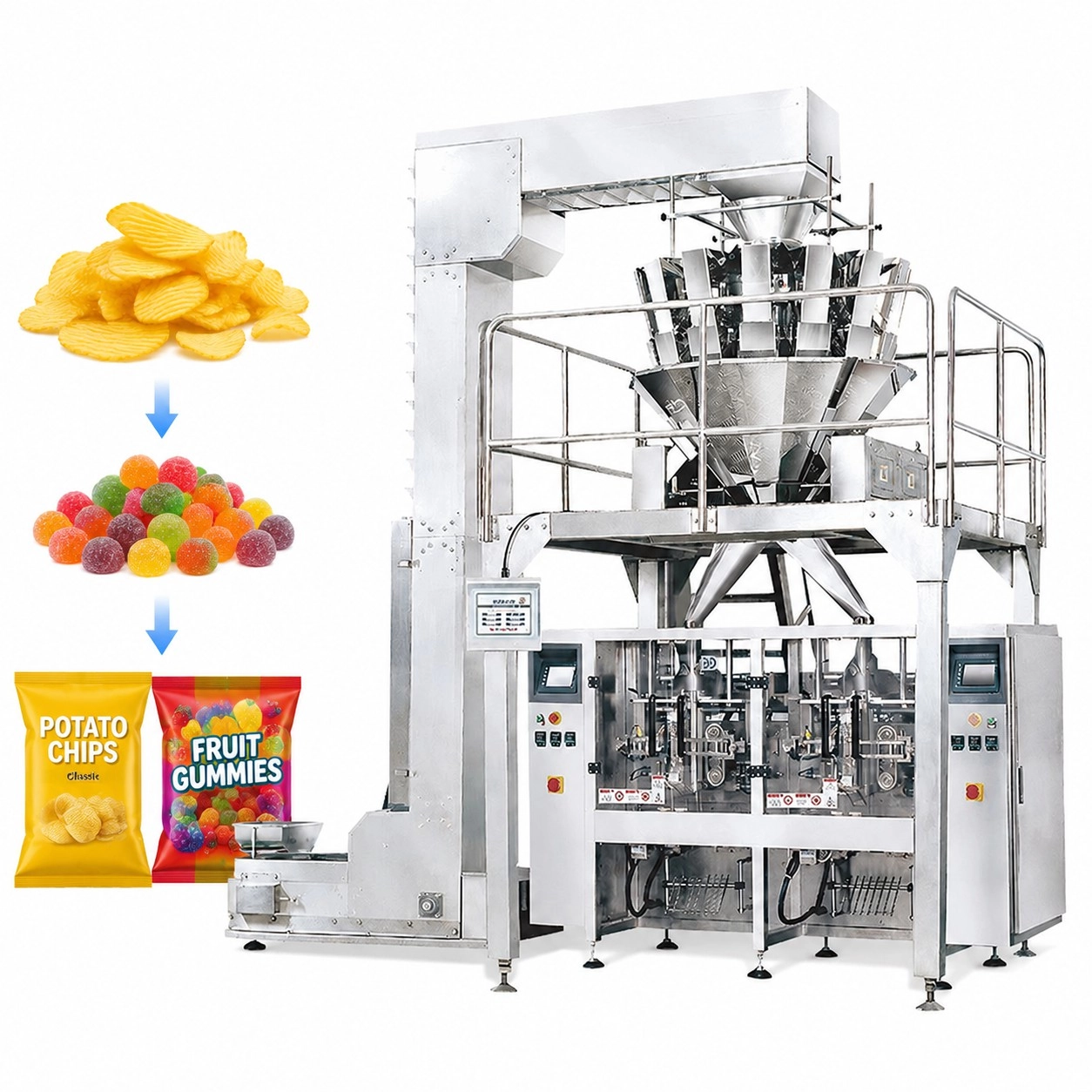
Kenwei is a specialized manufacturer of multi-head weighers and develops metal detectors, multi-head weighers, linear weighers, and check weighers for automated food and snack production. Our equipment is designed around high speed, high precision, repeatable product handling, and practical integration with packing systems. Depending on the product and target output, our solutions can include a multihead weigher packing machine, combination weigher, counting machine, food packaging machine, or complete food packing machinery configuration.
Our engineering process starts with the material characteristics and the customer’s production objective rather than with a fixed machine list. Product samples, target weights, speed expectations, bag dimensions, permissible giveaway, factory layout, and inspection requirements are evaluated together. This approach helps project owners avoid an under-specified line that appears economical initially but later requires expensive modifications, additional conveyors, or manual rework.
One-stop project execution and after-sales support
Guangdong Kenwei is located in Fusha High-tech Industrial Park, Zhongshan City, Guangdong Province. Our company combines design and development, manufacturing, marketing, installation and commissioning, technical training, and after-sales service. This single-source structure can simplify communication when a project includes weighing, conveying, foreign-object detection, weight verification, and bagging equipment.
Our team supports buyers with configuration discussions, production testing, shipping preparation, commissioning guidance, operator training, and spare-parts planning. The objective is not simply to dispatch equipment, but to help the line achieve stable performance after installation. Documentation, remote technical communication, and planned replacement parts can reduce the operational risk associated with importing specialized machinery.
Kenwei has established a recognized reputation for responsive service in the packaging machinery industry and is committed to becoming the world’s leading weighing packing machine manufacturer. Buyers can evaluate our product portfolio across check weighers, multihead weighers, linear weighers, metal detectors, packing machines, counting machines, combination weighers, and integrated food packaging systems at Kenwei’s official website. For project-specific lead-time, shipping, and spare-parts planning, contact our team at kenwei01@multiweigh.com.cn.
A reliable procurement process links technical specifications, acceptance testing, logistics, facility preparation, documentation, and service support before the purchase order is released. This structure gives brand owners and distributors a clearer view of total project duration, reduces commissioning surprises, and creates a more defensible basis for comparing suppliers beyond initial equipment price.
Contact Kenwei at kenwei01@multiweigh.com.cn or review our weighing and packaging solutions to plan a reliable snack production line.
Frequently Asked Questions
What factors determine the lead time for snack packaging equipment?
Lead time depends on product trials, configuration, number of weighing heads, target speed, packaging format, customization, component availability, factory workload, assembly, software configuration, testing, and approval of technical drawings and specifications.
How long does international shipping usually take for a complete packaging line?
Ocean freight for a complete line commonly requires about 3–8 weeks in planning, but the actual calendar depends on origin, destination, sailing schedules, port congestion, customs clearance, and the selected Incoterm.
Which spare parts should a snack producer keep in stock?
Recommended stock commonly includes sealing elements, heater cartridges, Teflon cloth, gaskets, belts, fuses, sensors, relays, solenoid valves, temperature controllers, encoder components, and selected PLC or HMI modules. The exact list should be based on machine configuration, operating hours, and downtime risk.
How can a buyer reduce commissioning delays after equipment arrives?
The facility should complete layout approval, floor and access checks, electrical and compressed-air preparation, lifting arrangements, operator staffing, packaging-film availability, and safety readiness before shipment arrives. Factory acceptance testing and documented performance criteria also reduce startup uncertainty.
Why is a multihead weigher important in snack production?
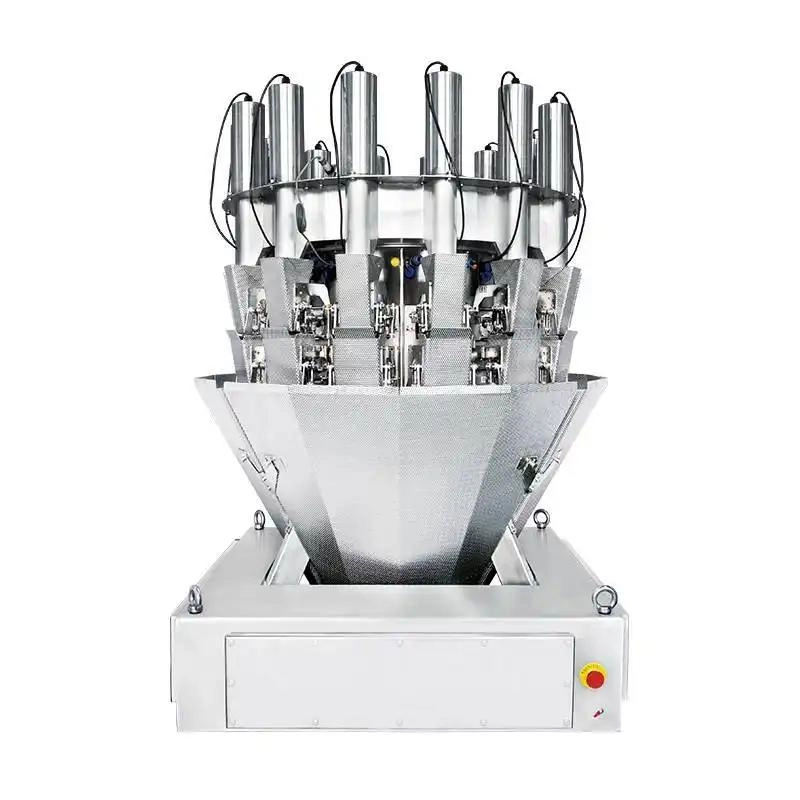
A multihead weigher combines product portions from multiple weighing hoppers to achieve the required target weight efficiently. Its suitability depends on product characteristics, target speed, accuracy requirements, product handling, hopper design, and integration with the bagging and inspection equipment.
What documentation should be requested from the supplier?
Buyers should request operating manuals, electrical schematics, pneumatic diagrams, preventive-maintenance schedules, calibration guidance, troubleshooting instructions, recommended spare-parts lists, packing details, commercial documents, and factory acceptance test records.
Tags
16 head weigher
16 head weigher
food industry metal detector
food industry metal detector
Rotating Collecting Tables
Rotating Collecting Tables
automatic packing machine
automatic packing machine
metal detector for food processing
metal detector for food processing
premade pouch packing machine supplier
premade pouch packing machine supplier
Recommended for you
Choosing the Right Metal Detector for Food Industry G5020 Guide
Compliance Matters: Food Safety for Powder Packing Machines
The latest trends for metal detector for food

Common Metal Contaminants and Detection Techniques in Food
You may also like
14 Heads Vertical Single Screw Feeding Pickles Weigher backups
This type of weigher is designed to handle the unique characteristics of pickles, ensuring precise measurements for packaging and distribution. It uses a vertical single screw mechanism to feed the pickles into the weighing system, allowing for efficient and consistent weighing. This technology is particularly useful in food processing and packaging facilities where precise portioning is essential for quality control and customer satisfaction. This specialized equipment is perfect for accurately measuring and dispensing pickles in a production line or packaging facility. The vertical design allows for efficient and precise filling of containers, while the single screw feeding mechanism ensures consistent and reliable weighing.
High-Speed Combination Weigher and Dual-Lane Packaging Solution for Food Manufacturers JW-B2
High-Speed Combination Weigher and Packaging Solution by Kenwei offers precise multi-head weighing and efficient dual-lane packing for food manufacturers seeking reliable speed and accuracy. This Combination Weigher integrates seamlessly into production lines to optimize throughput and reduce waste.
Food Metal Detector Manufacturer For Reject Defective Products G5020
The G5020 multi-frequency metal detector features a specialized conveyor belt designed to reduce contamination risks, ensure smooth operation, and maintain high detection sensitivity. It is easy to disassemble for convenient maintenance. Ideal for detecting metal contaminants in food, pharmaceuticals, spices, plastics, electronics, textiles, toys, handicrafts, and more.

6 Head Checkweigher for 50g Small Package Inspection
Checkweigher for 50g Small Package Inspection by Kenwei offers precise weight verification with six heads, ensuring fast and accurate sorting of small packages. Designed for consistent quality control in production lines, it minimizes errors and optimizes efficiency.
Contact Kenwei
Our company is located in areas with convenient transportation and developed economy. Our products are supplied in a timely manner. In the course of business operation, we always focus on customers.Have any questions or concerns about our products? Please leave us a message here, and our team will get back to you promptly.
Kenwei
Kenwei
Kenwei multi weigh
Kenwei
Kenwei
Kenwei