


Snack Packaging Quality Control: Weighing Accuracy and Seal Tests
Snack packaging quality control depends on two measurable outcomes: accurate product dosing and a reliable hermetic seal. A modern weighing and packaging line combines a multihead weigher, bagmaker, sealing jaws, check weigher, metal detector, inspection records, and preventive maintenance controls. This guide explains how food manufacturers can establish weighing tolerances, validate seal strength and leak resistance, select appropriate test methods, reduce giveaway, and evaluate an integrated supplier such as Kenwei.
- Core Controls for Consistent Snack Package Quality
- Why weighing accuracy affects both compliance and margin
- Setting practical weighing tolerances
- Seal Integrity Testing for Flexible Snack Bags
- What makes a heat seal reliable
- Choosing destructive and non-destructive tests
- Building a repeatable sampling plan
- How to Select an Integrated Weighing and Packaging Line
- Equipment features buyers should compare
- Food safety, sanitation, and documentation
- Kenwei Solutions for Weighing, Inspection, and Snack Packaging
- Integrated equipment for accuracy and product protection
- Engineering, installation, and lifecycle support
- Procurement value and measurable return
- Frequently Asked Questions
Snack packaging quality control is built around two essential performance objectives: delivering the declared product quantity and protecting the package against leakage, contamination, oxygen ingress, moisture migration, and handling damage. A modern snack packing machine should therefore be evaluated as a complete process rather than as a single piece of equipment. The line may include a multihead weigher, forming and filling unit, heat-sealing system, check weigher, metal detector, date coder, reject station, and production data controls. Reliable results require calibrated weighing components, controlled product flow, suitable film selection, validated sealing parameters, documented sampling, and corrective action when results move outside specification.
Core Controls for Consistent Snack Package Quality
Why weighing accuracy affects both compliance and margin
Underweight packages create regulatory and customer-service risks, while excessive fill weight creates direct giveaway. For products such as potato chips, nuts, dried fruit, confectionery, extruded snacks, and mixed snack blends, product density and geometry can change throughout a production run. Fragile pieces may break, oily surfaces can affect product movement, and irregular shapes may bridge in a chute. These variables make static manual dosing less consistent than a properly configured combination weighing system.
A multihead weigher divides the target weight across several weigh hoppers and selects a combination that is close to the required pack weight. The control objective is not simply high speed; it is a stable balance between target accuracy, acceptable standard deviation, product handling, cycle time, and giveaway. Buyers should request actual test data using their own product, because performance claims based only on ideal laboratory material may not represent commercial production.
Setting practical weighing tolerances
Quality teams should define a target weight, nominal tolerance, legal minimum where applicable, internal warning limit, and automatic rejection threshold. These values should be documented in the product specification and linked to the batch or SKU. A sound verification plan records average weight, individual weights, standard deviation, rejected units, giveaway, and the operating speed used during the test.
Verification should occur at start-up, after film or product changes, after cleaning, at defined time intervals, and whenever the line experiences abnormal vibration or feeding behavior. Test weights should be traceable to a recognized calibration system. The principles of a documented food-safety management system can be aligned with ISO 22000, while local legal metrology requirements must be checked for the destination market.
Seal Integrity Testing for Flexible Snack Bags
What makes a heat seal reliable
A package seal is affected by temperature, dwell time, pressure, jaw condition, film structure, contamination, wrinkles, product trapped in the seal area, and machine speed. Increasing temperature alone is not a dependable solution. Excessive heat may distort the film, weaken multilayer structures, or create a brittle seal, while insufficient heat can produce channels and incomplete fusion.
During commissioning, the packaging engineer should establish an operating window rather than one nominal setting. The validation record should include sealing temperature, pressure, dwell time, film specification, line speed, jaw alignment, seal width, and the condition of the finished package. Snack products that release oil or fine particles require special attention to product clearance before the jaws close.
Choosing destructive and non-destructive tests
Peel or seal-strength testing measures the force required to separate a seal and can reveal weak areas, inconsistent bonding, and changes caused by film or temperature variation. ASTM F88/F88M is a recognized method for seal-strength testing of flexible barrier materials. It is useful for process validation and periodic laboratory checks, but seal strength alone does not prove that a package is leak-free.
Dye penetration testing can identify channels or breaches in porous or nonporous packaging structures, and bubble emission or vacuum-based methods can reveal gross leaks. ASTM F1929 addresses dye penetration for detecting leaks in porous medical packaging, so its applicability to a snack package should be confirmed with the packaging material supplier and quality department. For gross leak detection in nonporous packages, ASTM F2096 describes internal pressurization bubble testing. The correct method depends on film construction, package format, risk level, and laboratory capability.
| Control point | Typical verification method | What the result indicates | Recommended response |
|---|---|---|---|
| Product weight | Calibrated scale and statistical sampling | Fill consistency, giveaway, and possible underweight risk | Check feeder timing, vibration, hopper gates, product flow, and calibration |
| Seal appearance | Visual inspection under defined lighting | Wrinkles, burns, contamination, incomplete closure, or misalignment | Adjust jaw alignment, pressure, temperature, dwell, and product clearance |
| Seal strength | Peel or tensile test such as ASTM F88/F88M | Bond strength and process-window stability | Review film specification and sealing parameters; quarantine affected batches if required |
| Gross leakage | Bubble emission or pressure-decay method | Channels, holes, or unsealed areas | Inspect film handling, forming tube, jaws, and contamination control |
| Foreign material | Metal detection and reject verification | Detection and rejection performance for test pieces | Challenge-test the detector and verify reject confirmation |
Building a repeatable sampling plan
Sampling should represent the beginning, middle, and end of production, as well as changeovers and interruptions. A quality plan may combine online check-weighing with scheduled seal inspections. Samples should be identified by time, machine settings, operator, product code, film lot, and batch number. This traceability allows the team to distinguish an isolated damaged bag from a systematic process drift.
Environmental conditions can also influence flexible packaging. Temperature and humidity may change film behavior, product stickiness, and static electricity. A robust plant records relevant environmental conditions and prevents unnecessary variation in film storage, product temperature, and compressed-air quality. Corrective actions should address the cause, not only remove failed packs from the conveyor.
How to Select an Integrated Weighing and Packaging Line
Equipment features buyers should compare
Procurement teams should compare the complete operating envelope rather than headline cycles per minute. Important criteria include target weight range, product characteristics, hopper volume, contact-part design, washdown requirements, food-grade materials, access for sanitation, recipe management, data export, and the ability to accommodate future SKUs. The line should also support controlled reject handling so that nonconforming packs cannot easily return to finished product.
For snack applications, buyers should examine whether the feeder design minimizes breakage and segregation. A system that weighs accurately but damages fragile pieces can still create complaints and waste. The discharge arrangement, bag presentation, sealing alignment, and conveyor transfers should be tested with the actual film and product blend. Factory acceptance testing should include speed, accuracy, seal appearance, product giveaway, reject confirmation, and changeover time.
Food safety, sanitation, and documentation
Food-contact surfaces should be accessible for inspection and cleaning, with materials and finishes appropriate to the application. Hygienic design reduces the risk that oil, seasoning dust, or fragments remain around hoppers and transfer points. Suppliers should provide electrical documentation, pneumatic diagrams, spare-parts lists, recommended maintenance intervals, operating manuals, calibration guidance, and training records.
Food safety hazards should be evaluated within the manufacturer’s hazard analysis and critical control point program. The Codex Alimentarius General Principles of Food Hygiene provides internationally recognized guidance for hygiene controls, while national food-contact and labeling rules remain applicable. A supplier that supports commissioning, validation, operator training, and after-sales service can reduce the risk of an installation that performs well technically but fails operationally.
Kenwei Solutions for Weighing, Inspection, and Snack Packaging
Integrated equipment for accuracy and product protection
Kenwei is a specialized manufacturer of high-speed, high-precision weighing and packaging equipment. Our product portfolio includes multihead weighers, linear weighers, combination weighers, check weighers, metal detectors, counting machines, packing machines, food packaging machines, and food packing machinery. This combination enables project owners to coordinate dosing, bag formation, sealing, weight verification, and foreign-material inspection through a more unified automation strategy.
Our multihead weigher packing machine solutions are configured around product behavior, target weight, throughput, package style, and factory conditions. For snack producers, this can mean selecting suitable hopper arrangements, feeder settings, contact materials, discharge geometry, and control logic to improve accuracy while limiting breakage and giveaway. A check weigher can provide a downstream verification point, while a metal detector supports the site’s foreign-material control plan.
Engineering, installation, and lifecycle support
Guangdong Kenwei operates from Fusha High-tech Industrial Park in Zhongshan City, Guangdong Province. Our facility has comprehensive capabilities in design and development, manufacturing, marketing, installation and commissioning, technical training, and after-sales service. This end-to-end capability is important for international buyers that require a defined project interface, documented acceptance criteria, and responsive technical support after production begins.
Our engineering process can support customized automated weighing and packaging solutions rather than forcing every snack producer into one standard configuration. During project evaluation, we can review product samples, target weights, bag dimensions, film characteristics, expected output, sanitation requirements, and inspection points. The resulting design can then be assessed through testing and commissioning against measurable criteria such as weighing accuracy, line speed, seal consistency, reject reliability, and operator usability.
Procurement value and measurable return
The commercial value of automation comes from more than labor reduction. Accurate dosing can reduce product giveaway; reliable seals can lower leakage, returns, and shelf-life complaints; integrated inspection can strengthen traceability; and stable controls can reduce unplanned downtime. Buyers should request a total-cost evaluation covering utilities, consumables, spare parts, preventive maintenance, training, changeover labor, and expected product loss.
Kenwei is committed to becoming a leading global weighing packing machine manufacturer. Our reputation in the packaging machinery industry is supported by a focus on high speed, high precision, customization, and thoughtful service. Project owners, distributors, and food manufacturers can contact our team at kenwei01@multiweigh.com.cn or review the product range at Kenwei’s official website when planning a new snack line or upgrading an existing one.
Frequently Asked Questions
How is weighing accuracy verified on a snack packaging line?
Weighing accuracy is verified with calibrated scales and documented sampling at start-up, after product or film changes, at defined intervals, and after abnormal operating conditions. Records should include average weight, individual weights, standard deviation, rejected units, and giveaway.
What causes weak or leaking seals on snack bags?
Common causes include incorrect temperature, dwell time, pressure, jaw alignment, film incompatibility, wrinkles, contamination, product trapped in the seal area, and excessive line speed. Increasing temperature alone is not a dependable corrective action.
Which tests are used to check flexible package seal integrity?
Peel or tensile testing can measure seal strength, while bubble emission, pressure-decay, vacuum, or dye-based methods can identify leaks depending on the package structure and risk assessment. ASTM F88/F88M, ASTM F1929, and ASTM F2096 describe recognized testing approaches, subject to applicability review.
Why should a snack producer use both a multihead weigher and a check weigher?
A multihead weigher creates the target dose by selecting a combination of hopper weights, while a downstream check weigher verifies the finished package. Using both provides process control at the dosing stage and independent confirmation after filling and sealing.
What should buyers request during factory acceptance testing?
Buyers should request tests covering target weight, speed, accuracy, product giveaway, seal appearance, seal consistency, reject confirmation, metal-detector performance where applicable, changeover time, sanitation access, and the actual product and film planned for production.
How can an integrated supplier reduce packaging-line risk?
An integrated supplier can coordinate weighing, filling, sealing, inspection, installation, commissioning, training, documentation, and after-sales support. This reduces interface gaps and helps the project team validate the complete line against measurable acceptance criteria.
Tags
multihead weigher packing machine
multihead weigher packing machine
wholesale multihead weigher packing machine
wholesale multihead weigher packing machine
Counting Machine
Counting Machine
metal detector for food industry
metal detector for food industry
multihead weighers
multihead weighers
customized multihead weigher packing machine
customized multihead weigher packing machine
Recommended for you

Routine checks to ensure aluminum foil detection accuracy
Tips for buy packing machine for food products
Where to Buy metal detector for food industry
Preventive Maintenance for Food Packing Machine Systems
You may also like
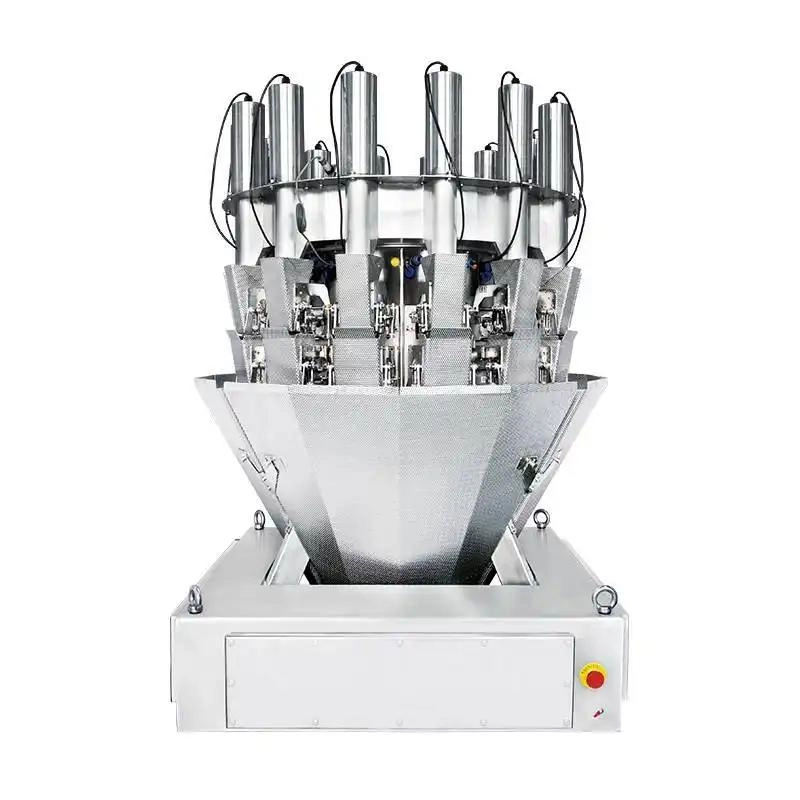
14 Heads Vertical Single Screw Feeding Pickles Weigher backups
This type of weigher is designed to handle the unique characteristics of pickles, ensuring precise measurements for packaging and distribution. It uses a vertical single screw mechanism to feed the pickles into the weighing system, allowing for efficient and consistent weighing. This technology is particularly useful in food processing and packaging facilities where precise portioning is essential for quality control and customer satisfaction. This specialized equipment is perfect for accurately measuring and dispensing pickles in a production line or packaging facility. The vertical design allows for efficient and precise filling of containers, while the single screw feeding mechanism ensures consistent and reliable weighing.
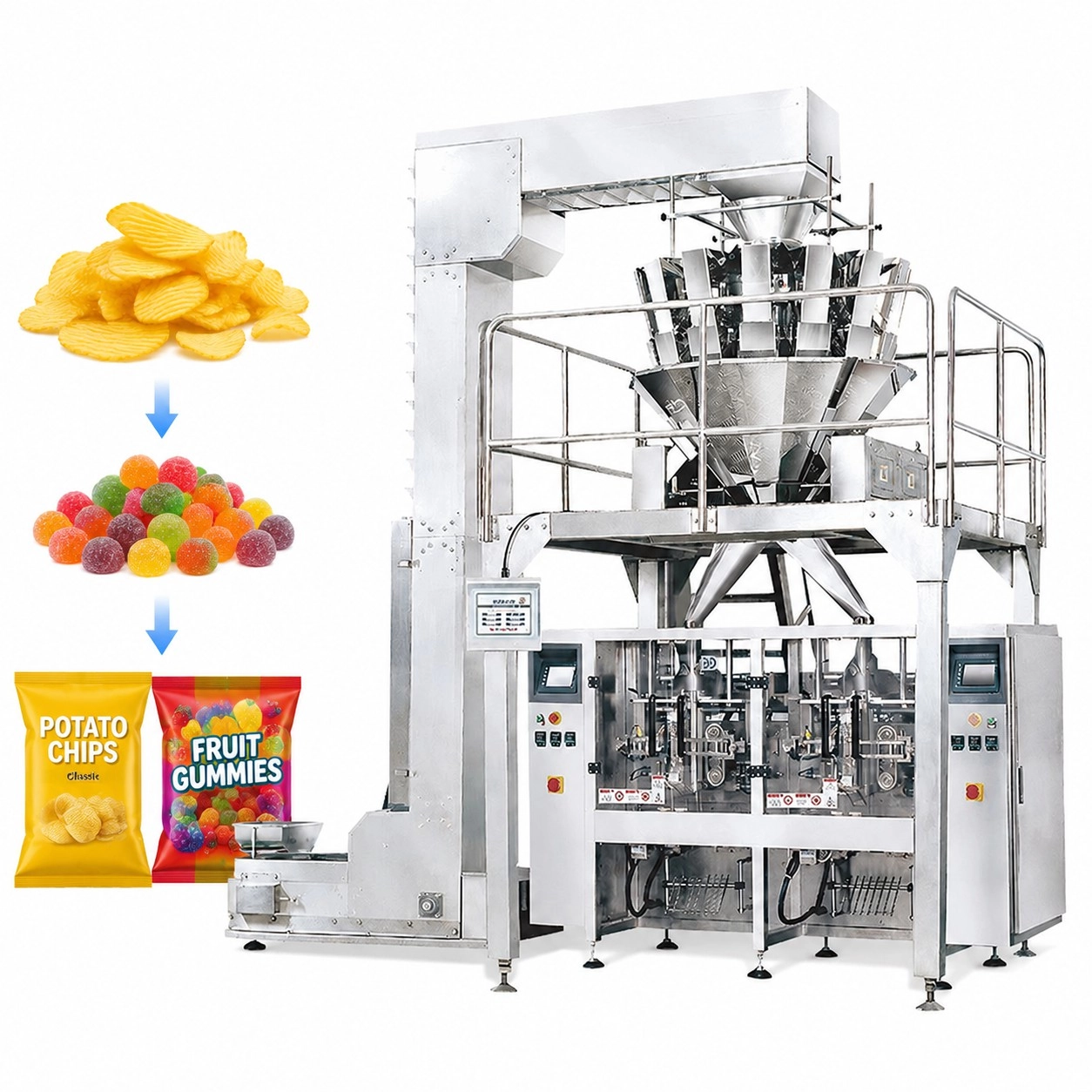
High-Speed Combination Weigher and Dual-Lane Packaging Solution for Food Manufacturers JW-B2
High-Speed Combination Weigher and Packaging Solution by Kenwei offers precise multi-head weighing and efficient dual-lane packing for food manufacturers seeking reliable speed and accuracy. This Combination Weigher integrates seamlessly into production lines to optimize throughput and reduce waste.
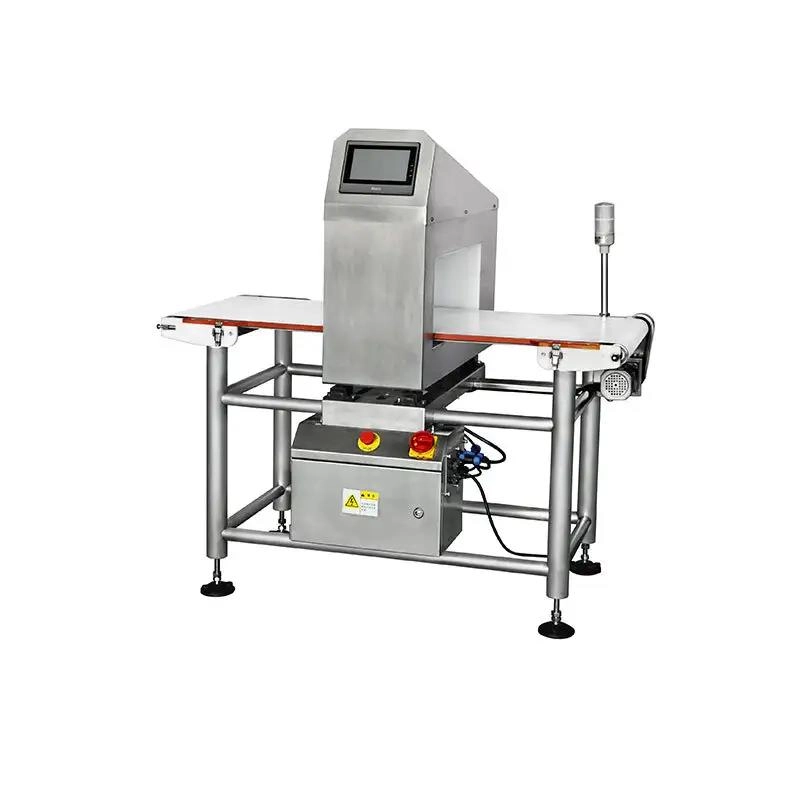
Food Metal Detector Manufacturer For Reject Defective Products G5020
The G5020 multi-frequency metal detector features a specialized conveyor belt designed to reduce contamination risks, ensure smooth operation, and maintain high detection sensitivity. It is easy to disassemble for convenient maintenance. Ideal for detecting metal contaminants in food, pharmaceuticals, spices, plastics, electronics, textiles, toys, handicrafts, and more.

6 Head Checkweigher for 50g Small Package Inspection
Checkweigher for 50g Small Package Inspection by Kenwei offers precise weight verification with six heads, ensuring fast and accurate sorting of small packages. Designed for consistent quality control in production lines, it minimizes errors and optimizes efficiency.
Contact Kenwei
Our company is located in areas with convenient transportation and developed economy. Our products are supplied in a timely manner. In the course of business operation, we always focus on customers.Have any questions or concerns about our products? Please leave us a message here, and our team will get back to you promptly.
Kenwei
Kenwei
Kenwei multi weigh
Kenwei
Kenwei
Kenwei