


OEM Snack Packing Machines for Private Label Brands
Private label snack brands need flexible, hygienic, and commercially scalable weighing and packaging systems that can handle multiple products, pack formats, and seasonal production demands. This guide explains how to select an OEM snack packaging line, evaluate multihead weighing accuracy, integrate inspection equipment, control total ownership cost, and assess suppliers such as Kenwei for customized automated weighing and packing projects.
- How Private Label Snack Packaging Lines Are Designed
- Match the weighing technology to the product
- Build flexibility into the primary bagger
- Integrate food safety and inspection controls
- Procurement Criteria for an OEM Snack Packaging System
- Evaluate capacity using a realistic production model
- Compare manual, semi-automatic, and automated operation
- Calculate total cost of ownership
- Why Kenwei Supports Private Label Packaging Projects
- Integrated weighing and packaging expertise
- OEM customization from design through commissioning
- Manufacturing base and service capability
- Implementation Roadmap for a Successful Private Label Launch
- Define the technical brief before requesting quotations
- Validate samples and acceptance criteria
- Prepare people, maintenance, and spare parts
- Frequently Asked Questions
OEM snack packaging equipment enables private label brands to produce consistent retail packs across nuts, seeds, confectionery, chips, dried fruit, pet treats, and other free-flowing products without building a fully customized factory system from the ground up. A suitable snack packing machine typically combines product feeding, multihead weighing, bag forming, heat sealing, date coding, metal detection, checkweighing, and data control. For buyers, the correct investment depends on product characteristics, target pack weights, output requirements, packaging materials, hygiene standards, changeover frequency, labor strategy, and supplier support. The strongest OEM projects balance speed with giveaway control, protect fragile products, accommodate private label packaging formats, and provide a clear route from factory acceptance testing to stable commercial production.
How Private Label Snack Packaging Lines Are Designed
Match the weighing technology to the product
Product behavior is the foundation of an automated packing line. Whole nuts, coated snacks, granola clusters, dried fruit, potato chips, and irregular confectionery pieces do not flow in the same way. A multihead weigher uses several individual weigh hoppers and a computer-controlled combination algorithm to select a group of hoppers that reaches the target weight. This arrangement is particularly useful for products that are difficult to portion consistently by volume.
Before requesting a quotation, project owners should document bulk density, particle size, moisture, oil content, stickiness, breakage sensitivity, and the proportion of fines. These characteristics affect hopper geometry, contact-surface finish, feeder vibration, discharge timing, and cleaning access. A combination weigher may be appropriate for mixed products or High Quality assortments, while a linear weigher can offer a simpler configuration for stable, uniform products and selected weight ranges. The correct choice should be verified through product trials rather than based only on catalogue specifications.
Build flexibility into the primary bagger
Private label portfolios often change faster than those of established national brands. A single facility may need to run pillow bags for mainstream products, gusseted bags for larger formats, quad-seal packs for High Quality presentation, or small sachets for trial and convenience channels. The vertical form-fill-seal system must therefore be matched to film width, laminate structure, sealing temperature, zipper or tear-notch requirements, registration marks, and the desired pack appearance.
OEM customization should address the complete product range rather than one launch SKU. Important questions include whether the machine can store recipes, how quickly forming tubes and collars can be changed, whether tooling is needed for every film width, and how operators are guided during setup. Servo-driven film pulling, automatic film tracking, programmable sealing, and recipe management can reduce setup variability, but these features create value only when the controls are intuitive and maintenance access is practical.
Integrate food safety and inspection controls
Retail customers and distributors increasingly expect documented controls for foreign-body prevention, traceability, and weight compliance. An integrated metal detector can identify ferrous and non-ferrous contamination after filling or at another validated point in the process. A check weigher can verify pack weight, reject underweight or overweight units, and generate production data for quality review. The inspection position should be selected according to the risk assessment, packaging material, line speed, and product conductivity.
Sanitary design also affects long-term operating cost. Buyers should examine the number of horizontal ledges, the accessibility of product-contact surfaces, the protection of electrical components, the drainage strategy, and the procedure for removing hoppers or forming parts. Food safety programs should be aligned with recognized frameworks such as ISO 22000 food safety management systems and applicable national regulations. In the United States, packaging operations should also review the FDA Food Safety Modernization Act requirements relevant to their facility and supply chain.
Procurement Criteria for an OEM Snack Packaging System
Evaluate capacity using a realistic production model
Quoted cycles per minute should never be treated as guaranteed commercial output. Actual throughput is influenced by product flow, target weight, bag length, film performance, operator intervention, upstream replenishment, inspection rejects, and changeovers. A meaningful request for quotation should state the expected grams per pack, acceptable weight tolerance, pack dimensions, product temperature, production hours per shift, planned SKUs, and minimum acceptable availability.
Buyers should request test results based on representative product samples and the actual film specification. The test should record average weight, standard deviation, giveaway, successful seal rate, reject rate, changeover duration, and sustained output. These measurements help distinguish a high nominal speed from a line that can deliver repeatable saleable packs. Where local legal metrology rules apply, the acceptance protocol should also define the relevant verification method and documentation.
Compare manual, semi-automatic, and automated operation
| Operating model | Typical strengths | Typical limitations | Best-fit application |
|---|---|---|---|
| Manual weighing and sealing | Low initial equipment complexity and useful for market testing | Higher labor dependence, slower output, and greater variation between operators | Very small batches, pilot products, or temporary production |
| Semi-automatic weighing with assisted packing | Improved consistency with moderate capital investment | Operators remain involved in feeding, bag handling, or sealing | Growing brands with limited SKU volume |
| Automated multihead weighing and vertical packing | High repeatability, recipe control, labor efficiency, and scalable output | Higher investment and greater need for commissioning and operator training | Established private labels and multi-SKU commercial production |
| Integrated line with inspection and data controls | Combines portioning, packing, metal detection, checkweighing, and quality records | Requires coordinated engineering, validation, and maintenance planning | Retail supply, contract packing, export production, and audited facilities |
For weighing instruments used in trade, the procurement team should review applicable national requirements and internationally recognized recommendations, including the OIML recommendation for automatic gravimetric filling instruments where relevant. The objective is not simply to purchase a fast line; it is to establish a controlled process that protects both regulatory compliance and product margin.
Calculate total cost of ownership
The purchase price is only one part of the financial model. Private label owners should include film waste, product giveaway, compressed air, electricity, spare parts, preventive maintenance, cleaning labor, technician travel, training, downtime, and planned format changes. Giveaway deserves particular attention because a small excess per pack can become a material annual cost across millions of units.
Supplier comparisons should therefore include a five-year ownership forecast. Ask for recommended spare-part lists, lubrication schedules, wear-part life estimates, software support terms, remote diagnostic options, and response times for technical assistance. A lower-cost machine may become expensive if the supplier cannot provide forming components, sensors, load cells, or control-system support quickly enough to protect production commitments.
Why Kenwei Supports Private Label Packaging Projects
Integrated weighing and packaging expertise
Kenwei is a specialized manufacturer of multihead weighers and automated weighing equipment for food and non-food applications. Our product portfolio includes multihead weighers, linear weighers, combination weighers, check weighers, metal detectors, counting machines, and complete food packaging machinery. This breadth allows our engineering team to assess the weighing, inspection, and packing stages as one coordinated process instead of treating each machine as an isolated purchase.
Our equipment is developed around high-speed operation and high-precision portioning. For private label snack producers, that combination can support consistent net content, lower giveaway, and dependable output across multiple product recipes. We also provide customized automated weighing and packaging solutions for projects that require different hopper configurations, discharge arrangements, bag sizes, product-contact materials, control logic, or inspection layouts.
OEM customization from design through commissioning
OEM projects require more than a machine that runs during a factory demonstration. They require engineering alignment between the product, film, facility utilities, operator workflow, hygiene plan, and commercial launch schedule. Our team supports design and development, manufacturing, marketing, installation, commissioning, technical training, and after-sales service. This one-stop structure helps project owners reduce communication gaps between equipment suppliers and establish clearer responsibility for line performance.
During project planning, buyers can provide product samples, target weights, bag drawings, film data, output expectations, and factory constraints. These inputs help determine the appropriate multihead weigher, linear weigher, packing machine, metal detector, and check weigher configuration. Factory acceptance testing and site commissioning can then focus on measurable requirements such as accuracy, output, sealing quality, reject performance, recipe changeover, and operator usability.
Manufacturing base and service capability
Guangdong Kenwei operates in Fusha High-tech Industrial Park, Zhongshan City, Guangdong Province. The company is equipped for automated weighing and packaging system development and has capabilities covering design, manufacturing, installation, commissioning, training, and service. This manufacturing and engineering foundation supports distributors, investors, food processors, and brand owners seeking a dependable OEM partner for regional or export-oriented projects.
Our vision is to become the world's leading weighing packing machine manufacturer. That objective is reflected in an emphasis on practical automation, high-precision weighing, responsive service, and solutions that can be adapted to different private label strategies. Buyers evaluating suppliers should review documented test procedures, component quality, software usability, installation resources, training scope, and the supplier's ability to support the equipment after delivery. Kenwei's reputation for thoughtful and fast service provides an additional basis for long-term cooperation in the packaging machinery industry.
Implementation Roadmap for a Successful Private Label Launch
Define the technical brief before requesting quotations
A clear technical brief should identify every product, target weight, allowable tolerance, bag style, film structure, pack dimensions, production speed, sanitation method, environmental conditions, and utility requirement. It should also specify whether the line must support nitrogen flushing, zipper application, date coding, line integration, remote access, or centralized production data. Clear information improves quotation accuracy and prevents costly changes after order placement.
Validate samples and acceptance criteria
Product trials should use commercial-grade ingredients and the intended packaging film whenever possible. The evaluation should cover short runs and sustained runs, because hopper loading behavior and heat stability may change over time. Acceptance criteria should be agreed in writing before manufacturing, including weight accuracy, giveaway target, output, seal integrity, machine availability during the test, and the performance of reject devices.
Prepare people, maintenance, and spare parts
Even a highly automated line depends on trained operators and maintenance personnel. Training should cover recipe selection, safe startup and shutdown, cleaning, film threading, alarm diagnosis, load-cell protection, inspection verification, and changeover procedures. The site should also prepare critical spare parts, preventive maintenance schedules, cleaning tools, product-contact replacement parts, and escalation contacts before commercial production begins.
Private label brands can improve launch reliability by treating equipment procurement as a process-development project rather than a simple capital purchase. A properly specified multihead weighing and packing line can support faster SKU expansion, stable retail quality, improved labor productivity, and stronger control of material losses while leaving room for future product and format growth.
Frequently Asked Questions
What products can an OEM snack packaging line handle?
An OEM snack packaging line can handle many free-flowing products, including nuts, seeds, confectionery, chips, dried fruit, granola clusters, and pet treats, provided the weighing and feeding configuration is matched to product characteristics such as bulk density, particle size, moisture, oil content, stickiness, and breakage sensitivity.
How does a multihead weigher improve private label production?
A multihead weigher uses several individual weigh hoppers and a computer-controlled combination algorithm to select a group of hoppers that reaches the target weight. This supports repeatable portioning, high-speed operation, and improved control of product giveaway across multiple recipes and pack sizes.
What should buyers include in an OEM packaging equipment request for quotation?
The request should include product samples and characteristics, target weights, allowable tolerances, bag styles, film specifications, pack dimensions, expected output, SKU range, changeover requirements, sanitation procedures, utility conditions, inspection needs, and any requirements for coding, nitrogen flushing, zipper application, or production data.
Why should a metal detector and check weigher be integrated into the line?
A metal detector can identify ferrous and non-ferrous contamination at a validated point in the process, while a check weigher can verify pack weight, reject nonconforming units, and generate production data for quality review. Integration helps coordinate inspection with the weighing and packing process.
How can private label brands reduce the total cost of an automated packing line?
Brands should assess total ownership cost, including film waste, product giveaway, utilities, spare parts, maintenance, cleaning labor, technician travel, training, downtime, and format changes. A five-year ownership forecast and product-based factory acceptance test provide a more reliable comparison than purchase price alone.
What support does Kenwei provide for OEM packaging projects?
Kenwei provides design and development, manufacturing, installation, commissioning, technical training, and after-sales service. Its portfolio includes multihead weighers, linear weighers, combination weighers, check weighers, metal detectors, counting machines, and complete automated weighing and packaging solutions.
Tags
multihead combination weigher machine
multihead combination weigher machine
semi automatic packaging machine
semi automatic packaging machine
metal detectors food
metal detectors food
kenwei multihead weigher
kenwei multihead weigher
checkweigher scales
checkweigher scales
metal detector standards food industry
metal detector standards food industry
Recommended for you
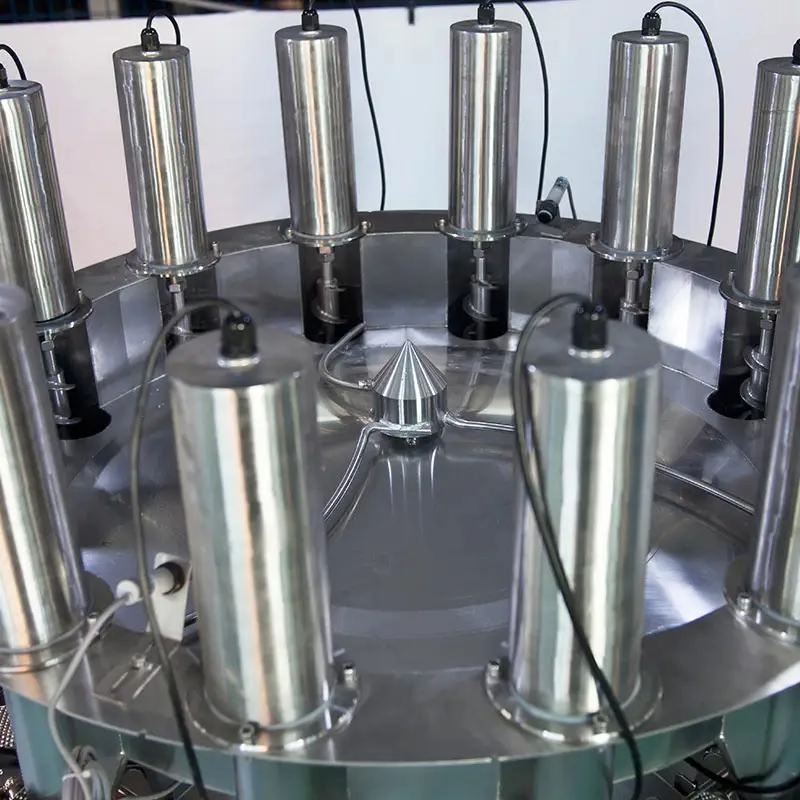
Top 10 Multihead Weigher Models for Pickles & Wet Products
Where to Buy linear weigher
The B2B Buyer’s Guide to automatic packaging machine
Top 10 multihead weigher machine Manufacturers and Supplier Brands
You may also like
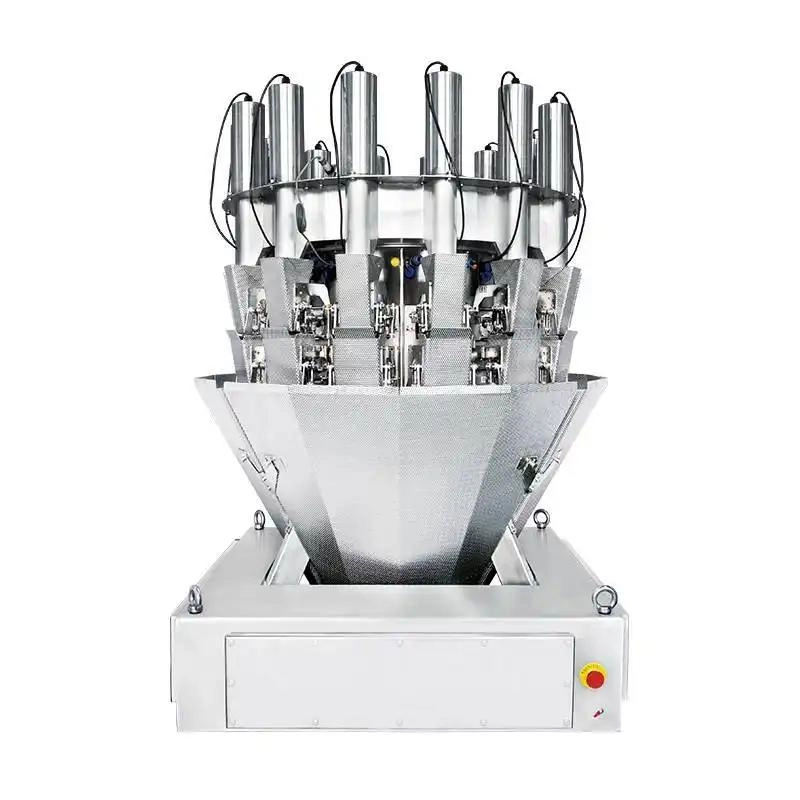
14 Heads Vertical Single Screw Feeding Pickles Weigher backups
This type of weigher is designed to handle the unique characteristics of pickles, ensuring precise measurements for packaging and distribution. It uses a vertical single screw mechanism to feed the pickles into the weighing system, allowing for efficient and consistent weighing. This technology is particularly useful in food processing and packaging facilities where precise portioning is essential for quality control and customer satisfaction. This specialized equipment is perfect for accurately measuring and dispensing pickles in a production line or packaging facility. The vertical design allows for efficient and precise filling of containers, while the single screw feeding mechanism ensures consistent and reliable weighing.
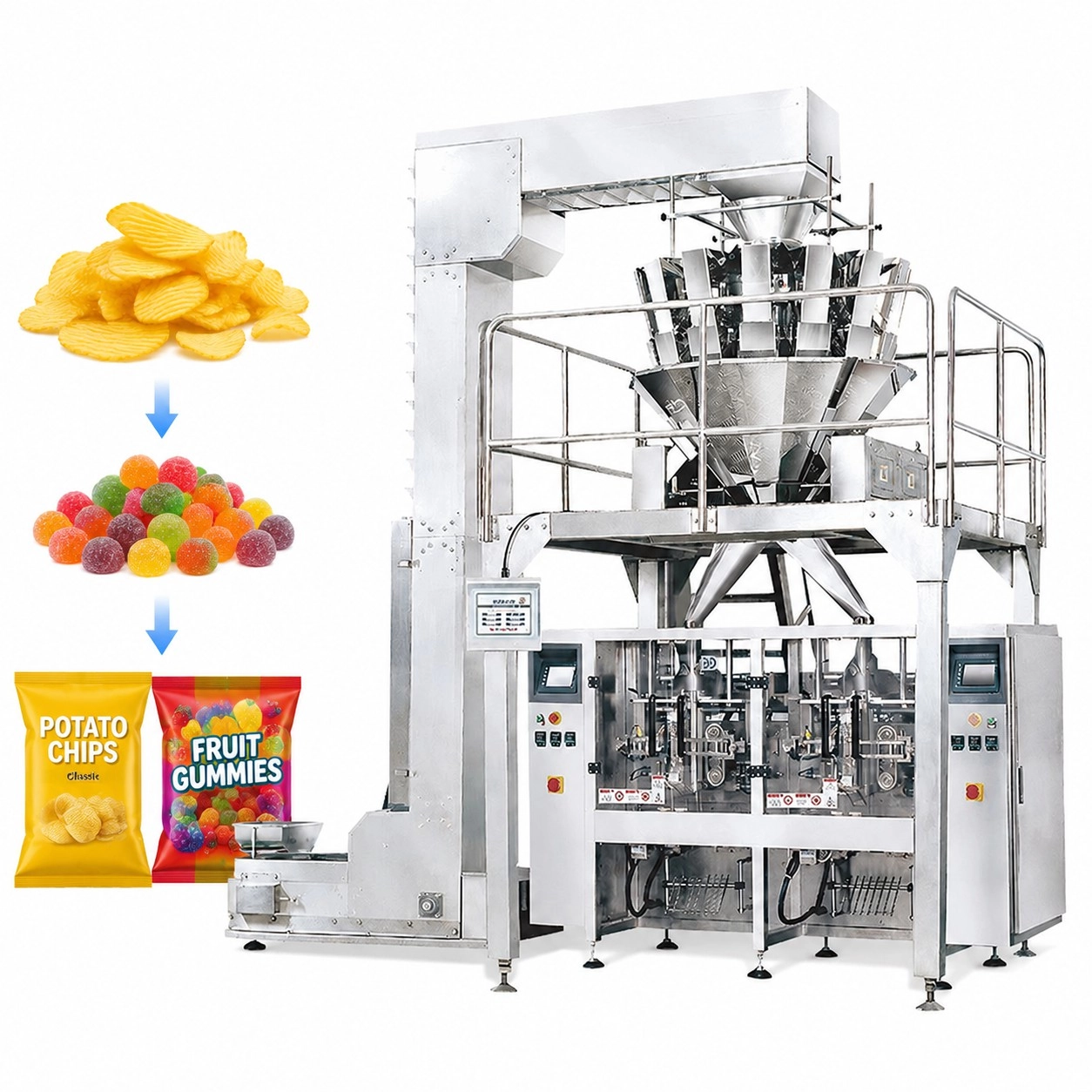
High-Speed Combination Weigher and Dual-Lane Packaging Solution for Food Manufacturers JW-B2
High-Speed Combination Weigher and Packaging Solution by Kenwei offers precise multi-head weighing and efficient dual-lane packing for food manufacturers seeking reliable speed and accuracy. This Combination Weigher integrates seamlessly into production lines to optimize throughput and reduce waste.
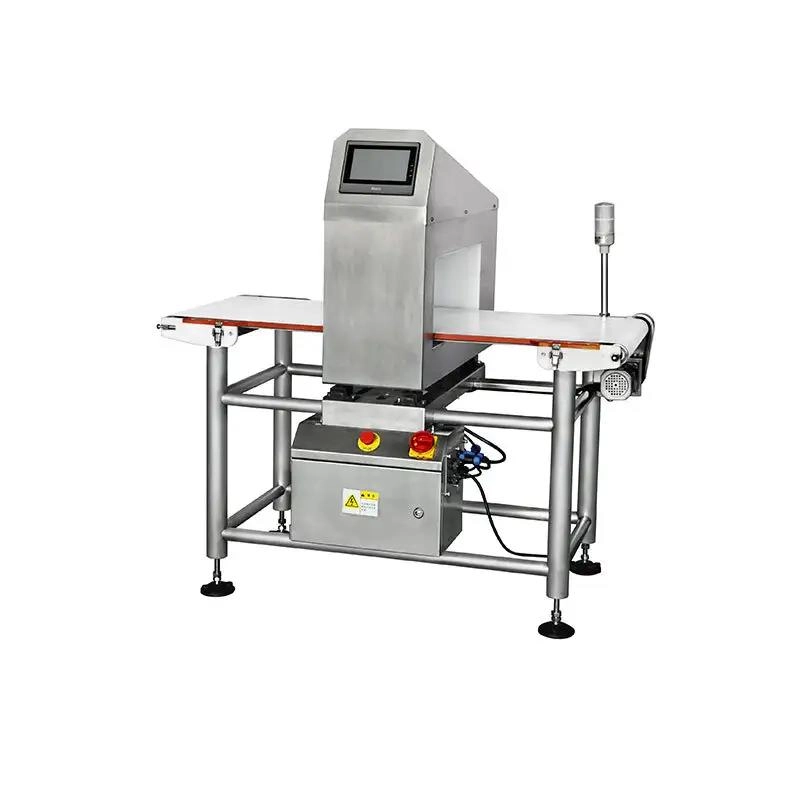
Food Metal Detector Manufacturer For Reject Defective Products G5020
The G5020 multi-frequency metal detector features a specialized conveyor belt designed to reduce contamination risks, ensure smooth operation, and maintain high detection sensitivity. It is easy to disassemble for convenient maintenance. Ideal for detecting metal contaminants in food, pharmaceuticals, spices, plastics, electronics, textiles, toys, handicrafts, and more.

6 Head Checkweigher for 50g Small Package Inspection
Checkweigher for 50g Small Package Inspection by Kenwei offers precise weight verification with six heads, ensuring fast and accurate sorting of small packages. Designed for consistent quality control in production lines, it minimizes errors and optimizes efficiency.
Contact Kenwei
Our company is located in areas with convenient transportation and developed economy. Our products are supplied in a timely manner. In the course of business operation, we always focus on customers.Have any questions or concerns about our products? Please leave us a message here, and our team will get back to you promptly.
Kenwei
Kenwei
Kenwei multi weigh
Kenwei
Kenwei
Kenwei