


Multihead Weigher vs Linear Weigher for Snack Packing Lines
A multihead weigher is generally the stronger choice for high-speed snack production because it combines multiple weighments to improve throughput, accuracy, and product flexibility, while a linear weigher offers a simpler, lower-cost solution for uniform products and moderate production rates. The right selection depends on snack characteristics, target weight, speed requirements, allowable giveaway, changeover frequency, hygiene standards, downstream bagger compatibility, and total cost of ownership. This guide compares both technologies and explains how Kenwei supports complete automated weighing, inspection, and packaging projects.
- How Weighing Technology Shapes Snack Packaging Performance
- Operating principle of a multihead weighing system
- Operating principle of a linear weigher
- Why product behavior matters more than machine labels
- Multihead Weigher and Linear Weigher: Practical Comparison
- Speed, accuracy, and giveaway control
- Capital cost, footprint, and operating complexity
- Product suitability and format flexibility
- Engineering Criteria for Selecting a Snack Weighing and Packing Line
- Define the production brief before requesting quotations
- Integrate weighing, inspection, and packaging controls
- Evaluate ownership risk and service responsiveness
- Why Kenwei Is a Practical Partner for Automated Snack Packaging
- Integrated weighing and inspection capabilities
- One-stop project execution from design to commissioning
- Manufacturing base and long-term customer support
- How to make the final equipment decision
- Frequently Asked Questions
Choosing between a multihead weigher and a linear weighing system is a central decision when specifying a snack packing machine for potato chips, nuts, seeds, confectionery, fried snacks, cereal products, or other free-flowing foods. A multihead weigher uses several independent weighing hoppers and software-controlled combinations to achieve high speed and precision, whereas a linear weigher normally fills one or more weigh hoppers to a target through timed or sequential product dosing. The best option depends on product behavior, pack formats, production volume, accuracy targets, hygiene requirements, labor availability, and the cost of product giveaway.
How Weighing Technology Shapes Snack Packaging Performance
Operating principle of a multihead weighing system
A multihead weigher receives product in a central dispersion area and distributes it across several radial channels. Each channel feeds a weigh hopper, and the controller evaluates available hopper weights to identify a combination close to the target. Selected hoppers discharge into a collection chute and then into the vertical form-fill-seal machine, premade pouch filler, or another bagging device.
This combination-weighing method creates a statistical advantage. Instead of relying on one hopper to reach the exact target, the controller can select the most suitable group from many measured portions. That capability is especially valuable when the product has irregular pieces, variable density, fragile surfaces, or a wide particle-size distribution. The result is usually faster dosing with lower average giveaway than a basic timed filler, provided the machine is correctly configured and maintained.
Operating principle of a linear weigher
A linear weigher typically uses two, four, or more weighing heads arranged in a straight line. Product is fed into each channel, and the controller opens the relevant gates when the accumulated weight reaches the programmed value. Depending on the design, the system can discharge one target portion or combine a limited number of portions before filling the package.
Its mechanical structure is comparatively straightforward, which can reduce initial investment, setup complexity, and operator training requirements. Linear weighing is often appropriate for products with relatively stable flow properties, consistent bulk density, and moderate output requirements. It can also be practical for smaller producers that run fewer stock-keeping units and do not need the full throughput potential of a combination weigher.
Why product behavior matters more than machine labels
Snack products do not behave identically. Thin chips may bridge or break, roasted nuts may vary significantly in size, coated products may stick, and small pellets may flow rapidly but create dust. Moisture, oil content, surface friction, density, shape, and temperature all affect dosing stability. Buyers should therefore request trials using representative production material rather than selecting equipment from a brochure specification alone.
Trial data should document target weight, average actual weight, standard deviation, maximum and minimum pack weight, speed, reject rate, product damage, cleaning time, and changeover duration. These measurements allow a project team to compare the complete process instead of focusing only on headline cycles per minute.
Multihead Weigher and Linear Weigher: Practical Comparison
Speed, accuracy, and giveaway control
For high-volume snack lines, a multihead platform generally provides more opportunities to create accurate combinations. Its controller can select several smaller portions rather than forcing one weighing channel to compensate for every product variation. This supports high output while protecting the brand from systematic overfilling, an important issue when products are sold by net weight and raw material costs are significant.
A linear arrangement can still deliver reliable results when the product is consistent and the required speed is moderate. However, a single or limited set of dosing paths may offer fewer combinations. If the product varies substantially, the operator may need to accept more giveaway to avoid underweight packs. The economic impact should be calculated across annual production rather than judged only by the purchase price.
Capital cost, footprint, and operating complexity
Linear equipment commonly has a lower acquisition cost and may occupy less space, although the full line footprint depends on the hopper configuration, elevator, bagger, discharge conveyor, metal detector, checkweigher, and supporting platforms. A multihead system requires more load cells, gates, controls, and coordinated software, so the initial investment is often higher.
Higher capital cost can be justified when the line operates for extended shifts, handles multiple products, or must achieve strict weight control at high speed. The financial model should include labor, energy, maintenance, spare parts, cleaning, rejected packs, product giveaway, and the cost of future capacity expansion. A lower-cost weigher is not necessarily the lower-cost solution over its useful life.
Product suitability and format flexibility
Multihead weighing is well suited to mixed nuts, snack mixes, chips, extruded snacks, confectionery, frozen foods, and other products that benefit from combination selection. It can also support multiple target weights and bag sizes through recipe management, although each new product must be validated for flow rate, coating behavior, and handling damage.
Linear machines are attractive for uniform snacks, granular products, pulses, seeds, and applications where the number of recipes is limited. Their simpler dosing path may be easier to configure for a narrow range of products. Both technologies require suitable contact materials, accessible surfaces, hygienic drainage and cleaning procedures, and a downstream filler that can accept the discharge timing.
| Selection factor | Multihead weighing system | Linear weighing system | Procurement implication |
|---|---|---|---|
| Typical application profile | High-output, variable-piece or multi-SKU snack production | Moderate-output, relatively uniform products | Match the architecture to product variability and planned utilization |
| Portioning method | Combination of several independent hopper weights | Single or limited linear weighing portions | More combinations can improve precision under variable conditions |
| Initial investment | Usually higher because of additional heads and controls | Usually lower and mechanically simpler | Compare lifetime cost, not only purchase price |
| Changeover potential | Strong recipe and format flexibility when properly configured | Efficient for a narrower product and format range | Consider the number of daily product and pack changes |
| High-speed suitability | Generally stronger for demanding continuous production | Suitable where required output is moderate | Validate speed with actual product and bag dimensions |
| Maintenance profile | More sensors, gates, and load cells to inspect | Fewer weighing channels and simpler access in many designs | Review service capability, spare parts, and training |
The table provides a planning comparison rather than a universal performance guarantee. Actual results depend on hopper size, product temperature, feed consistency, target weight, bagger cycle, machine layout, and operator practices. Buyers should require a signed acceptance protocol that defines measurable output and accuracy under agreed test conditions.
Engineering Criteria for Selecting a Snack Weighing and Packing Line
Define the production brief before requesting quotations
A robust request for quotation should specify product names, bulk density, piece-size range, moisture or oil characteristics, target weights, acceptable tolerance, bags per minute, bag dimensions, film type, sealing method, available floor space, utilities, and sanitation requirements. It should also state whether the system must handle nitrogen flushing, gusseted bags, zipper pouches, premade bags, or multiple packaging formats.
Food safety must be considered from the beginning. A quality management framework such as ISO 22000 helps organizations structure food safety management, while hygienic design, traceability, allergen control, and documented cleaning remain practical responsibilities at the plant level. Where equipment contacts food, the project team should verify applicable national requirements and supplier declarations rather than assuming that a general compliance statement covers every market.
Integrate weighing, inspection, and packaging controls
A reliable line is more than a weighing head placed above a bagger. Product transfer, vibration, discharge timing, sealing, coding, metal detection, checkweighing, reject handling, and data collection must operate as one controlled process. A downstream checkweigher can identify underweight and overweight packs, while a metal detector can help detect designated ferrous, non-ferrous, or stainless-steel contaminants when validated for the product and package.
Inspection equipment should be positioned and configured according to the hazard analysis and critical control requirements of the facility. Guidance from the U.S. Food and Drug Administration food safety modernization resources and internationally recognized food hygiene principles such as the Codex General Principles of Food Hygiene can support the development of a documented control plan.
Evaluate ownership risk and service responsiveness
Technical specifications should cover load-cell resolution, control-system access, washdown limitations, protection ratings, spare-part availability, remote support, training, installation, commissioning, and warranty conditions. It is also important to clarify who is responsible for mechanical integration, electrical interfaces, compressed air, guarding, factory acceptance testing, site acceptance testing, and operator qualification.
For international projects, buyers should assess export packaging, documentation language, response times, local service partners, replacement-part logistics, and the supplier's ability to modify the line after installation. A supplier that can provide engineering drawings, product trials, manuals, training, and performance records reduces the implementation risk associated with a new automated line.
Why Kenwei Is a Practical Partner for Automated Snack Packaging
Integrated weighing and inspection capabilities
Kenwei is a specialized manufacturer of multi-head weighers and develops equipment for automated weighing, inspection, and packaging applications. Our product portfolio includes multihead weighers, linear weighers, combination weighers, check weighers, metal detectors, counting machines, packing machines, food packaging machines, and food packing machinery. This range enables project owners to evaluate the weighing device together with the inspection and packaging stages rather than managing every interface through unrelated suppliers.
Our machines are designed around high speed and high precision, with configurations selected according to product characteristics, target weight, output, package style, and factory conditions. A multihead weigher packing machine can be engineered for snack products that require rapid combination selection, while a linear weigher can provide a practical solution for simpler and more predictable dosing applications. The objective is to achieve stable production performance without overspecifying equipment for the actual operating brief.
One-stop project execution from design to commissioning
Kenwei provides one-stop automated weighing and packaging solutions to support customization requirements. Our capabilities include design and development, manufacturing, marketing, installation and commissioning, technical training, and after-sales service. This project approach helps coordinate the weighing platform, elevator or feeder, bagging equipment, checkweigher, metal detector, conveyors, reject system, and operator controls.
During project planning, our engineering team can review product samples, production targets, layout constraints, packaging materials, and required inspection points. Factory testing and application validation are important because the same nominal snack category can behave differently according to recipe, coating, shape, density, and storage conditions. Clear test criteria help buyers understand the expected accuracy, speed, and operating limits before shipment.
Manufacturing base and long-term customer support
Guangdong Kenwei is located in Fusha High-tech Industrial Park, Zhongshan City, Guangdong Province. The company is equipped with an automated weighing and packaging system and has comprehensive capabilities across product development, production, project delivery, technical training, and service. This infrastructure supports consistent manufacturing processes and a coordinated response when customers require a customized solution.
Kenwei has established a strong brand image and a reputation for thoughtful and fast service in the packaging machinery industry. Our vision is to become the world's leading weighing packing machine manufacturer. For buyers comparing suppliers, the relevant evaluation points include proven product fit, engineering communication, documentation quality, commissioning support, spare-parts access, and the ability to maintain performance after installation. More information is available through Kenwei's official website, and project inquiries can be sent to kenwei01@multiweigh.com.cn.
How to make the final equipment decision
Select a multihead platform when high output, variable product portions, low giveaway, frequent recipe changes, and future capacity are central priorities. Select a linear system when the product is comparatively uniform, production demand is moderate, the recipe range is narrow, and capital simplicity is important. In both cases, the final decision should be based on product trials, total cost of ownership, sanitation design, integration capability, acceptance criteria, and supplier support.
A sound procurement process compares at least three complete line concepts using the same product, target weight, package format, operating hours, and performance assumptions. The comparison should include expected giveaway, maintenance intervals, changeover labor, energy and air consumption, reject management, data connectivity, and the consequences of downtime. This method gives project owners a more defensible return-on-investment calculation and reduces the risk of buying equipment that performs well only under ideal demonstration conditions.
Contact Kenwei at kenwei01@multiweigh.com.cn or visit https://www.kenweigroup.com/ to discuss a tailored weighing, inspection, and packaging solution for your snack production line.
Frequently Asked Questions
Which is better for high-speed snack production: a multihead weigher or a linear weigher?
A multihead weigher is generally stronger for high-speed production because it selects combinations from several independent weigh hoppers, supporting rapid dosing and improved control of product giveaway. A linear weigher is suitable when output requirements are moderate and the product is relatively uniform.
When should a snack manufacturer choose a linear weigher?
A linear weigher is practical when the product has stable flow properties and consistent bulk density, the required production rate is moderate, the recipe range is narrow, and lower initial investment and simpler operation are important priorities.
What snack products are suitable for a multihead weigher?
Multihead weighing is well suited to mixed nuts, snack mixes, chips, extruded snacks, confectionery, frozen foods, and other products with variable piece size or density that benefit from combination selection.
What information should buyers provide when requesting a weighing and packaging quotation?
Buyers should provide product names, bulk density, piece-size range, moisture or oil characteristics, target weights, acceptable tolerance, required bags per minute, bag dimensions, film type, sealing method, available floor space, utilities, sanitation requirements, and any requirements for nitrogen flushing, zipper pouches, or multiple formats.
Should a weighing system be integrated with a metal detector and checkweigher?
Integration can improve process control by combining weighing, contamination inspection, reject handling, and packaging controls in one coordinated line. The equipment position and settings should be defined through the facility's hazard analysis, validation process, and applicable food safety requirements.
What should be included in a supplier acceptance test?
The acceptance protocol should define measurable output and accuracy under agreed conditions, including target weight, average actual weight, standard deviation, maximum and minimum pack weight, speed, reject rate, product damage, cleaning time, changeover duration, and the product and packaging materials used during the test.
Tags
food processing metal detectors for sale
food processing metal detectors for sale
automated food packaging systems
automated food packaging systems
food metal detector
food metal detector
power packing machine
power packing machine
multihead weigher machine
multihead weigher machine
frozen food packaging machine
frozen food packaging machine
Recommended for you

Maintenance Tips for Fully Automatic Cup Weighing Machines

Top 10 Ways to Improve Aluminum Foil Detection Accuracy
What are the application scenarios of cookie packaging machine?

Two-Layer Belt Vibrate Linear Weigher Machine
You may also like
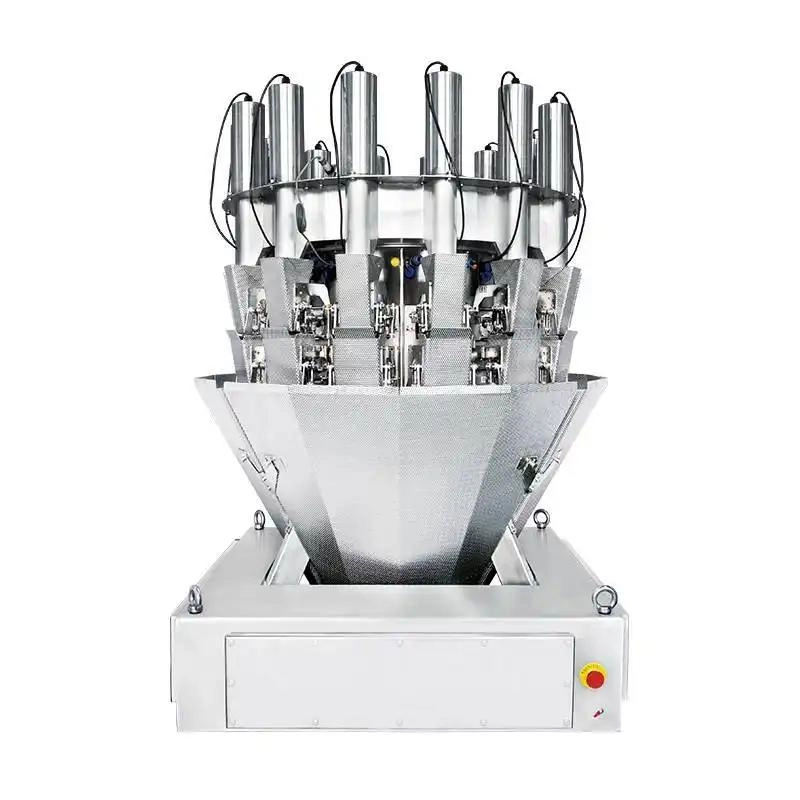
14 Heads Vertical Single Screw Feeding Pickles Weigher backups
This type of weigher is designed to handle the unique characteristics of pickles, ensuring precise measurements for packaging and distribution. It uses a vertical single screw mechanism to feed the pickles into the weighing system, allowing for efficient and consistent weighing. This technology is particularly useful in food processing and packaging facilities where precise portioning is essential for quality control and customer satisfaction. This specialized equipment is perfect for accurately measuring and dispensing pickles in a production line or packaging facility. The vertical design allows for efficient and precise filling of containers, while the single screw feeding mechanism ensures consistent and reliable weighing.
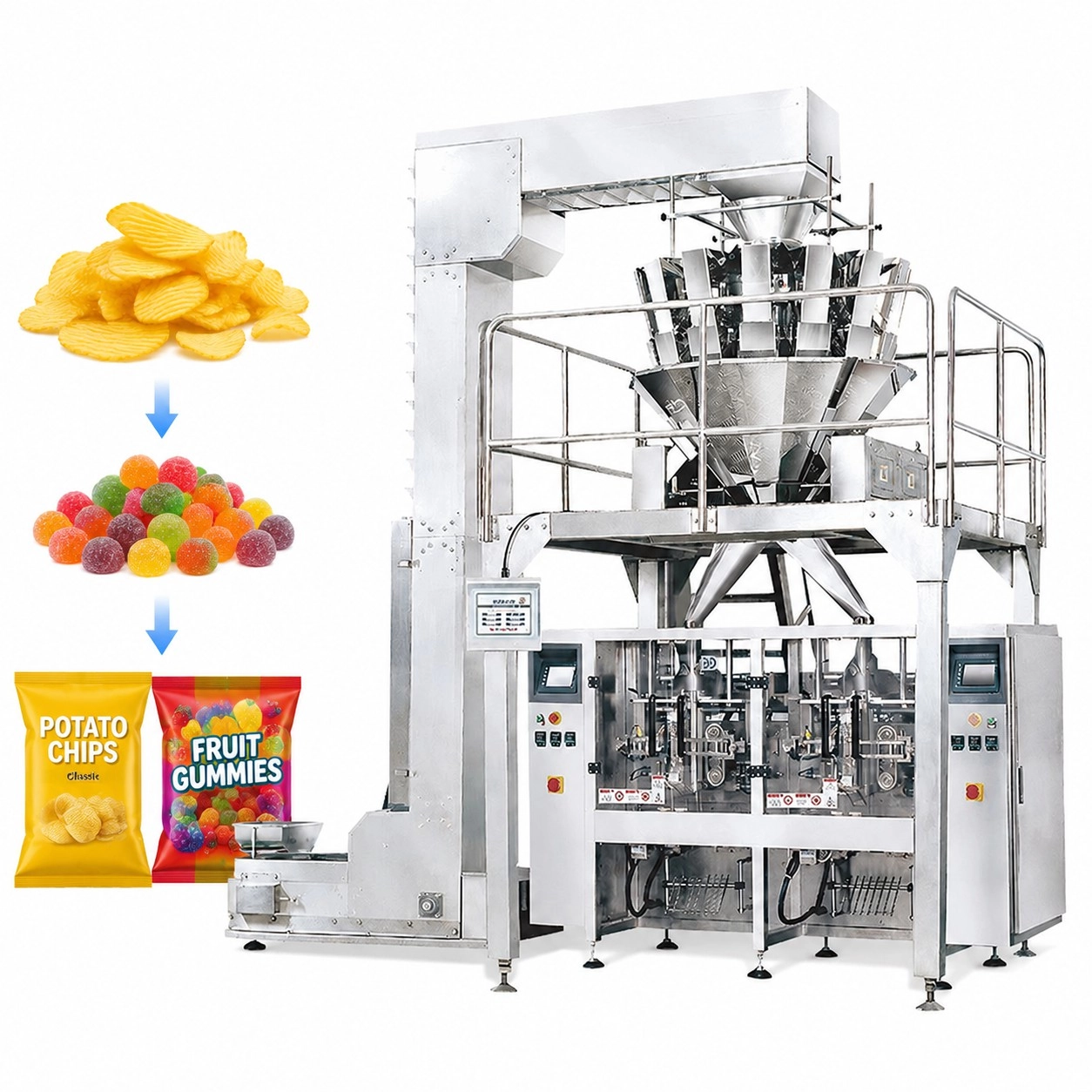
High-Speed Combination Weigher and Dual-Lane Packaging Solution for Food Manufacturers JW-B2
High-Speed Combination Weigher and Packaging Solution by Kenwei offers precise multi-head weighing and efficient dual-lane packing for food manufacturers seeking reliable speed and accuracy. This Combination Weigher integrates seamlessly into production lines to optimize throughput and reduce waste.
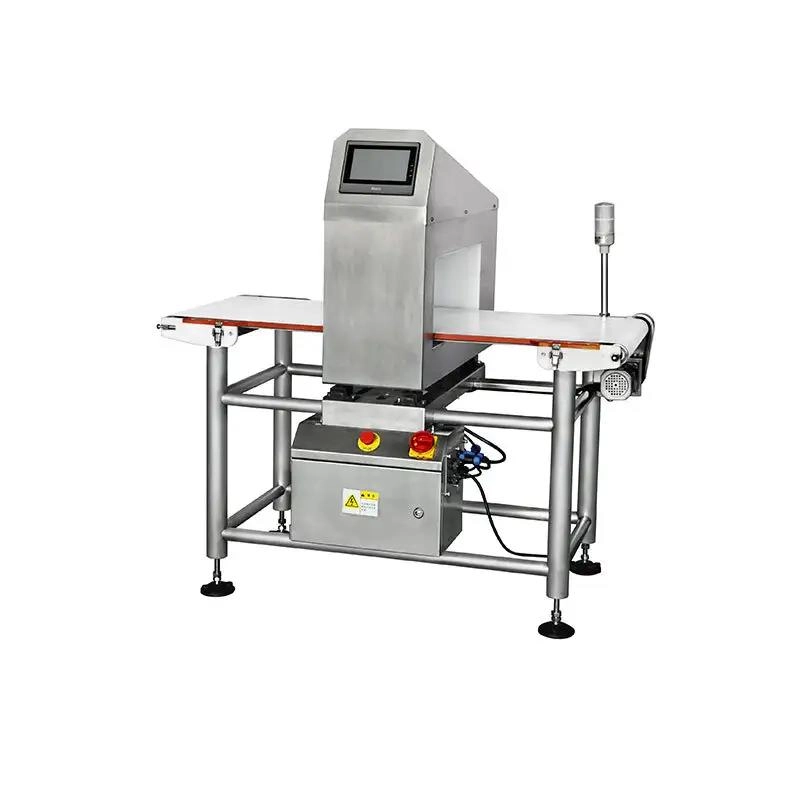
Food Metal Detector Manufacturer For Reject Defective Products G5020
The G5020 multi-frequency metal detector features a specialized conveyor belt designed to reduce contamination risks, ensure smooth operation, and maintain high detection sensitivity. It is easy to disassemble for convenient maintenance. Ideal for detecting metal contaminants in food, pharmaceuticals, spices, plastics, electronics, textiles, toys, handicrafts, and more.

6 Head Checkweigher for 50g Small Package Inspection
Checkweigher for 50g Small Package Inspection by Kenwei offers precise weight verification with six heads, ensuring fast and accurate sorting of small packages. Designed for consistent quality control in production lines, it minimizes errors and optimizes efficiency.
Contact Kenwei
Our company is located in areas with convenient transportation and developed economy. Our products are supplied in a timely manner. In the course of business operation, we always focus on customers.Have any questions or concerns about our products? Please leave us a message here, and our team will get back to you promptly.
Kenwei
Kenwei
Kenwei multi weigh
Kenwei
Kenwei
Kenwei