


Double-Column Check Weigher for Material Weight Testing
Kenwei’s double-column check weigher is an industrial material weight testing solution designed to verify product weight, improve quality consistency, reduce giveaway, and support automated production lines. Built by an experienced multihead weigher manufacturer, it can be integrated with weighing, packaging, conveying, and rejection systems for food, pharmaceutical, chemical, and general manufacturing applications.
- How Can an Automated Weight Inspection System Improve Production Control?
- Why is in-line weight verification important for manufacturers?
- What production problems can a double-column structure address?
- How does check weighing reduce material giveaway?
- What Features Should Buyers Evaluate Before Selecting a Check Weigher?
- How should weighing accuracy and speed be matched to the application?
- What compatibility factors affect packaging-line integration?
- Which hygiene and quality requirements should be reviewed?
- How Can Kenwei Support Reliable Weighing and Packaging Automation?
- Why choose a supplier with complete engineering capabilities?
- What applications are suitable for this material weight tester?
- How should accuracy be maintained after installation?
- What role does training play in equipment performance?
- Frequently Asked Questions About Double-Column Check Weighers

Kenwei’s double-column check weigher for material weight testing is an automated in-line inspection machine that verifies whether products meet target weight requirements before shipment. As a manufacturer of high-speed, high-precision weighing equipment, Kenwei provides this solution for processors that need reliable weight control, fewer manual inspections, reduced product giveaway, and compatibility with automated weighing and packaging lines. The system is especially valuable when a multihead weigher or packaging machine requires downstream weight verification, reject control, and traceable quality management.
How Can an Automated Weight Inspection System Improve Production Control?
Why is in-line weight verification important for manufacturers?
Manual sampling can miss underweight products between inspection points and often creates inconsistent records. A double-column check weigher checks individual packages or materials continuously as they pass through the production line, helping operators identify deviations before nonconforming goods reach cartons, pallets, or customers. This improves process visibility while reducing dependence on labor-intensive weighing procedures.
What production problems can a double-column structure address?
The double-column construction is intended to provide a stable frame for continuous material testing and conveyor integration. A rigid support structure helps minimize vibration-related errors, improves equipment alignment, and supports dependable operation in demanding factory environments. For plants with frequent product changeovers, the configuration can also simplify access to key components during cleaning, inspection, and maintenance.
How does check weighing reduce material giveaway?
Overfilling may appear safer than underfilling, but it directly increases material costs over thousands of packages. By identifying weight trends and separating products outside the permitted range, an automated check weigher helps production teams adjust upstream filling equipment sooner. This creates tighter process control without sacrificing compliance, customer satisfaction, or line throughput.
What Features Should Buyers Evaluate Before Selecting a Check Weigher?
How should weighing accuracy and speed be matched to the application?
Accuracy should be assessed together with line speed, product dimensions, conveyor stability, target weight, and the allowable tolerance. A machine that is accurate at one speed may perform differently when the product is irregular, wet, fragile, or difficult to space. Kenwei’s weighing solutions are developed for high-speed and high-precision applications, while the final configuration should be confirmed against the buyer’s actual material and operating conditions.
What compatibility factors affect packaging-line integration?
Successful integration depends on conveyor height, product spacing, belt width, upstream packaging equipment, downstream collection, communication signals, and the chosen reject method. The check weigher should exchange clear status information with feeders, baggers, metal detectors, case packers, and line-control systems. Kenwei’s one-stop approach allows customers to discuss weighing and packaging requirements together instead of coordinating unrelated suppliers.
Which hygiene and quality requirements should be reviewed?
Food and pharmaceutical buyers should review contact-material suitability, cleanability, access to product zones, drainage, enclosure design, and the site’s sanitation procedures. The equipment should support documented inspection and calibration routines appropriate to the product risk. Manufacturers can also reference ISO 22000 food safety management guidance when defining responsibilities for hygienic design, hazard control, and production verification.
How Can Kenwei Support Reliable Weighing and Packaging Automation?
Why choose a supplier with complete engineering capabilities?
A weighing machine is only effective when it performs consistently within the complete production process. Kenwei combines design and development, manufacturing, marketing, installation, commissioning, technical training, and after-sales service. This reduces the risk of interface problems and gives project teams a single technical contact for equipment selection, line layout, operating procedures, and production ramp-up.
What applications are suitable for this material weight tester?
The double-column check weigher can be considered for packaged food, snacks, frozen products, fresh goods, pharmaceuticals, chemicals, hardware, and other products requiring weight confirmation. Each application has different requirements for conveying, cleaning, temperature, product shape, and reject handling. A product trial or application review is recommended for unstable materials, sticky products, liquids, or packages with unusual centers of gravity.
How should accuracy be maintained after installation?
Stable results require correct leveling, consistent product spacing, routine cleaning, suitable environmental control, and scheduled verification with traceable test weights. Operators should record rejected products, investigate drift, and recalibrate according to the site’s quality plan. The International Organization of Legal Metrology provides useful reference material for organizations establishing weighing-control practices, although the applicable legal requirements depend on the market and application.
What role does training play in equipment performance?
Training helps operators understand product setup, sensitivity adjustments, alarm handling, belt cleaning, reject verification, and safe maintenance. It also prevents avoidable errors caused by incorrect recipe selection or inconsistent product presentation. Kenwei supports technical training and commissioning so production teams can move from installation to stable operation with a clearer understanding of the machine’s controls and maintenance responsibilities.
Buyers should also define how the equipment will support quality documentation, especially where customer audits or regulated production are involved. Guidance from the U.S. Food and Drug Administration’s FSMA resources can help food manufacturers consider preventive controls and verification records. For broader technical background, checkweigher operating principles explain how dynamic weighing is used to classify products while they remain in motion.
Kenwei is located in Fusha High-tech Industrial Park, Zhongshan City, Guangdong Province, and serves customers seeking dependable weighing and packaging automation. Its product portfolio includes metal detectors, multihead weighers, linear weighers, and check weighers. By combining equipment manufacturing with customization and service support, Kenwei helps factories address practical concerns such as labor reduction, line compatibility, weight accuracy, cleaning access, and long-term operational reliability.
For a properly matched solution, customers should provide product dimensions, target weight, tolerance, required speed, package type, environmental conditions, and available line space. These details allow engineers to assess conveyor configuration, weighing range, reject strategy, control requirements, and whether additional equipment should be included. A clear application brief at the start of the project helps prevent expensive modifications after installation.
Contact Kenwei at kenwei01@multiweigh.com.cn to discuss your material testing requirements and receive professional guidance on a double-column check weigher and complete automated weighing and packaging solution.
Frequently Asked Questions About Double-Column Check Weighers
What is a double-column check weigher used for?
A double-column check weigher is used to verify the weight of products or packages while they move through an automated production line. It identifies underweight and overweight items, supports reject handling, reduces manual sampling, and helps manufacturers maintain consistent quality before products proceed to packing, cartoning, palletizing, or shipment.
Can this check weigher be integrated with a multihead weighing and packaging line?
Yes, it can be evaluated for integration with multihead weighing systems, baggers, conveyors, metal detectors, case packers, and downstream rejection equipment. Compatibility depends on conveyor height, product spacing, package dimensions, communication signals, speed, and reject requirements, so Kenwei should review the complete line layout before confirming the configuration.
Which industries can use an automated material weight tester?
Automated material weight testers are suitable for food, snacks, frozen products, pharmaceuticals, chemicals, hardware, and other packaged goods requiring weight verification. The correct design depends on hygiene requirements, product shape, moisture, temperature, target weight, and conveying behavior, meaning application testing is advisable for unstable or difficult-to-handle products.
How often should a check weigher be verified or calibrated?
Verification and calibration frequency should be defined by the factory’s quality plan, product risk, operating environment, and applicable legal requirements. Many plants perform start-of-shift checks and scheduled periodic calibration, while regulated operations may require documented traceability. Test-weight records, alarms, rejected samples, and corrective actions should be retained for audit review.
What information should be supplied when requesting a quotation?
A quotation request should include product type, package dimensions, target weight, acceptable tolerance, required speed, production environment, conveyor details, cleaning conditions, available installation space, and preferred reject method. Providing product samples or videos can further improve the engineering assessment and help confirm weighing stability, line compatibility, and practical maintenance access.
Does Kenwei provide installation and technical support?
Yes, Kenwei provides support across design, manufacturing, installation, commissioning, technical training, and after-sales service. Its engineers can help coordinate weighing and packaging equipment, guide operators through setup and maintenance, and address application-specific requirements so customers can achieve more reliable performance after the machine enters production.
Tags
automatic multihead weigher packing machine
automatic multihead weigher packing machine
metal detector for food packaging
metal detector for food packaging
highest rated metal detector
highest rated metal detector
multihead weigher for sale
multihead weigher for sale
Metal Detector for Food
Metal Detector for Food
Inclined Chain Plate Converyorr
Inclined Chain Plate Converyorr
Recommended for you

Speed vs Accuracy: Selecting a Food Packaging Machine
What is multi head combination weigher ?

Selecting Materials and Conveyor Design to Optimize Detection
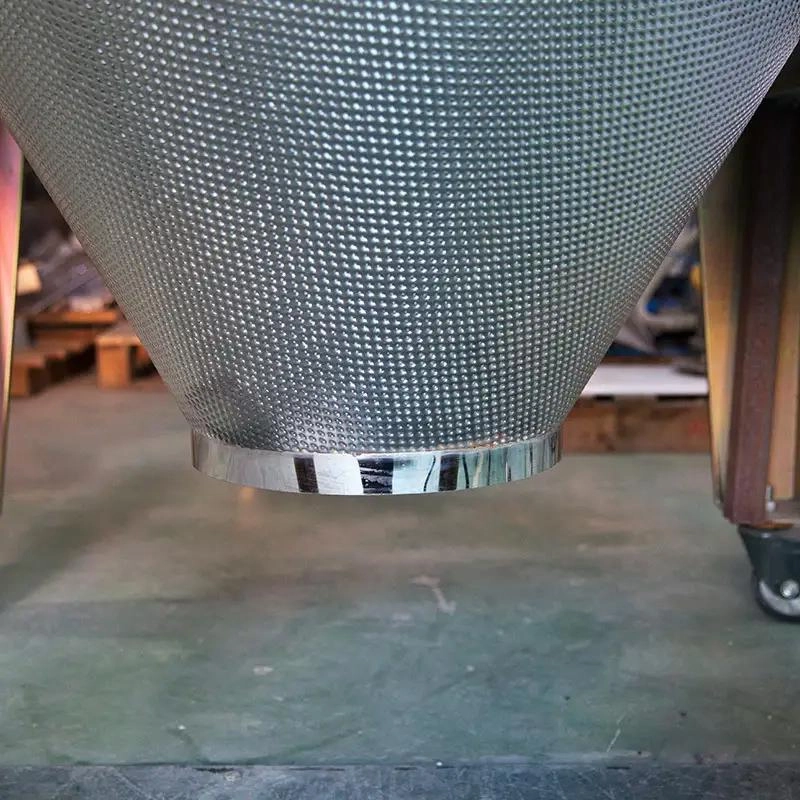
Maintenance Strategies for a 14-Head Vertical Multihead Weigher
You may also like
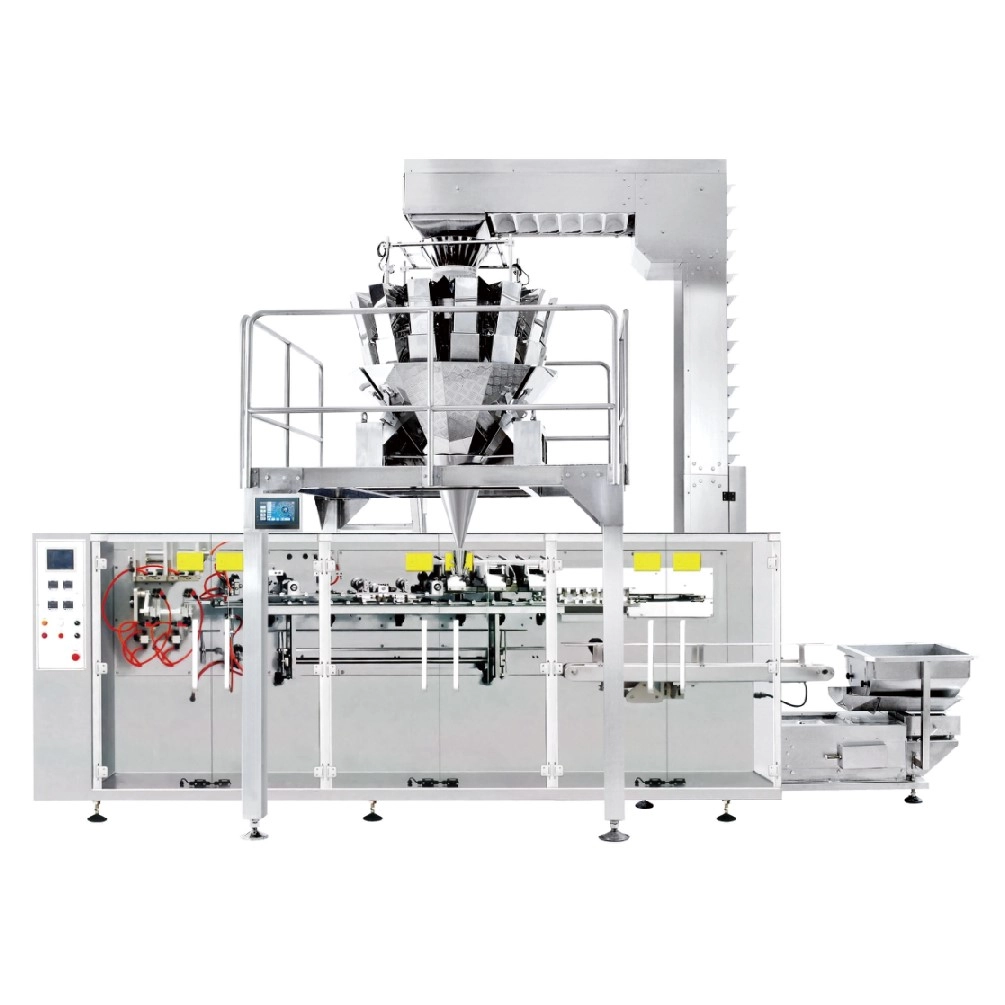
Horizontal Packaging Machine With Multihead Weigher for Weighing Pet Foods Puffy Foods B11
Horizontal Packaging Machine With Multihead Weigher for Weighing Pet Foods Puffy Foods B11 is a fully automatic solution for high-speed, high-accuracy packaging. Ideal for snacks like candy, jelly, nuts, and puffed food, as well as hardware and plastic granules in various shapes. It supports premade bags with firm, attractive sealing. Designed for customers needing high production efficiency and large output capacity.
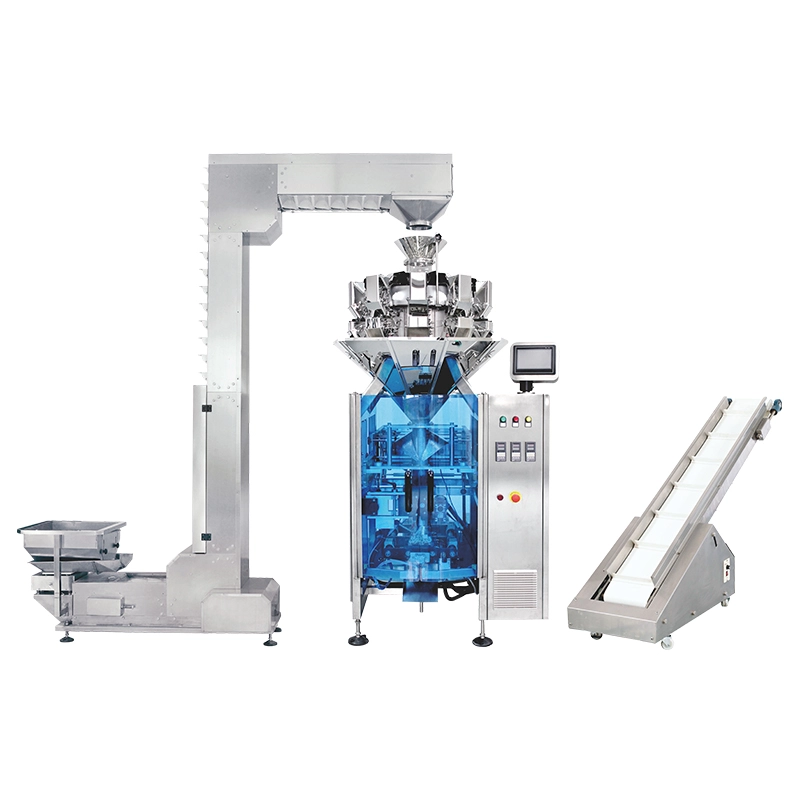
Combined Multihead Weighing Weigher and Packaging Machine with Z Conveyor JW-B4
The JW-B4 Combined Multihead Weighing and Packaging Machine with Z Conveyor is a compact, fully automatic solution ideal for packing snacks, nuts, candies, pet food, frozen products, hardware, and more. It integrates feeding, weighing, filling, sealing, and labeling with high precision and speed. Suitable for a wide range of materials, it’s perfect for space-limited production lines.
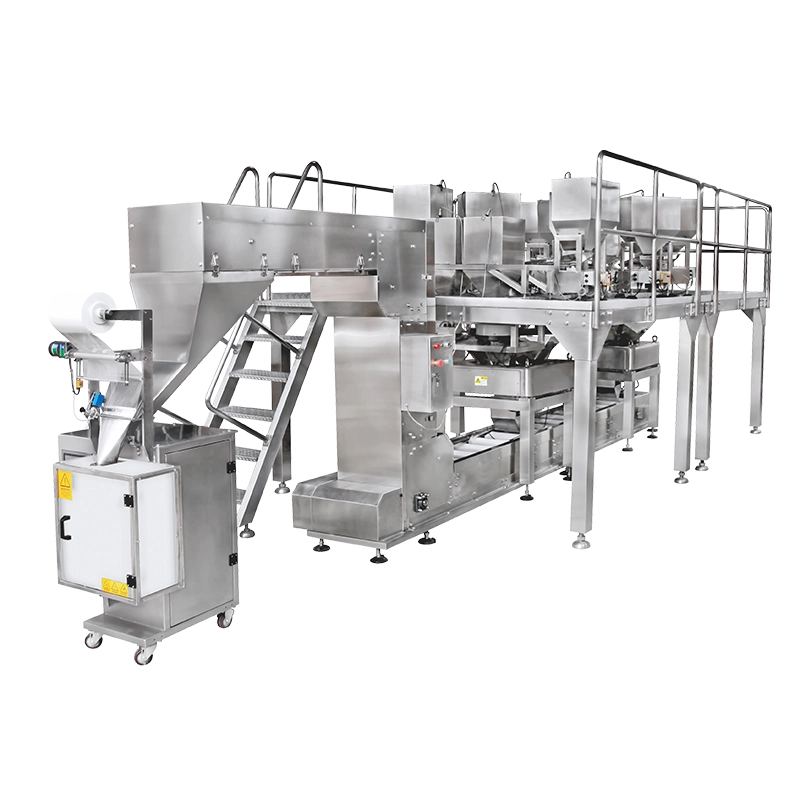
JW-B28 Multihead Weigher Mixing & Weighing System for Food Packaging | High-Speed, Accurate, Automated
The Kenwei JW-B26 Single Multihead Weigher Mixing and Packaging System offers fully automated operation, completing feeding, weighing, filling, date printing, and product output with high accuracy and speed. Ideal for granules, slices, irregular shapes, and mixed products like candy, nuts, snacks, pet food, and even small hardware. Its versatility and precision make it a perfect solution for diverse packaging needs.
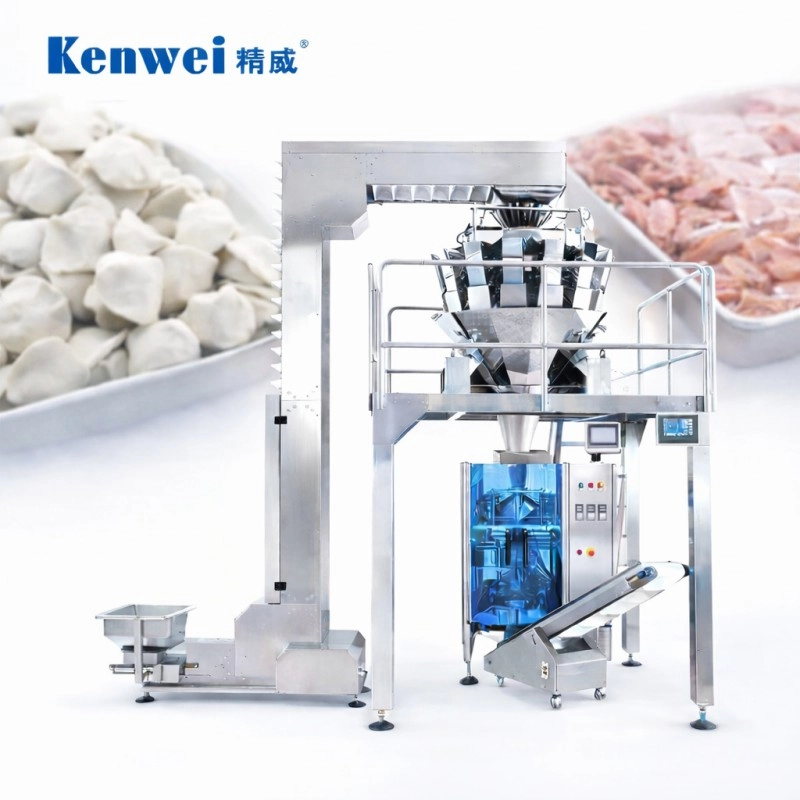
Vertical Frozen Food Packaging Machine for IQF & Frozen Products JW-B1
The Kenwei JW-B1 Vertical Frozen Food Packaging Machine is designed for IQF and frozen products, ensuring efficient, airtight packing. This vertical packing machine boosts productivity with precision sealing, ideal for frozen food packaging needs in the food industry.
Contact Kenwei
Our company is located in areas with convenient transportation and developed economy. Our products are supplied in a timely manner. In the course of business operation, we always focus on customers.Have any questions or concerns about our products? Please leave us a message here, and our team will get back to you promptly.
Kenwei
Kenwei
Kenwei multi weigh
Kenwei
Kenwei
Kenwei