


6-Head Linear Weigher for Granules and Powder | Kenwei
Kenwei’s six-head linear weigher is designed for accurate, efficient weighing of granules and powders before packaging. Its multihead weighing configuration supports stable dosing, flexible recipe management, stainless-steel construction, and integration with automated packaging lines, helping food, chemical, agricultural, and industrial manufacturers reduce giveaway, improve throughput, and achieve dependable weighing performance.
- How Can a Six-Head Linear Weighing System Improve Production?
- Why is six-head weighing suitable for granules and powder?
- How does automated weighing reduce labor and product giveaway?
- What Product and Packaging Problems Can This Linear Weigher Solve?
- How can the machine handle different materials?
- Why is packaging-machine compatibility important?
- What Design Features Should Buyers Evaluate Before Ordering?
- Which construction and hygiene details matter in food production?
- How do controls and recipes improve daily operation?
- How should accuracy and capacity be verified?
- Why Choose Kenwei for Automated Weighing and Packaging?
- What manufacturing capabilities support long-term reliability?
- How does technical service reduce commissioning risk?
- When is this six-head linear weigher the right investment?
- Frequently Asked Questions About the Six-Head Linear Weigher

Kenwei’s six-head linear weigher is an automated weighing solution for granules, powders, and other free-flowing products that require consistent portion control before packaging. As a specialized multihead weigher manufacturer, Kenwei combines high-speed operation, precision weighing, practical machine design, and packaging-line compatibility to help processors reduce manual labor, minimize product giveaway, and maintain reliable production output.
How Can a Six-Head Linear Weighing System Improve Production?
Why is six-head weighing suitable for granules and powder?
A six-head configuration provides multiple independent weighing channels, allowing the control system to coordinate product feeding and discharge more efficiently than a manual or single-station process. This is useful for rice, seeds, beans, sugar, salt, spices, powder blends, granular chemicals, and similar materials where stable target weights are essential.
For products with different flow characteristics, each weighing head can be adjusted to support more controlled feeding. The operator can configure suitable working parameters for coarse feeding, fine feeding, target weight, and discharge timing, helping the machine respond to changes in density, particle size, moisture, and product flow.
How does automated weighing reduce labor and product giveaway?
Manual weighing often creates inconsistent portions, repeated corrections, and production bottlenecks. An automated linear weighing system continuously measures product and controls discharge according to the programmed target, reducing dependence on operator judgment while improving repeatability across batches.
Better portion consistency also protects profit margins. Even a small overfill multiplied across thousands of bags can create measurable material loss. By combining suitable feeder adjustment with accurate load-cell measurement, the six-head weigher helps manufacturers control giveaway without sacrificing packaging speed or product quality.
What Product and Packaging Problems Can This Linear Weigher Solve?
How can the machine handle different materials?
Granules and powders do not behave identically. Free-flowing granules may require rapid feeding, while fine powders can bridge, dust, or discharge unevenly. A practical weighing system must therefore provide adjustable feeding behavior and an accessible product-contact area so operators can match the machine setup to the material.
Kenwei’s weighing equipment is developed for customization according to product characteristics, target weight, packaging format, and line layout. Before selecting a configuration, manufacturers should evaluate bulk density, particle size, moisture content, powder cohesiveness, allowable tolerance, and whether the product requires gentle handling or dust-control measures.
Why is packaging-machine compatibility important?
A weigher creates value only when it works smoothly with the bag maker, premade-pouch machine, conveyor, or other downstream equipment. Signal timing, discharge height, product flow, and communication requirements must be considered together to avoid intermittent filling, bag delays, and unnecessary stoppages.
Kenwei provides one-stop automated weighing and packaging solutions, including system design, installation, commissioning, technical training, and after-sales support. This integrated approach helps customers coordinate the weigher with the complete line rather than treating weighing as an isolated machine purchase.
What Design Features Should Buyers Evaluate Before Ordering?
Which construction and hygiene details matter in food production?
For food, agricultural, and ingredient applications, accessible surfaces and suitable product-contact materials simplify cleaning and help reduce contamination risks. Buyers should ask about stainless-steel construction, hopper accessibility, electrical enclosure protection, discharge design, and the procedures required for product changeover.
Equipment selection should also align with the company’s food-safety system. Manufacturers can review the principles published by the Codex Alimentarius Commission and consult the U.S. Food and Drug Administration food guidance when defining sanitation, material, labeling, and process-control expectations for a particular market.
How do controls and recipes improve daily operation?
A clear control interface allows operators to store product parameters, change target weights, adjust feeding speeds, and monitor machine status without extensive technical intervention. Recipe management is particularly valuable for factories producing several SKUs, because it reduces setup errors and shortens changeover time.
Useful controls should make abnormal conditions visible, including empty hoppers, unstable weighing signals, blocked discharge, or communication interruptions. Buyers should request a demonstration using their own product whenever possible, because actual flow behavior is more informative than a specification sheet alone.
How should accuracy and capacity be verified?
Accuracy is not determined by the load cell alone. Product properties, target weight, feeder settings, vibration, environmental conditions, calibration, and operator practice all influence results. A responsible supplier should discuss expected performance using the customer’s product and define an acceptance method before finalizing the order.
For regulated or export-oriented production, weighing procedures should be documented and periodically checked. The ISO 22000 food safety management standard can provide useful context for integrating equipment controls into a broader food-safety management system, while local legal metrology requirements should be confirmed for commercial transactions.
Why Choose Kenwei for Automated Weighing and Packaging?
What manufacturing capabilities support long-term reliability?
Kenwei is based in Fusha High-tech Industrial Park, Zhongshan City, Guangdong Province, and focuses on the development and manufacture of multihead weighers, linear weighers, check weighers, and metal detectors. Its capabilities cover design and development, manufacturing, marketing, installation, commissioning, training, and after-sales service.
This broad capability matters to B2B buyers because production equipment must remain supportable after delivery. A supplier that understands weighing, inspection, conveying, and packaging integration can help identify interface problems earlier and provide more practical recommendations for future line expansion.
How does technical service reduce commissioning risk?
Correct installation and parameter setup directly affect weighing stability. Kenwei’s technical support can assist with equipment commissioning, operator training, recipe configuration, and production-line coordination. These services help the customer move from machine delivery to repeatable operation with fewer avoidable delays.
Service planning should include spare parts, preventive maintenance, calibration routines, cleaning procedures, and response expectations. Customers should provide product samples, packaging details, target weights, required capacity, plant drawings, and electrical information so the recommended solution reflects real operating conditions.
When is this six-head linear weigher the right investment?
This model is a strong candidate when a manufacturer needs automated portion weighing for granules or powders but requires a practical, customizable system that can connect with existing or planned packaging equipment. It is especially relevant for companies replacing manual filling, improving batch consistency, or expanding SKU volume.
It may not be the best choice for every product. Extremely sticky, highly aerated, fragile, or irregular materials may require a different feeder design or a hybrid weighing solution. A product test and line review are the most dependable ways to confirm suitability, expected speed, and achievable accuracy before purchase.
Contact Kenwei customer service at kenwei01@multiweigh.com.cn to discuss your product, target weight, packaging line, and customized six-head weighing solution.
Frequently Asked Questions About the Six-Head Linear Weigher
What products can the six-head linear weigher handle?
The six-head linear weigher is suitable for many free-flowing granules and powders, including rice, seeds, beans, sugar, salt, spices, powder blends, and granular chemicals. Final suitability depends on bulk density, particle size, moisture, cohesiveness, target weight, and required feeding behavior, so product testing is recommended before ordering.
How does a six-head linear weigher reduce product giveaway?
It reduces giveaway by using independent weighing channels and programmed feeding control to approach the target weight more consistently than manual filling. Operators can adjust coarse and fine feeding parameters for the product, while regular calibration and process checks help maintain repeatable portions across thousands of packages.
Can Kenwei integrate the weigher with an existing packaging line?
Yes, Kenwei can evaluate integration with bag makers, premade-pouch machines, conveyors, and related inspection equipment. The review should include discharge height, timing signals, line speed, control communication, product flow, and available plant space, allowing the final configuration to match the customer’s existing or planned packaging system.
What information should be provided for a machine recommendation?
Buyers should provide the product name, sample or product characteristics, target weight range, required capacity, packaging style, bag dimensions, accuracy expectations, power conditions, and plant layout. These details allow Kenwei to assess feeding behavior, select suitable hopper and discharge arrangements, and recommend practical automation interfaces.
Does Kenwei provide installation and operator training?
Yes, Kenwei provides support covering installation, commissioning, technical training, and after-sales service. Training can address safe operation, recipe setup, cleaning, calibration, routine adjustments, and troubleshooting, helping operators establish dependable production procedures and reducing the risk of avoidable downtime after the equipment is installed.
How can weighing accuracy be maintained over time?
Accuracy depends on calibration, stable installation, correct feeder settings, clean product-contact parts, and regular verification using approved procedures. Operators should monitor weighing results during production and follow applicable local legal metrology requirements, while maintenance personnel should inspect load cells, wiring, hoppers, and discharge mechanisms at planned intervals.
Tags
checkweigher scale
checkweigher scale
food packing machines
food packing machines
multihead weigher packing machine
multihead weigher packing machine
Weight sorting machine
Weight sorting machine
14 head multihead weigher
14 head multihead weigher
china multihead weigher
china multihead weigher
Recommended for you
Top 10 Linear Weigher Features to Look For
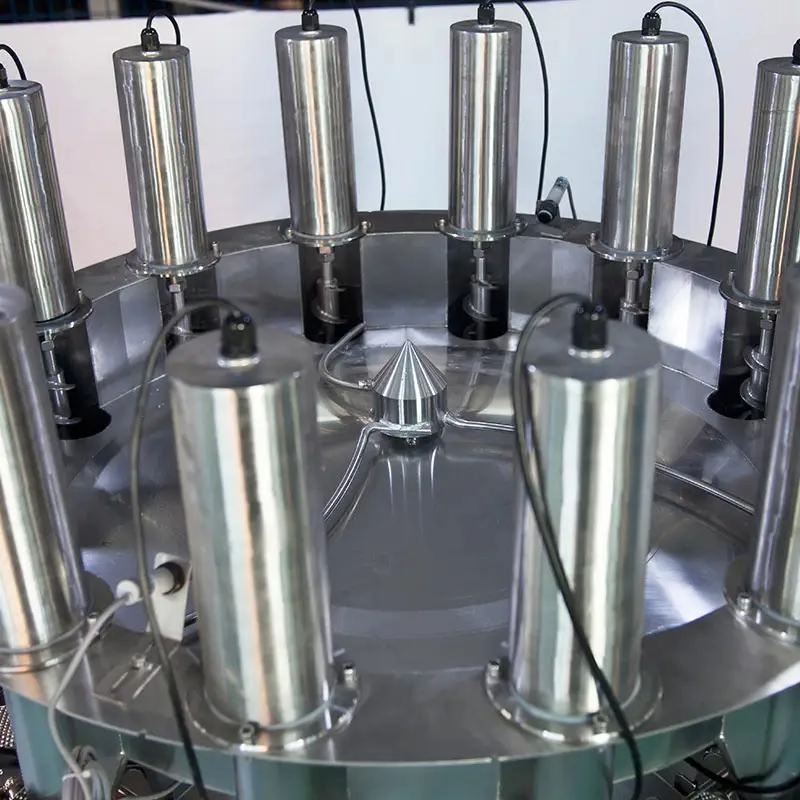
Comparing Single Screw Feeding vs Vibratory Feeding Systems

Multihead Weigher for Stick-Shaped Products
Top 10 head multihead weigher Manufacturers and Suppliers in China
You may also like
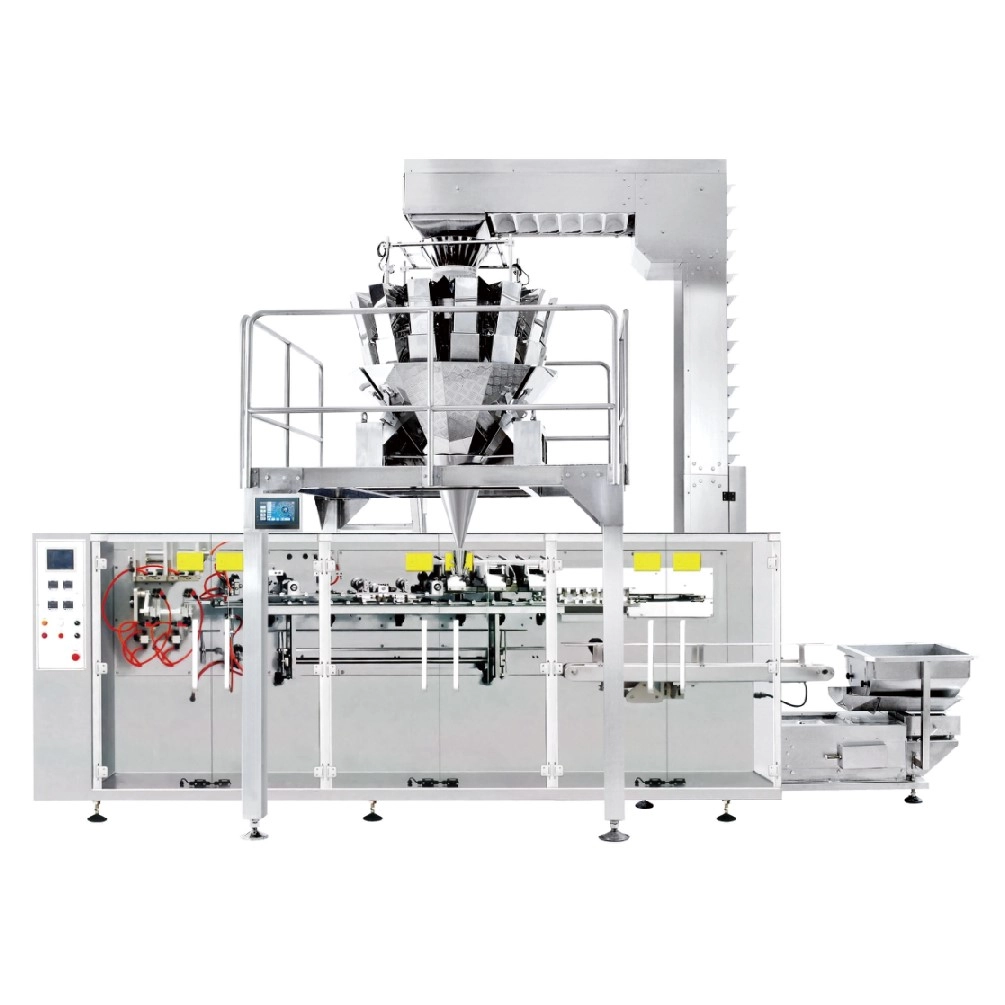
Horizontal Packaging Machine With Multihead Weigher for Weighing Pet Foods Puffy Foods B11
Horizontal Packaging Machine With Multihead Weigher for Weighing Pet Foods Puffy Foods B11 is a fully automatic solution for high-speed, high-accuracy packaging. Ideal for snacks like candy, jelly, nuts, and puffed food, as well as hardware and plastic granules in various shapes. It supports premade bags with firm, attractive sealing. Designed for customers needing high production efficiency and large output capacity.
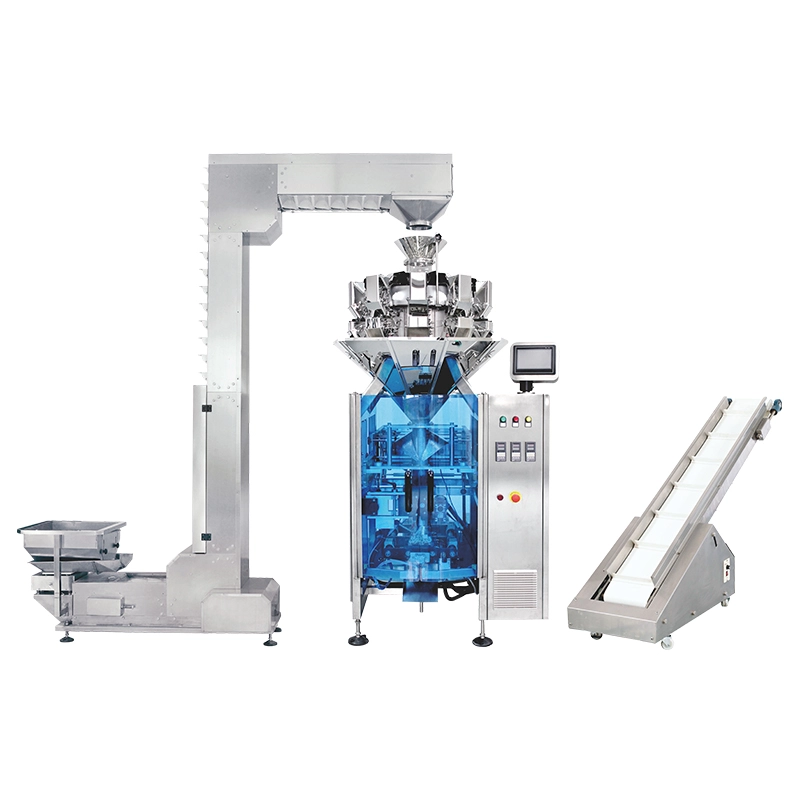
Combined Multihead Weighing Weigher and Packaging Machine with Z Conveyor JW-B4
The JW-B4 Combined Multihead Weighing and Packaging Machine with Z Conveyor is a compact, fully automatic solution ideal for packing snacks, nuts, candies, pet food, frozen products, hardware, and more. It integrates feeding, weighing, filling, sealing, and labeling with high precision and speed. Suitable for a wide range of materials, it’s perfect for space-limited production lines.
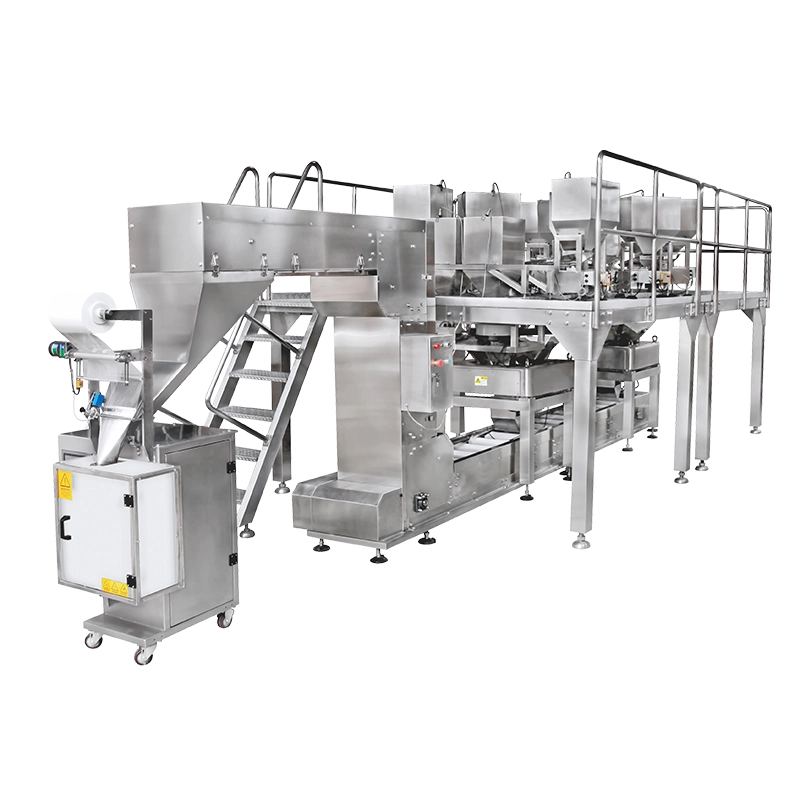
JW-B28 Multihead Weigher Mixing & Weighing System for Food Packaging | High-Speed, Accurate, Automated
The Kenwei JW-B26 Single Multihead Weigher Mixing and Packaging System offers fully automated operation, completing feeding, weighing, filling, date printing, and product output with high accuracy and speed. Ideal for granules, slices, irregular shapes, and mixed products like candy, nuts, snacks, pet food, and even small hardware. Its versatility and precision make it a perfect solution for diverse packaging needs.
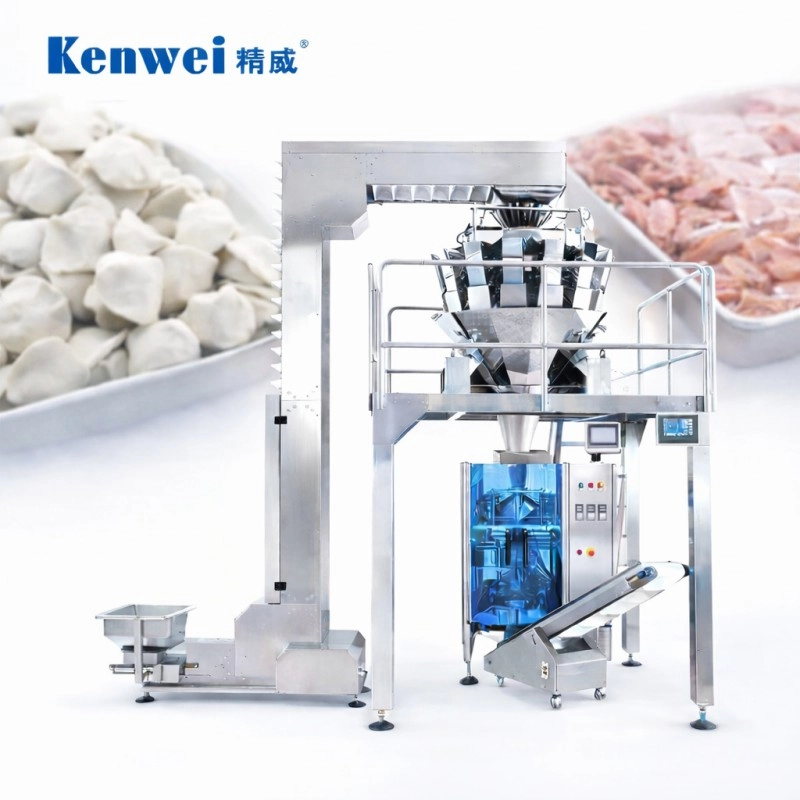
Vertical Frozen Food Packaging Machine for IQF & Frozen Products JW-B1
The Kenwei JW-B1 Vertical Frozen Food Packaging Machine is designed for IQF and frozen products, ensuring efficient, airtight packing. This vertical packing machine boosts productivity with precision sealing, ideal for frozen food packaging needs in the food industry.
Contact Kenwei
Our company is located in areas with convenient transportation and developed economy. Our products are supplied in a timely manner. In the course of business operation, we always focus on customers.Have any questions or concerns about our products? Please leave us a message here, and our team will get back to you promptly.
Kenwei
Kenwei
Kenwei multi weigh
Kenwei
Kenwei
Kenwei