


6-Head Checkweigher for 50g Small Package Inspection
Kenwei’s 6-head checkweigher for 50g small package inspection is designed for accurate, high-speed weight verification on compact products, helping food, pharmaceutical, and consumer-goods manufacturers reduce underweight claims, prevent giveaway, and maintain consistent packaging quality. Its six-head weighing configuration supports automated inspection, configurable weight limits, and integration with an automatic production and packaging line, while Kenwei provides engineering, commissioning, training, and after-sales support.
- How Can a Six-Head Checkweigher Improve Small Package Quality?
- Why is 50g inspection difficult on conventional packaging lines?
- What does six-head weighing contribute to inspection performance?
- How does automated rejection reduce operating risk?
- What Features Should Buyers Evaluate in a 50g Checkweigher?
- How should weighing accuracy and product stability be assessed?
- Which controls and records support quality management?
- How important are hygiene, access, and line compatibility?
- How Can a Multihead Weigher and Checkweigher Work Together?
- What is the role of the upstream multihead weigher?
- Which products are suitable for this compact weighing arrangement?
- How should integration be planned before ordering?
- Why Choose Kenwei for Automated Weighing and Packaging?
- What manufacturing experience supports the equipment?
- What services are included beyond machine supply?
- How does compliance knowledge influence equipment selection?
- What Should Buyers Know About 50g Checkweigher Applications?

Kenwei’s multihead weigher solution for 50g small package inspection is built for manufacturers that need reliable, automated weight control without slowing a compact production line. A six-head configuration provides a practical balance between weighing precision, throughput, footprint, and investment cost, helping operators identify underweight and overweight packs before shipment. The system is suitable for applications where accurate portion control, stable operation, fast product handling, and dependable integration with packaging equipment are essential.
How Can a Six-Head Checkweigher Improve Small Package Quality?
Why is 50g inspection difficult on conventional packaging lines?
Small packages leave little tolerance for weighing errors. A minor product shortage can create regulatory exposure, customer complaints, and inconsistent retail presentation, while excessive fill increases material giveaway across thousands of packs. Manual sampling also allows defective units to pass between checks. An automated checkweigher evaluates each pack in the flow of production, giving manufacturers a more consistent method for controlling declared weight and identifying process drift.
What does six-head weighing contribute to inspection performance?
A six-head arrangement distributes the weighing task across multiple hoppers or weighing points, allowing the machine to collect stable measurements while maintaining a compact layout. This is valuable for 50g products because the line can achieve repeatable handling without relying on a single weighing point for every decision. The correct operating speed, product characteristics, conveyor arrangement, and reject configuration should be confirmed during application testing.
How does automated rejection reduce operating risk?
Once a package falls outside the configured weight limits, an integrated reject device can remove it from the accepted product stream. This prevents operators from manually inspecting every pack and reduces the chance that an underweight unit reaches a customer. Reject confirmation, collection-bin design, guarding, and access for sanitation should be included in the line design so inspection remains effective during long production runs.
What Features Should Buyers Evaluate in a 50g Checkweigher?
How should weighing accuracy and product stability be assessed?
Accuracy is not determined by the load cell alone. Product shape, vibration, moisture, speed, infeed spacing, conveyor transfer, and settling time all affect the measurement. Buyers should request a product trial using actual 50g packs and review repeatability, target throughput, acceptable tolerance limits, and rejected-product statistics. A professional supplier should explain how calibration, zero tracking, and environmental conditions influence performance.
Which controls and records support quality management?
An industrial checkweigher should make it simple to configure target weight, upper and lower limits, product recipes, and inspection status. Clear alarms and accessible operating data help supervisors identify trends before they become a large batch problem. For regulated operations, data handling and verification procedures should align with the company’s quality system and applicable requirements, including principles described in ISO 22000 food safety management guidance.
How important are hygiene, access, and line compatibility?
For food and pharmaceutical packaging, a weighing solution must be practical to clean and inspect. Product-contact areas, conveyor surfaces, guarding, drainage, and tool-free access should be reviewed before purchase. The checkweigher must also match the upstream filler or multihead weigher, downstream sealer, conveyor height, pack dimensions, and available floor space. Early interface planning prevents costly modifications during installation.
How Can a Multihead Weigher and Checkweigher Work Together?
What is the role of the upstream multihead weigher?
An upstream multihead weigher generally portions or combines product to approach the required pack weight, while the checkweigher verifies the finished package after filling and sealing. This separation is important because the filling process can experience variation caused by product flow, hopper timing, or changing bulk density. Closed-loop adjustment can use inspection results to help operators reduce systematic overfill and improve material yield.
Which products are suitable for this compact weighing arrangement?
The most suitable products are free-flowing or consistently handled items packed in small bags, pouches, trays, or cartons, provided their dimensions and surface properties support stable conveying. Examples may include snacks, seeds, dried foods, confectionery, hardware components, and selected pharmaceutical or personal-care products. Sticky, fragile, dusty, or irregular products require a detailed test because transfer behavior can affect both accuracy and reject reliability.
How should integration be planned before ordering?
Provide the supplier with pack dimensions, target weight, product density, temperature, moisture, line speed, conveyor direction, packaging-machine signals, and required reject method. It is also useful to define changeover frequency, cleaning expectations, electrical standards, communication requirements, and acceptance criteria. Kenwei’s engineering and commissioning capabilities can help coordinate weighing, conveying, inspection, and packaging equipment as one automated system rather than isolated machines.
Why Choose Kenwei for Automated Weighing and Packaging?
What manufacturing experience supports the equipment?
Guangdong Kenwei develops and manufactures multihead weighers, linear weighers, check weighers, and metal detectors at its facility in Fusha High-tech Industrial Park, Zhongshan, Guangdong. This product scope gives the company practical knowledge of weighing, inspection, and packaging interfaces. Its focus on high speed and high precision is relevant to manufacturers seeking to improve output while controlling giveaway and maintaining repeatable quality.
What services are included beyond machine supply?
A successful inspection project requires more than delivery. Kenwei supports design and development, manufacturing, marketing, installation, commissioning, technical training, and after-sales service. This one-stop capability helps reduce the communication gap between equipment suppliers and gives production teams a clearer route for troubleshooting, operator instruction, spare-parts planning, and future line customization.
How does compliance knowledge influence equipment selection?
Manufacturers should distinguish between a machine’s advertised capability and the performance demonstrated under their own conditions. Verification protocols should define test weights, sample quantities, operating speeds, environmental conditions, and allowable error. The OIML R 51 automatic weighing instrument reference provides useful terminology and technical context for automatic catchweighing applications, while food businesses can also consult FDA food guidance and regulations when determining their validation requirements.
Kenwei’s six-head checkweigher is most valuable when it is specified as part of a complete process: accurate product dosing upstream, controlled package transfer, stable weighing, dependable rejection, and documented verification. For a 50g application, the right result is not simply a high nominal speed; it is sustained accuracy at the required output with manageable cleaning, changeover, maintenance, and data-review procedures.
Contact Kenwei at kenwei01@multiweigh.com.cn to discuss your 50g product, line speed, accuracy target, and customized automated weighing and packaging requirements.
What Should Buyers Know About 50g Checkweigher Applications?
What is a 6-head checkweigher used for?
A 6-head checkweigher automatically verifies the weight of finished packages and removes units outside the configured limits. It is particularly useful for compact 50g products because it combines repeatable weighing, continuous inspection, and automated rejection, helping reduce underweight complaints, excessive giveaway, manual sampling, and inconsistent package quality on high-throughput packaging lines.
Can this checkweigher inspect products other than 50g packages?
Yes, the equipment can often be configured for additional product weights and package formats after an application review. Suitable performance depends on pack dimensions, product flow, density, conveyor stability, and target speed, so manufacturers should provide representative samples and confirm accuracy, changeover requirements, rejection behavior, and throughput through a supplier test before final specification.
How accurate is a checkweigher for small packages?
Accuracy depends on the product, pack format, line speed, vibration, transfer stability, and configured tolerances rather than on head count alone. A reliable acceptance test should use actual production samples, defined test weights, repeatability measurements, and a documented sample quantity, with requirements interpreted alongside applicable quality procedures and automatic-weighing guidance such as OIML R 51.
How does a checkweigher reduce product giveaway?
A checkweigher identifies weight trends and separates packages that exceed the upper limit, giving operators evidence to adjust the upstream filling process. This can reduce systematic overfilling that is difficult to detect through occasional manual checks, especially when thousands of 50g packs are produced, although savings depend on product variation, target settings, and the effectiveness of process feedback.
Can Kenwei integrate weighing and packaging equipment?
Yes, Kenwei provides integrated automated weighing and packaging solutions covering equipment design, manufacturing, installation, commissioning, training, and after-sales support. Integration planning should include conveyor height, signals, product transfer, packaging-machine interfaces, reject handling, cleaning access, electrical requirements, and production targets so the complete line operates as a coordinated system.
What information is needed for a checkweigher quotation?
A quotation should include target weight, pack dimensions, product characteristics, required speed, accuracy or tolerance limits, conveyor direction, available floor space, packaging-machine details, reject preference, cleaning requirements, and site utilities. Supplying product samples or videos is also helpful because real handling behavior can affect weighing stability, inspection reliability, and the final machine configuration.
Tags
Working Platform in Packaging Machine
Working Platform in Packaging Machine
china rotary bag snack food packing machine
china rotary bag snack food packing machine
food packing machine for sale
food packing machine for sale
Counting and Filling Machine
Counting and Filling Machine
automatic tablet counting machine
automatic tablet counting machine
metal detectors for the food industry
metal detectors for the food industry
Recommended for you
Combination Weigher Safety Standards and Compliance 2026
Packaging Frozen Foods: Food Packing Machine Best Practices
The latest trends for single head weigher
Food Safety and Cleaning Protocols for Packing Machines
You may also like
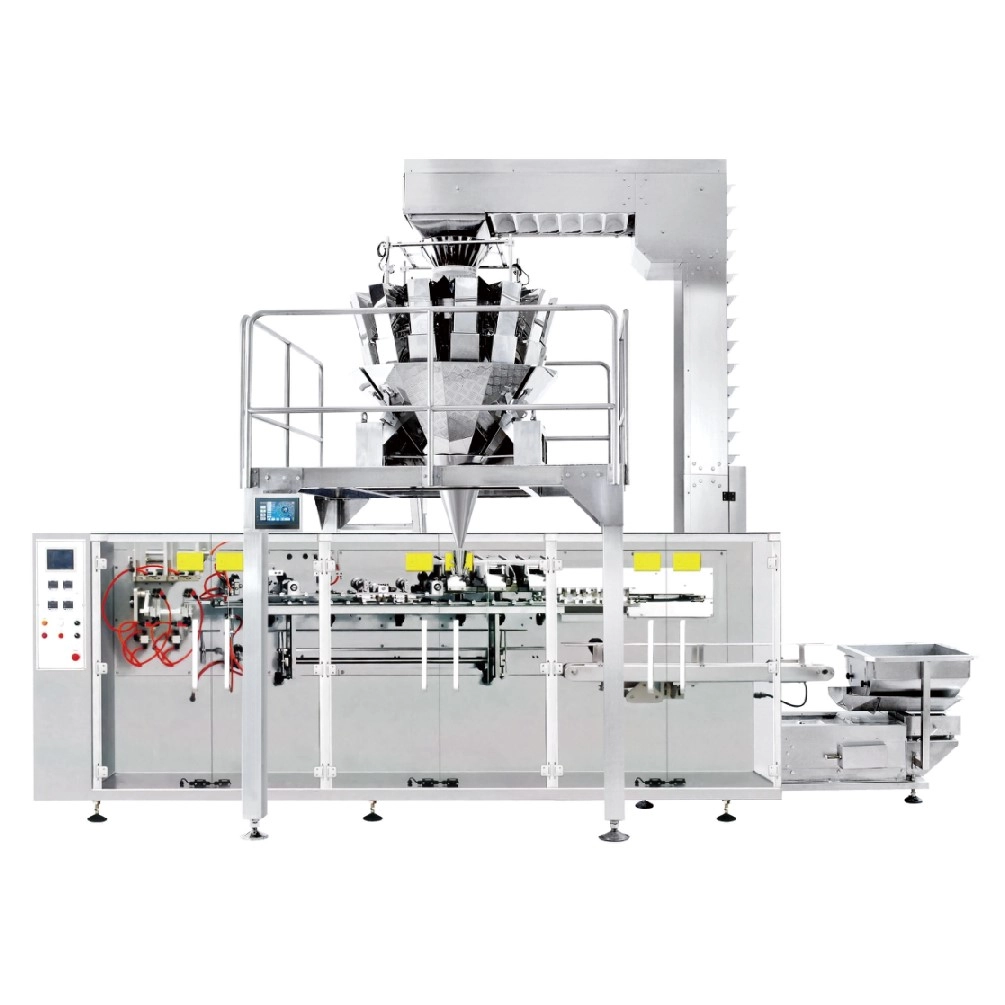
Horizontal Packaging Machine With Multihead Weigher for Weighing Pet Foods Puffy Foods B11
Horizontal Packaging Machine With Multihead Weigher for Weighing Pet Foods Puffy Foods B11 is a fully automatic solution for high-speed, high-accuracy packaging. Ideal for snacks like candy, jelly, nuts, and puffed food, as well as hardware and plastic granules in various shapes. It supports premade bags with firm, attractive sealing. Designed for customers needing high production efficiency and large output capacity.
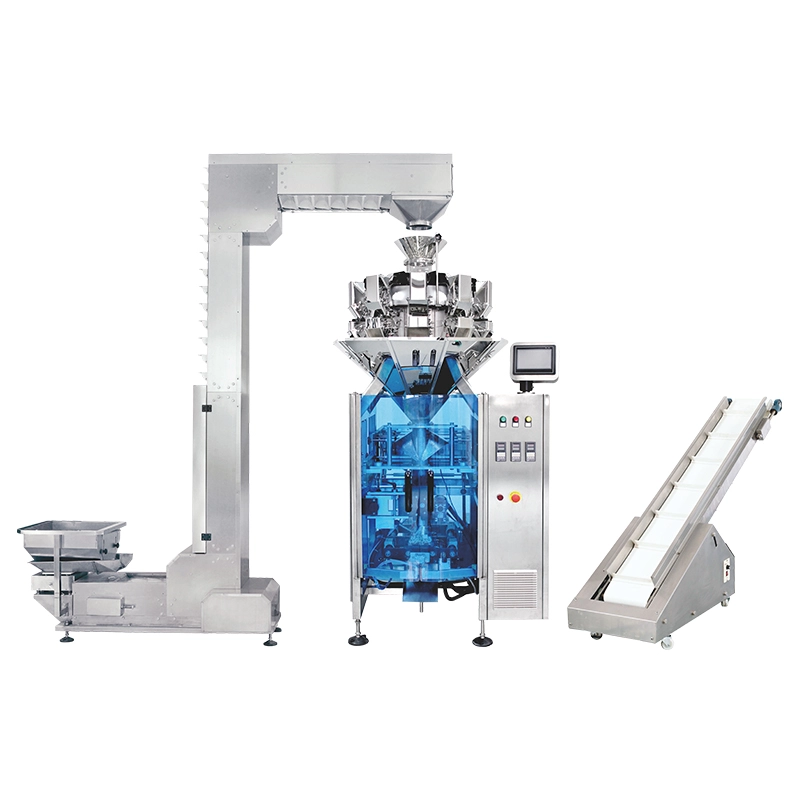
Combined Multihead Weighing Weigher and Packaging Machine with Z Conveyor JW-B4
The JW-B4 Combined Multihead Weighing and Packaging Machine with Z Conveyor is a compact, fully automatic solution ideal for packing snacks, nuts, candies, pet food, frozen products, hardware, and more. It integrates feeding, weighing, filling, sealing, and labeling with high precision and speed. Suitable for a wide range of materials, it’s perfect for space-limited production lines.
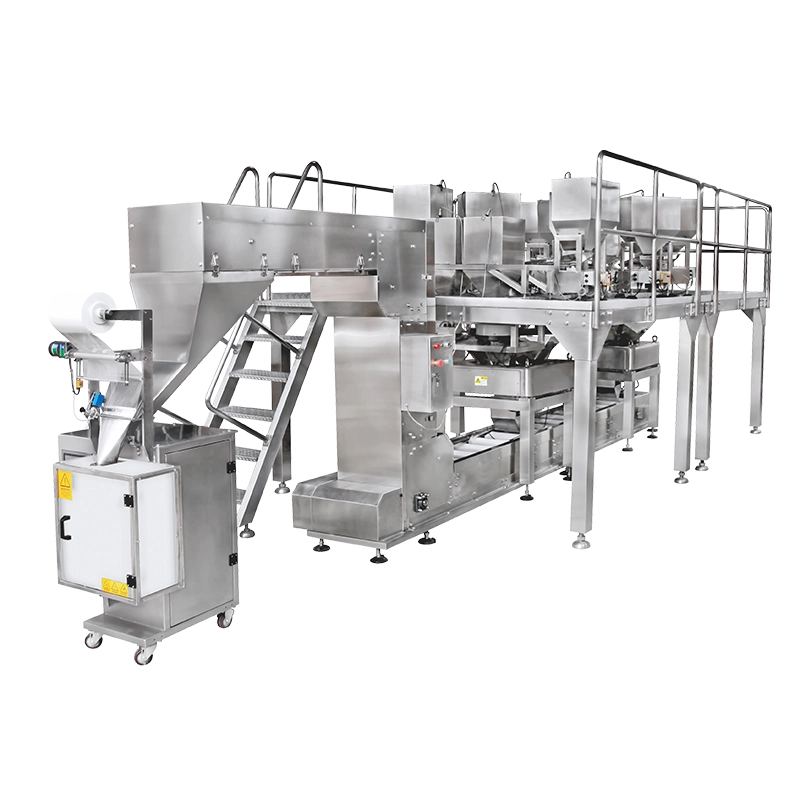
JW-B28 Multihead Weigher Mixing & Weighing System for Food Packaging | High-Speed, Accurate, Automated
The Kenwei JW-B26 Single Multihead Weigher Mixing and Packaging System offers fully automated operation, completing feeding, weighing, filling, date printing, and product output with high accuracy and speed. Ideal for granules, slices, irregular shapes, and mixed products like candy, nuts, snacks, pet food, and even small hardware. Its versatility and precision make it a perfect solution for diverse packaging needs.
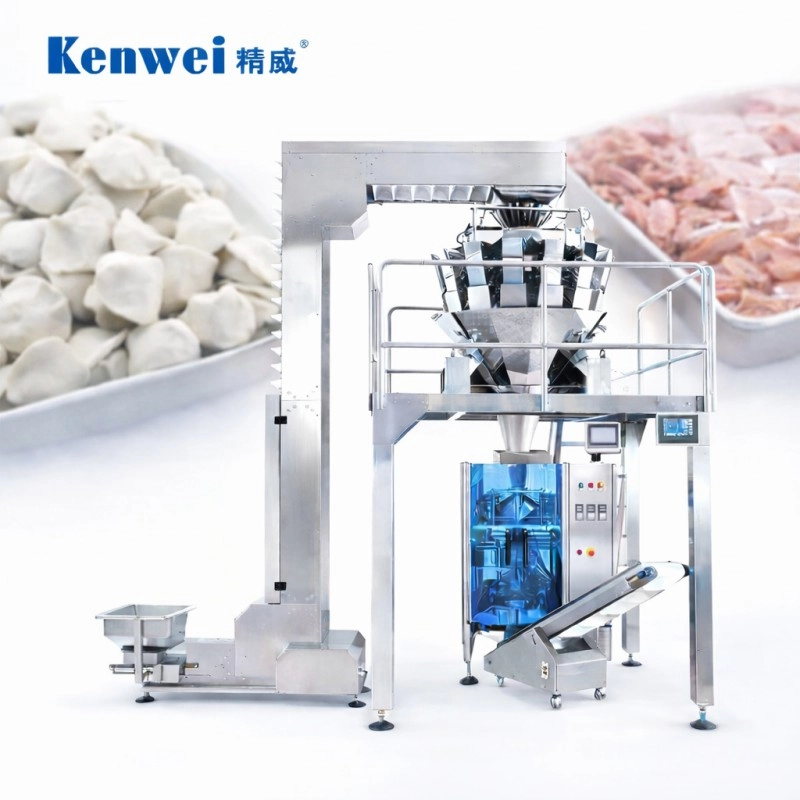
Vertical Frozen Food Packaging Machine for IQF & Frozen Products JW-B1
The Kenwei JW-B1 Vertical Frozen Food Packaging Machine is designed for IQF and frozen products, ensuring efficient, airtight packing. This vertical packing machine boosts productivity with precision sealing, ideal for frozen food packaging needs in the food industry.
Contact Kenwei
Our company is located in areas with convenient transportation and developed economy. Our products are supplied in a timely manner. In the course of business operation, we always focus on customers.Have any questions or concerns about our products? Please leave us a message here, and our team will get back to you promptly.
Kenwei
Kenwei
Kenwei multi weigh
Kenwei
Kenwei
Kenwei