


4-Head High-Speed Linear Weigher for Granules
Kenwei’s 4-head high-speed linear weigher is designed for accurate, efficient weighing of granular products such as rice, seeds, beans, nuts, snacks, pellets, and other free-flowing materials. Its four independent weighing heads support fast combination weighing, stable portion control, straightforward integration with automated packaging lines, and flexible customization for manufacturers seeking higher throughput, reduced giveaway, dependable operation, and professional installation and after-sales support.
- How can a four-head granule weigher improve packaging efficiency?
- Why does independent weighing improve portion accuracy?
- How does high-speed operation reduce labor and production delays?
- What products and packaging applications suit this multihead weigher?
- Which granular materials can be weighed effectively?
- How can the weigher connect with a complete packaging line?
- How should buyers evaluate a high-speed linear weighing machine?
- What technical factors affect accuracy and throughput?
- Why are hygiene, maintenance, and safety important?
- How can service support protect the investment?
- How can a manufacturer prepare for a Kenwei weighing solution?
- What information should be included in an equipment inquiry?
- Why should buyers request a complete line review?
- What questions do buyers ask about a 4-head linear weigher?

Kenwei’s 4-head linear weigher for granules is a high-speed weighing solution for manufacturers handling rice, grains, seeds, beans, nuts, snacks, pellets, and other free-flowing products. By using four independent weighing heads, this multihead weigher helps producers improve portion consistency, reduce manual labor, limit product giveaway, and connect weighing with automated bagging, sealing, and inspection equipment.
How can a four-head granule weigher improve packaging efficiency?
Why does independent weighing improve portion accuracy?
Granular products do not always flow at a uniform rate. Product size, surface texture, moisture, and bulk density can change the amount delivered during each feed cycle, creating underweight packs, overweight giveaway, or frequent operator adjustments. A four-head arrangement separates product into controlled weighing channels, allowing the system to select or combine measured quantities more consistently than a manual filling process.
This approach is particularly useful when the target weight must remain stable across long production runs. Operators can set the desired portion through the control interface, monitor actual weighing behavior, and adjust feeding parameters when a product changes. The result is more repeatable pack weight and better control of raw-material costs, which is important when packaging high-value nuts, seeds, confectionery, or specialty grains.
How does high-speed operation reduce labor and production delays?
Manual weighing requires repeated scooping, checking, correcting, and recording. Those activities increase labor requirements and make output dependent on operator experience. An automated linear weigher performs the weighing cycle continuously and can feed a downstream packaging machine, allowing staff to focus on replenishment, quality checks, material handling, and line supervision rather than repetitive portioning.
The practical speed of a complete line depends on target weight, product characteristics, feeder settings, bagger capability, and the required accuracy. Kenwei’s equipment is developed for automated weighing and packaging applications, so the appropriate configuration can be matched to the product, bag format, available floor space, and expected production schedule instead of treating the weigher as an isolated machine.
What products and packaging applications suit this multihead weigher?
Which granular materials can be weighed effectively?
This machine concept is suited to free-flowing granular materials including rice, wheat, corn, beans, lentils, seeds, sugar, salt, cereal pieces, pulses, dry pet food, plastic granules, and selected snack products. The correct design depends on whether the material is dusty, fragile, oily, sticky, abrasive, irregularly shaped, or sensitive to impact. A product test is therefore valuable before finalizing feeder and contact-part specifications.
Product testing also helps identify the best target weight, feed profile, discharge arrangement, and cleaning method. For food applications, buyers should consider hygienic construction, accessible product-contact areas, corrosion resistance, and the cleaning routine required between product changes. These decisions help protect product quality while reducing changeover time and contamination risk.
How can the weigher connect with a complete packaging line?
A weighing machine delivers the most value when its discharge timing and control signals are coordinated with the packaging system. The four-head unit can be considered for integration with vertical form-fill-seal machines, premade pouch equipment, sealing systems, conveyors, check weighers, metal detectors, and collection systems. The final interface should be confirmed according to the packaging machine manufacturer’s electrical, mechanical, and communication requirements.
Kenwei provides one-stop automated weighing and packaging solutions, including design, manufacturing, installation, commissioning, technical training, and after-sales service. This integrated approach helps reduce compatibility problems that can occur when a customer purchases a weigher, bagger, detector, and conveyor from unrelated suppliers.
How should buyers evaluate a high-speed linear weighing machine?
What technical factors affect accuracy and throughput?
Buyers should evaluate target weight range, required packs per minute, product bulk density, particle size distribution, allowable tolerance, feeding stability, hopper capacity, discharge height, and available installation space. Accuracy cannot be judged from speed alone: an aggressive feed rate may create overshoot, while an overly cautious setting can reduce output. The best configuration balances throughput with the commercial value of every gram.
It is also useful to ask how the control system stores recipes, reports alarms, manages parameter changes, and supports operator permissions. Recipe management is especially important for plants producing multiple package sizes. Clear status information and accessible adjustment controls shorten troubleshooting time and help operators return the line to stable production after a material or format change.
Why are hygiene, maintenance, and safety important?
Frequent cleaning and inspection should be practical rather than disruptive. Buyers should check whether hoppers, feeder components, and product-contact parts can be removed or accessed without excessive disassembly. They should also confirm the availability of replacement parts, electrical documentation, maintenance guidance, and service support in the destination country.
For food and pharmaceutical-related environments, the machine should be evaluated alongside the facility’s hygiene program and applicable regulations. The U.S. Food and Drug Administration food guidance provides useful regulatory reference material for businesses supplying the United States, while ISO 9001 quality management principles offer a framework for consistent processes, traceability, and continual improvement. Equipment selection should always be reviewed with the customer’s own compliance team.
How can service support protect the investment?
Weighing performance depends on correct installation, calibration, product setup, and operator training. A supplier with design and commissioning capabilities can identify issues such as unstable material flow, incorrect discharge alignment, unsuitable bagger timing, or inadequate electrical integration before they become recurring production problems.
Kenwei is located in Fusha High-tech Industrial Park, Zhongshan, Guangdong, and has capabilities covering research and development, manufacturing, marketing, installation, commissioning, training, and after-sales service. This breadth matters to overseas buyers because a long-term equipment partner should support not only the initial purchase but also line expansion, recipe changes, troubleshooting, and future automation requirements.
How can a manufacturer prepare for a Kenwei weighing solution?
What information should be included in an equipment inquiry?
Provide the product name, sample images, particle size, bulk density, moisture or oil content, target pack weights, expected output, packaging format, bag dimensions, power standard, installation height, and preferred automation level. Product samples or representative test material can help engineers assess flow behavior and recommend suitable contact materials, feeder settings, and discharge arrangements.
It is also helpful to describe current production problems in measurable terms. For example, explain the present manual labor requirement, average giveaway, rejected-pack rate, cleaning frequency, downtime causes, and planned future capacity. This information allows the supplier to design around the real bottleneck rather than simply proposing a faster machine.
Why should buyers request a complete line review?
A weigher may perform well by itself but still fail to deliver expected output if the bagger is slower, the conveyor cannot receive product smoothly, or the detector creates a downstream queue. A complete review should examine product flow from infeed through weighing, bag forming or pouch loading, sealing, inspection, discharge, and finished-goods handling.
Kenwei manufactures metal detectors, multihead weighers, linear weighers, and check weighers, enabling customers to discuss weighing and inspection requirements with one experienced automation partner. For general metrology background, buyers can consult the BIPM information on international measurement standards when defining terminology, calibration expectations, and measurement consistency for a new line.
Contact Kenwei at kenwei01@multiweigh.com.cn to discuss your product, target weight, output requirements, and complete automated weighing and packaging solution.
What questions do buyers ask about a 4-head linear weigher?
What products can a 4-head linear weigher handle?
A 4-head linear weigher can handle many free-flowing products, including rice, grains, beans, seeds, sugar, salt, snacks, pellets, and dry pet food. Final suitability depends on particle size, bulk density, moisture, oil content, fragility, and flow behavior, so product testing should confirm the correct feeder settings and contact-part configuration.
How does a four-head weigher reduce product giveaway?
A four-head weigher reduces giveaway by dividing product into controlled weighing channels and selecting measured quantities closer to the target portion. Stable feeding, correct recipe settings, regular calibration, and suitable operating speed are still essential, because product characteristics and downstream bagger timing directly affect achievable accuracy during continuous production.
Can this weigher connect to a packaging machine?
Yes, the machine can be considered for integration with automated packaging equipment such as vertical form-fill-seal machines, premade pouch systems, conveyors, check weighers, and metal detectors. Compatibility must be confirmed using the bag format, discharge height, electrical requirements, communication signals, line speed, and timing specifications of the complete packaging line.
What information should be supplied for a quotation?
A quotation should include the product type, sample images, particle size, bulk density, target pack weights, desired output, bag dimensions, packaging method, power standard, installation height, and available floor space. Supplying representative product samples is also recommended because flow behavior strongly influences the final configuration, testing process, and expected weighing performance.
How long does installation and commissioning usually take?
Installation and commissioning time depends on line complexity, site readiness, shipping schedule, utilities, and the number of connected machines, so a fixed duration should not be assumed before reviewing the project. Customers should plan time for mechanical installation, electrical connection, product testing, recipe setup, operator training, and production acceptance checks.
Tags
top metal detector
top metal detector
multihead weigher packing machine
multihead weigher packing machine
vffs packing machine
vffs packing machine
food packaging machines
food packaging machines
combined check weigher and metal detector
combined check weigher and metal detector
semi automatic packaging machine
semi automatic packaging machine
Recommended for you
Food Grain Packing Machine vs. Traditional Packaging Methods: Which Is Right for Your Business?
Snack Packing Machine Lead Times, Shipping, and Spare Parts
Top 10 linear combination weigher Manufacturers and Supplier Brands
Multihead Weigher Working Principle Explained
You may also like
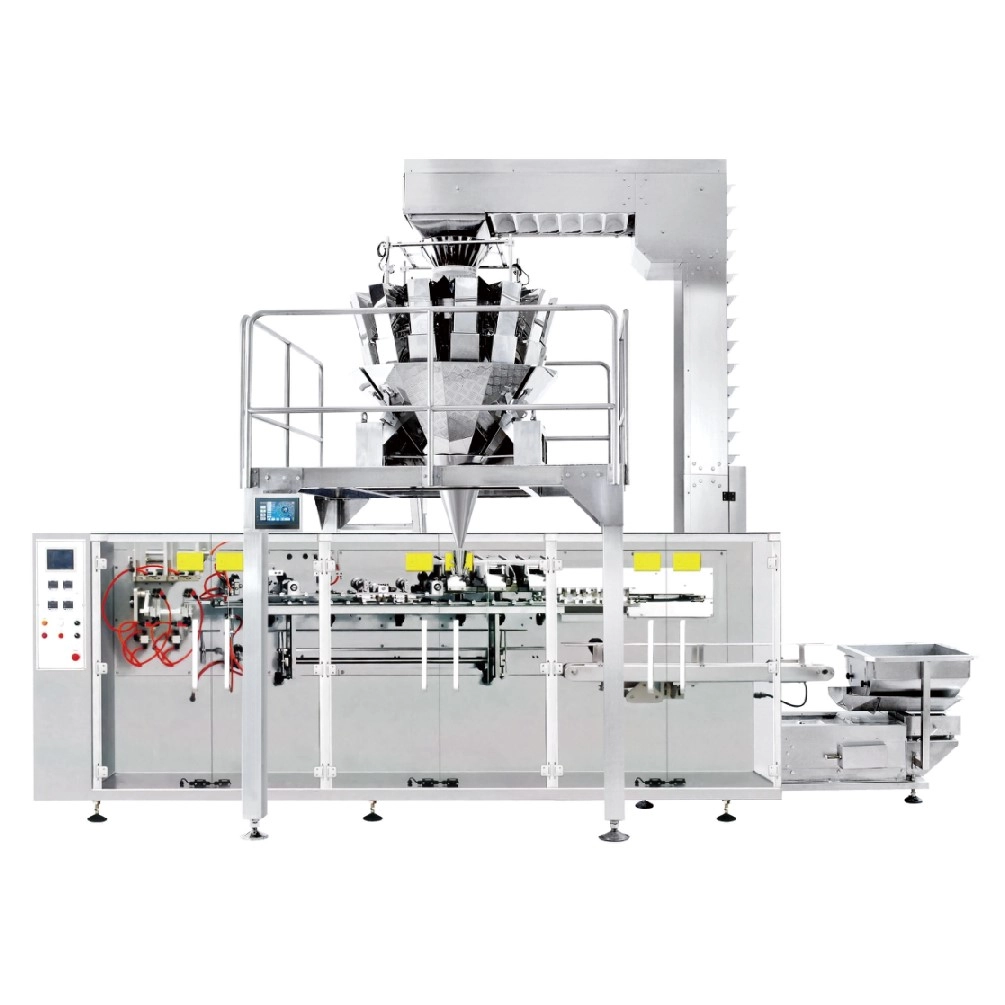
Horizontal Packaging Machine With Multihead Weigher for Weighing Pet Foods Puffy Foods B11
Horizontal Packaging Machine With Multihead Weigher for Weighing Pet Foods Puffy Foods B11 is a fully automatic solution for high-speed, high-accuracy packaging. Ideal for snacks like candy, jelly, nuts, and puffed food, as well as hardware and plastic granules in various shapes. It supports premade bags with firm, attractive sealing. Designed for customers needing high production efficiency and large output capacity.
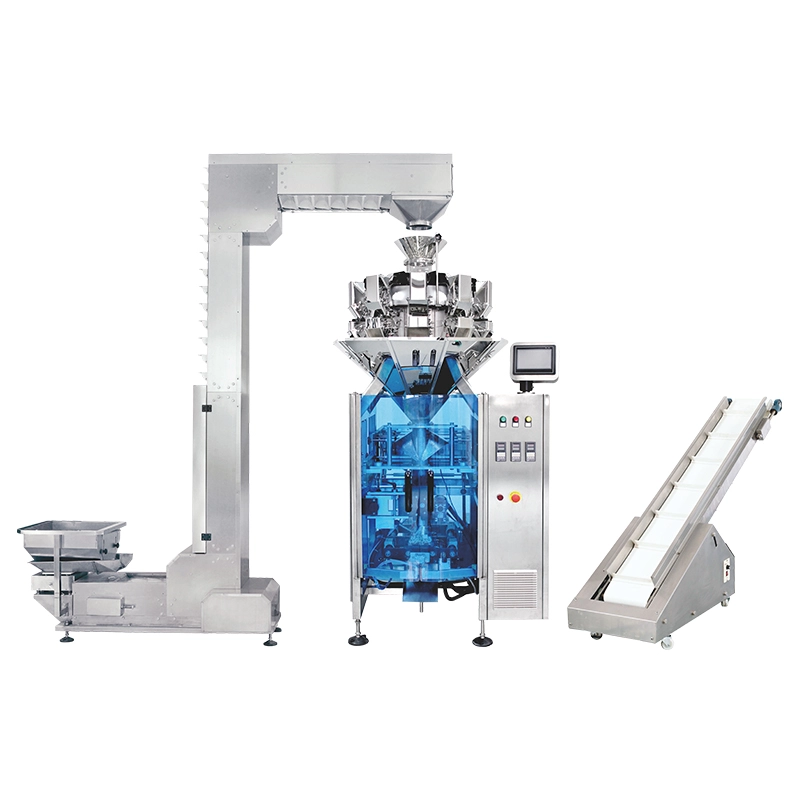
Combined Multihead Weighing Weigher and Packaging Machine with Z Conveyor JW-B4
The JW-B4 Combined Multihead Weighing and Packaging Machine with Z Conveyor is a compact, fully automatic solution ideal for packing snacks, nuts, candies, pet food, frozen products, hardware, and more. It integrates feeding, weighing, filling, sealing, and labeling with high precision and speed. Suitable for a wide range of materials, it’s perfect for space-limited production lines.
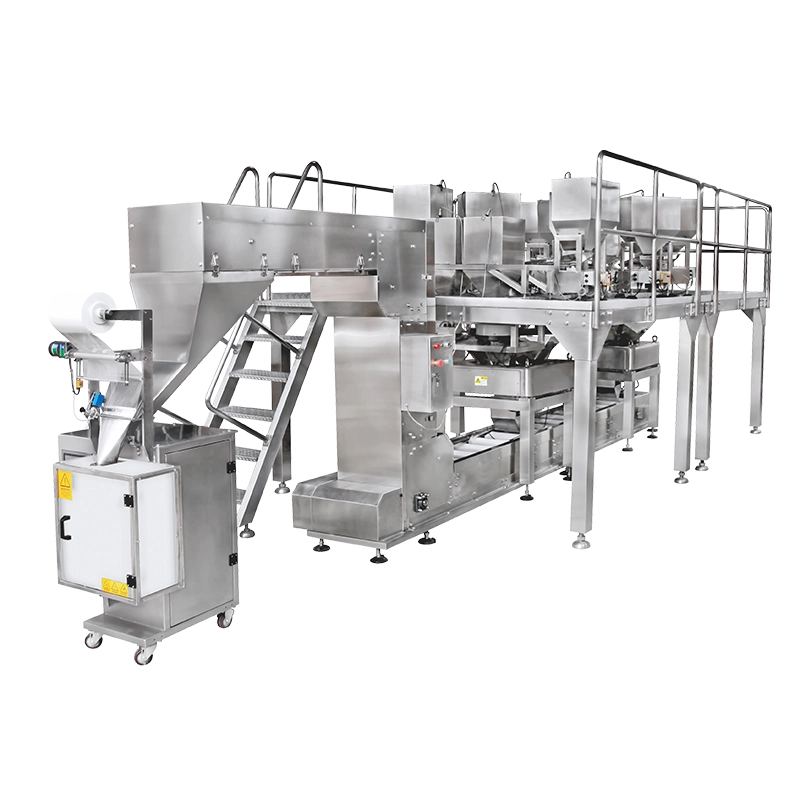
JW-B28 Multihead Weigher Mixing & Weighing System for Food Packaging | High-Speed, Accurate, Automated
The Kenwei JW-B26 Single Multihead Weigher Mixing and Packaging System offers fully automated operation, completing feeding, weighing, filling, date printing, and product output with high accuracy and speed. Ideal for granules, slices, irregular shapes, and mixed products like candy, nuts, snacks, pet food, and even small hardware. Its versatility and precision make it a perfect solution for diverse packaging needs.
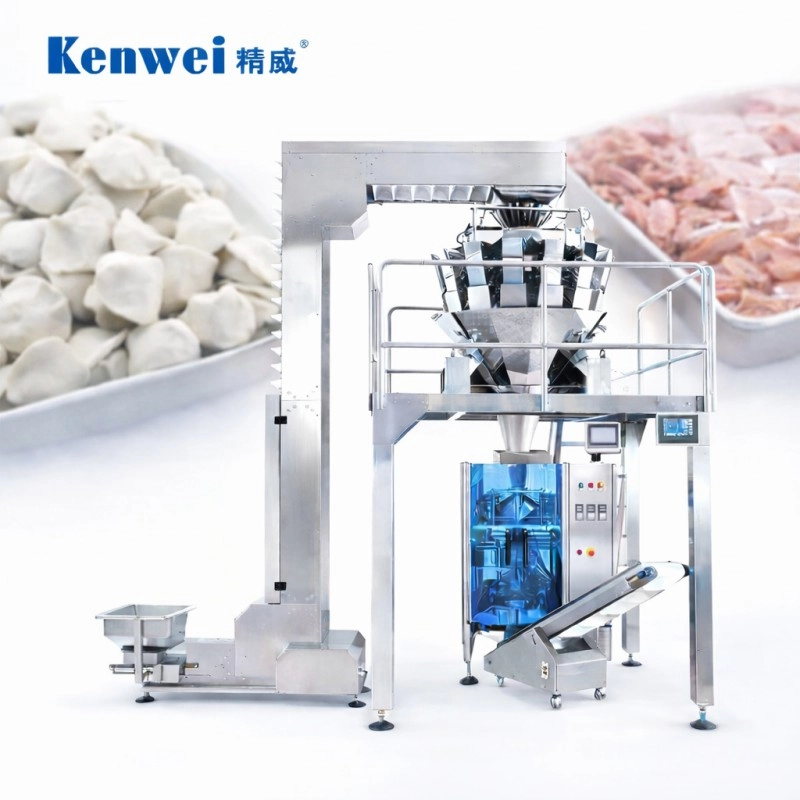
Vertical Frozen Food Packaging Machine for IQF & Frozen Products JW-B1
The Kenwei JW-B1 Vertical Frozen Food Packaging Machine is designed for IQF and frozen products, ensuring efficient, airtight packing. This vertical packing machine boosts productivity with precision sealing, ideal for frozen food packaging needs in the food industry.
Contact Kenwei
Our company is located in areas with convenient transportation and developed economy. Our products are supplied in a timely manner. In the course of business operation, we always focus on customers.Have any questions or concerns about our products? Please leave us a message here, and our team will get back to you promptly.
Kenwei
Kenwei
Kenwei multi weigh
Kenwei
Kenwei
Kenwei