


2-Head Belt Linear Weigher for Vegetables, Salad and Fruit
Kenwei’s 2-head belt linear weigher is designed for accurate, gentle and efficient weighing of vegetables, prepared salads, fruit and other fresh products. Its dual belt-weighing structure supports stable feeding, reduced product damage and simple integration with automated packaging lines, making it a practical solution for processors seeking improved portion consistency and lower manual labor costs.
- How to Choose a Belt Weighing System for Fresh Produce?
- Why are belt weighers suitable for vegetables, salad and fruit?
- What production problems can a two-head configuration solve?
- What Are the Main Benefits of the Kenwei 2-Head Belt Linear Weigher?
- How does the machine improve weighing accuracy and reduce giveaway?
- How does the belt design protect delicate food products?
- How Can This Linear Weigher Integrate with an Automated Packaging Line?
- What packaging equipment can connect to the weighing machine?
- Which line factors should buyers confirm before ordering?
- How Should Operators Maintain and Validate the Weighing System?
- What daily practices support reliable weighing performance?
- How can manufacturers protect long-term equipment reliability?
- Frequently Asked Questions About the 2-Head Belt Linear Weigher

Kenwei’s multihead weigher solution for vegetables, salad and fruit uses two independent belt weighing heads to portion fresh, irregular and delicate products with greater consistency than manual weighing. The 2-head belt linear weigher is suitable for food processors that need hygienic handling, gentle product transfer, flexible target weights and dependable compatibility with automated packaging equipment. Its belt-based design helps reduce bruising and sticking while supporting efficient weighing for fresh produce, mixed salads and prepared food applications.
How to Choose a Belt Weighing System for Fresh Produce?
Why are belt weighers suitable for vegetables, salad and fruit?
Fresh vegetables, leafy salad, berries and cut fruit often vary in shape, moisture and density, so rigid conveying or aggressive vibration can cause product damage, bridging or inconsistent flow. A belt linear weigher transports product smoothly and provides a controlled weighing process, helping operators maintain portion accuracy without excessive mechanical impact. This is particularly valuable for products sold by weight, where giveaway and appearance directly affect profitability.
What production problems can a two-head configuration solve?
A two-head configuration offers a compact alternative to larger weighing systems when a processor needs dependable portioning at moderate output levels. Each weighing belt can receive and measure product independently, allowing the machine to maintain a more stable feeding rhythm and reduce the labor associated with manual portion preparation. It is appropriate for fresh produce lines where space, budget and gentle handling are important purchasing considerations.
What Are the Main Benefits of the Kenwei 2-Head Belt Linear Weigher?
How does the machine improve weighing accuracy and reduce giveaway?
Consistent target weights depend on repeatable feeding, clean weighing surfaces and correctly configured control parameters. The Kenwei 2-head belt linear weigher separates feeding and weighing actions through its belt-based structure, giving operators a practical way to control product movement and portion size. More consistent portions can reduce overfilling, protect packaging margins and make downstream sealing and labeling processes more predictable.
How does the belt design protect delicate food products?
Unlike systems that rely primarily on intensive vibration, belt weighing provides a gentler transfer path for products that can bruise, tear or lose visual quality. The result is better control when handling leafy vegetables, sliced fruit and salad components. Smooth product movement also helps minimize product retention, which supports faster changeovers and reduces the amount of material left inside the weighing path after production.
Food safety depends on more than weighing accuracy; it also requires a hygienic machine design and disciplined operating procedures. Kenwei develops weighing and packaging equipment for food production environments, while processors should validate their cleaning, sanitation and allergen-control programs against applicable requirements such as the FDA Food Code and relevant local regulations. Equipment selection should therefore consider accessibility, washdown practices, material compatibility and the risk of cross-contamination.
How Can This Linear Weigher Integrate with an Automated Packaging Line?
What packaging equipment can connect to the weighing machine?
The weigher can serve as an upstream portioning unit for automated packaging systems used for bags, trays or other retail formats, subject to product characteristics and line configuration. A complete project may include feeding conveyors, a packaging machine, date coding, check weighing and metal detection. Coordinating these elements helps prevent bottlenecks and ensures that the weighing stage matches the speed and control requirements of the complete line.
Which line factors should buyers confirm before ordering?
Buyers should provide target weight, product type, bulk density, moisture level, expected output, product temperature, packaging format and available installation space. They should also confirm elevation, discharge height, electrical requirements, cleaning procedures and whether different recipes require rapid changeover. These details allow Kenwei’s engineering team to recommend a suitable configuration rather than treating the 2-head belt linear weigher as a standalone commodity product.
For packaged food operations, verification equipment is an important part of quality control. A check weigher can identify underweight or overweight packs after filling, while a metal detector can help detect certain metallic contaminants when correctly selected and validated. Processors can reference the ISO 22000 food safety management standard when developing broader food safety controls and documenting critical operating procedures.
How Should Operators Maintain and Validate the Weighing System?
What daily practices support reliable weighing performance?
Operators should inspect belts, hoppers, contact surfaces and discharge areas before production, remove product buildup and confirm that belts track correctly. They should also verify the target weight, recipe selection and zero condition at the beginning of each run. Routine cleaning is especially important for wet or sticky produce because residue can affect belt movement, create hygiene risks and gradually influence weighing repeatability.
How can manufacturers protect long-term equipment reliability?
Preventive maintenance should include checking belt tension, fasteners, sensors, electrical connections and moving components according to the operating environment and supplier guidance. Weighing performance should be checked using calibrated test procedures and documented at an interval appropriate to the product risk and production schedule. The NIST weights and measures guidance provides useful reference material for businesses establishing measurement-control practices.
Kenwei supports customers beyond machine supply through application assessment, system design, manufacturing, installation, commissioning, technical training and after-sales service. Based in Fusha High-tech Industrial Park, Zhongshan, Guangdong, the company develops weighing and packaging equipment including multi-head weighers, linear weighers, metal detectors and check weighers. This one-stop capability helps customers address compatibility, operator training and future production requirements through a coordinated project approach.
Contact Kenwei at kenwei01@multiweigh.com.cn to discuss your product, target weight and packaging line requirements and receive a tailored recommendation for the 2-head belt linear weigher.
Frequently Asked Questions About the 2-Head Belt Linear Weigher
What products can the 2-head belt linear weigher handle?
The 2-head belt linear weigher is designed for vegetables, prepared salads, fruit and other fresh products requiring gentle, controlled portioning. Its belt-based transport is suitable for irregular, leafy or delicate materials, although final suitability depends on product size, moisture, density, target weight and the required production rate.
Why use a belt weigher instead of manual weighing?
A belt weigher improves portion consistency while reducing repetitive manual labor and product giveaway. Controlled belt movement supports smoother feeding for delicate produce, and automated weighing can provide more predictable pack weights, better production records and easier integration with packaging, check weighing and metal detection equipment.
How many weighing heads does this Kenwei machine use?
This model uses two independent weighing heads arranged in a compact belt linear weighing configuration. The two-head structure is appropriate for processors seeking automated portioning at moderate output levels, particularly where installation space, gentle product handling and investment control are more important than the maximum speed of a larger multihead system.
What information should be supplied before requesting a quotation?
Provide the product name, typical piece or particle size, bulk density, moisture condition, target weight, acceptable accuracy, desired output, packaging format and available space. Also include discharge height, electrical conditions, cleaning requirements and product-changeover expectations so Kenwei can evaluate the complete weighing and packaging application accurately.
How often should weighing accuracy be checked?
Accuracy should be verified at startup, after significant product or recipe changes and at intervals defined by the site’s quality system and risk assessment. Many facilities document checks during each production shift, while regulated or high-risk operations may require more frequent verification using calibrated test weights and approved procedures.
Can the weigher be integrated into a complete packaging system?
Yes, the machine can be evaluated as part of an automated weighing and packaging line, potentially including conveyors, bagging or tray equipment, coding, check weighing and metal detection. Integration depends on product behavior, line speed, communication requirements, elevation and packaging format, so these details should be confirmed during engineering review.
Tags
vacuumized food packaging machine
vacuumized food packaging machine
utility metal detector
utility metal detector
granular sugar packing machine auger filler
granular sugar packing machine auger filler
14 head weigher packaging machine
14 head weigher packaging machine
Working Platform in Packaging Machine
Working Platform in Packaging Machine
Weight sorting machine
Weight sorting machine
Recommended for you
What are the application scenarios of vacuum packing machine?
The latest trends for metal detector machine
Compliance & Safety Features to Request in a VFFS Machine

Multi-Level Check Weigher Machine for Agricultural Product Sorting
You may also like
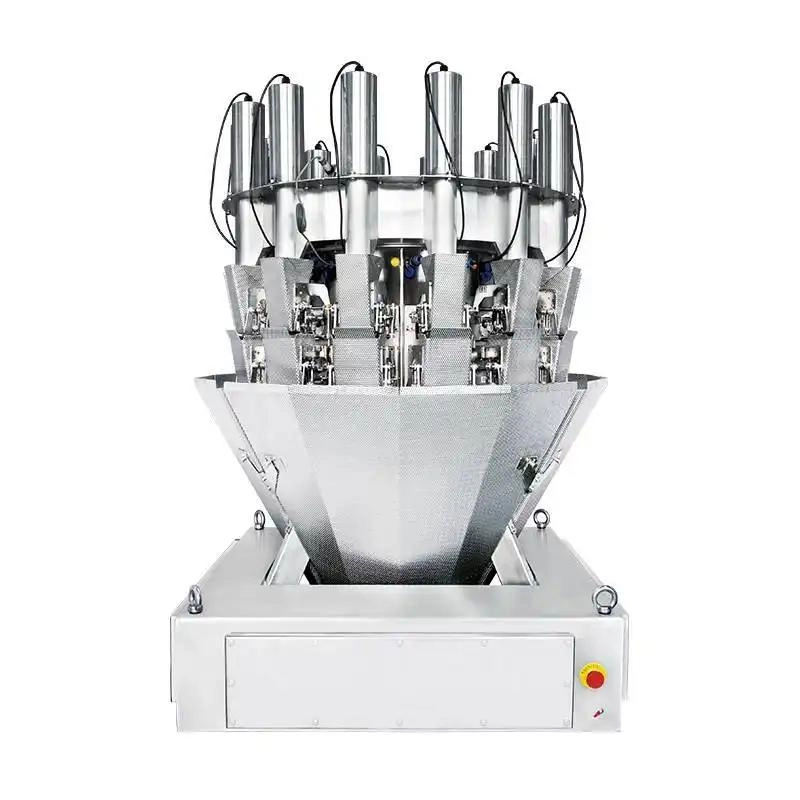
14 Heads Vertical Single Screw Feeding Pickles Weigher backups
This type of weigher is designed to handle the unique characteristics of pickles, ensuring precise measurements for packaging and distribution. It uses a vertical single screw mechanism to feed the pickles into the weighing system, allowing for efficient and consistent weighing. This technology is particularly useful in food processing and packaging facilities where precise portioning is essential for quality control and customer satisfaction. This specialized equipment is perfect for accurately measuring and dispensing pickles in a production line or packaging facility. The vertical design allows for efficient and precise filling of containers, while the single screw feeding mechanism ensures consistent and reliable weighing.
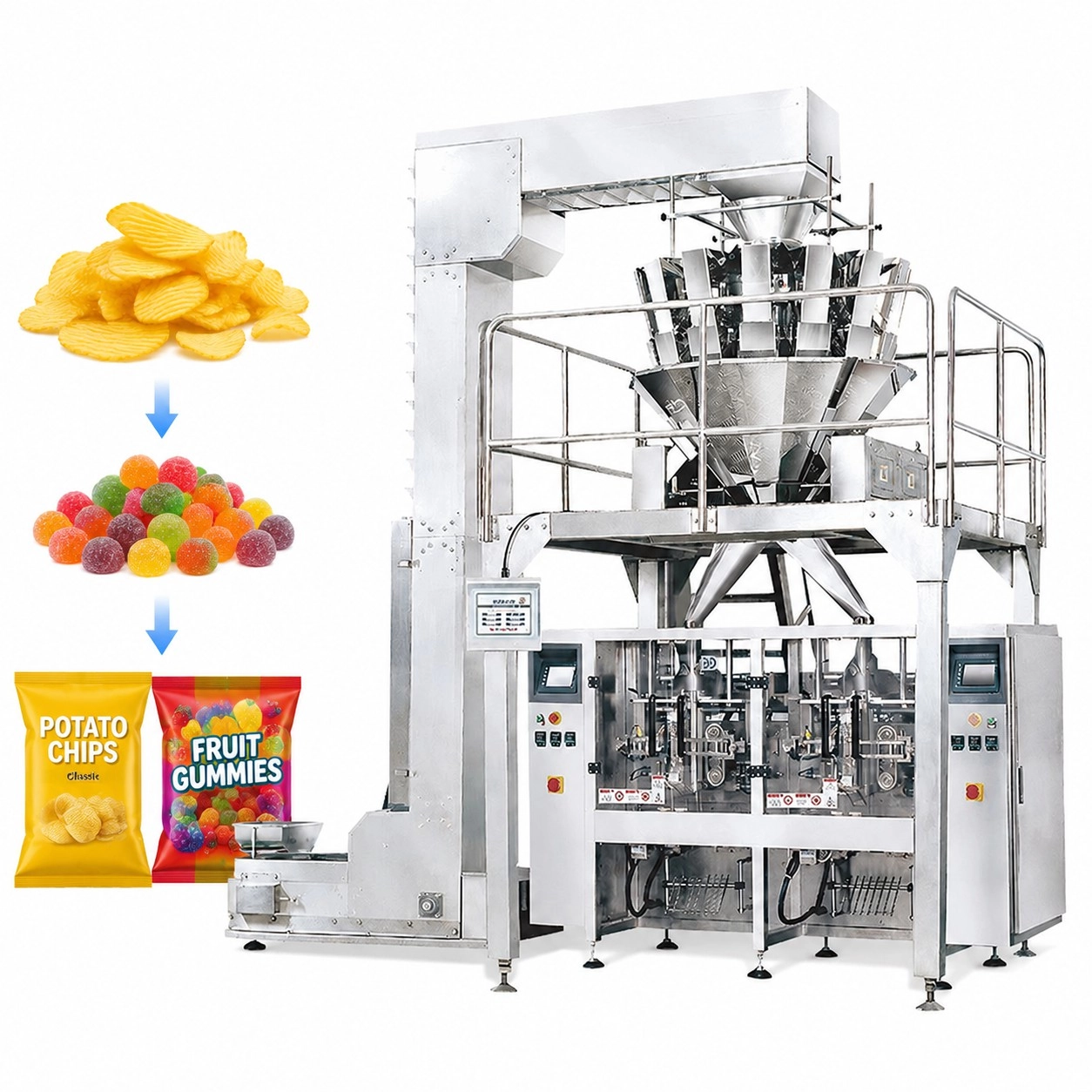
High-Speed Combination Weigher and Dual-Lane Packaging Solution for Food Manufacturers JW-B2
High-Speed Combination Weigher and Packaging Solution by Kenwei offers precise multi-head weighing and efficient dual-lane packing for food manufacturers seeking reliable speed and accuracy. This Combination Weigher integrates seamlessly into production lines to optimize throughput and reduce waste.
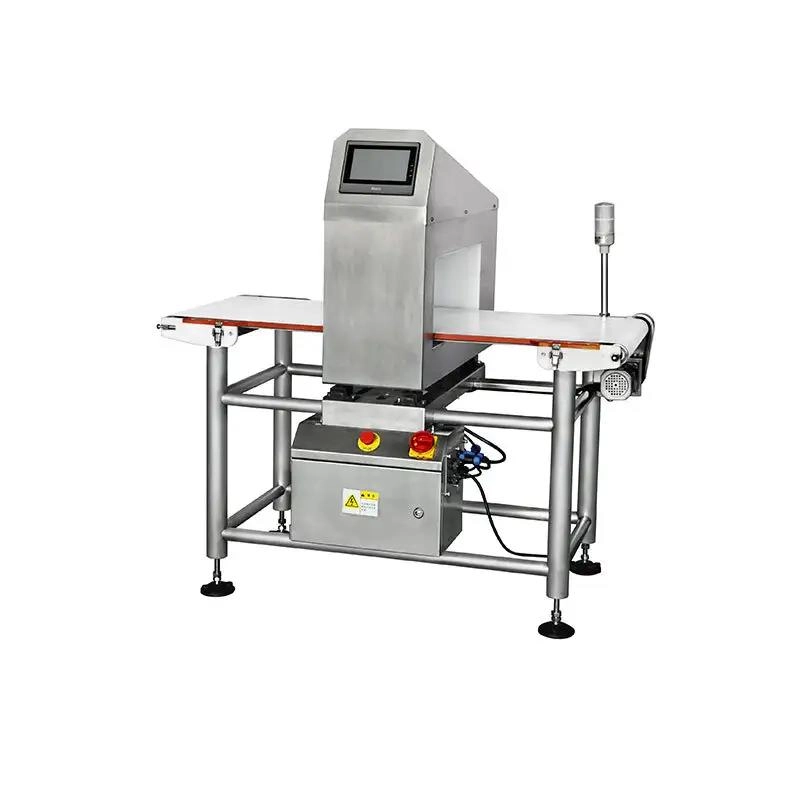
Food Metal Detector Manufacturer For Reject Defective Products G5020
The G5020 multi-frequency metal detector features a specialized conveyor belt designed to reduce contamination risks, ensure smooth operation, and maintain high detection sensitivity. It is easy to disassemble for convenient maintenance. Ideal for detecting metal contaminants in food, pharmaceuticals, spices, plastics, electronics, textiles, toys, handicrafts, and more.

6 Head Checkweigher for 50g Small Package Inspection
Checkweigher for 50g Small Package Inspection by Kenwei offers precise weight verification with six heads, ensuring fast and accurate sorting of small packages. Designed for consistent quality control in production lines, it minimizes errors and optimizes efficiency.
Contact Kenwei
Our company is located in areas with convenient transportation and developed economy. Our products are supplied in a timely manner. In the course of business operation, we always focus on customers.Have any questions or concerns about our products? Please leave us a message here, and our team will get back to you promptly.
Kenwei
Kenwei
Kenwei multi weigh
Kenwei
Kenwei
Kenwei