


10-Head Standard No-Spring Multihead Weigher 1.6L
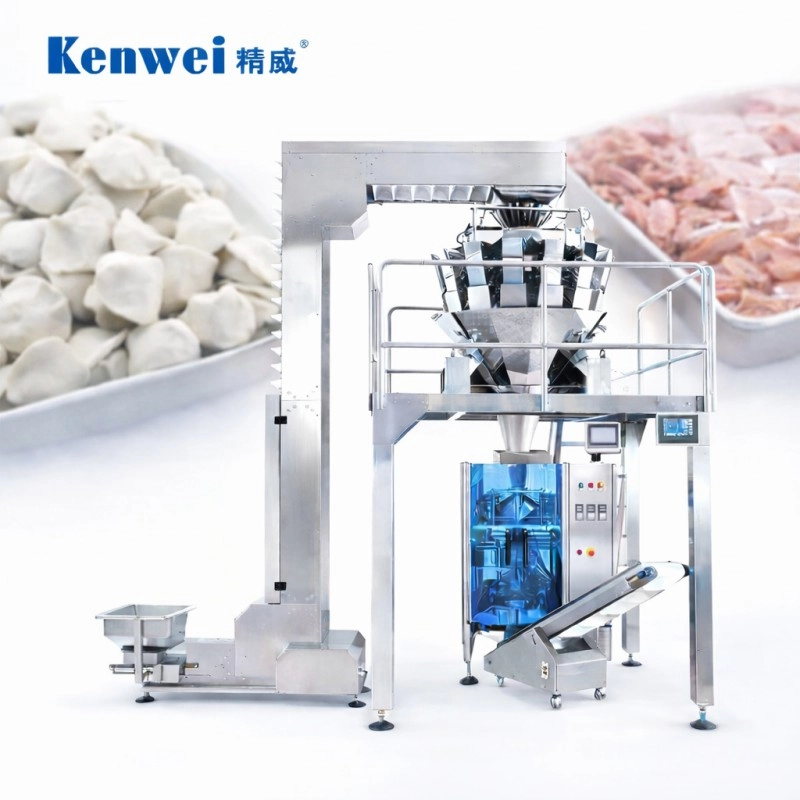
Kenwei’s 10-head standard no-spring multihead weigher with 1.6L hoppers is a high-speed, high-precision automatic weighing solution for granular, snack, frozen, and dry food products. Its 10 weighing heads, durable no-spring construction, programmable combination weighing, and packaging-line compatibility help manufacturers improve accuracy, reduce giveaway, simplify maintenance, and achieve reliable production performance.
- How Can a 10-Head Combination Weigher Improve Packaging Efficiency?
- Why is combination weighing more accurate than manual portioning?
- What production problems can a 1.6L hopper configuration solve?
- What Makes This Automatic Weighing Machine Suitable for Industrial Use?
- How does the no-spring design support reliability?
- Why are speed and precision important for a packaging line?
- How Should Buyers Select and Integrate a Multihead Weigher?
- What product information should be confirmed before purchase?
- How can manufacturers reduce maintenance and operating costs?
- Why is supplier support important after installation?
- Which Questions Should Buyers Ask About a 10-Head Multihead Weigher?

Kenwei’s multihead weigher is designed for manufacturers that need fast, repeatable, and hygienic portion control without excessive product giveaway. This 10-head standard model uses 1.6L weighing hoppers and a no-spring structure to support automatic combination weighing for snacks, grains, seeds, frozen foods, confectionery, pet food, and other free-flowing products. By selecting the most accurate combination of hopper weights, the system helps packaging lines achieve stable target weights while reducing manual labor and inconsistent filling.
How Can a 10-Head Combination Weigher Improve Packaging Efficiency?
Why is combination weighing more accurate than manual portioning?
Manual weighing often creates variation because operators must estimate, adjust, and repeatedly check each portion. A combination weighing system instead collects weight data from multiple hoppers and calculates the closest combination to the programmed target. This approach improves repeatability, supports higher throughput, and limits product giveaway, which is particularly important when processing high-value snacks, nuts, seafood, or High Quality confectionery.
The 10-head configuration provides multiple possible weight combinations while maintaining a practical balance between capacity, footprint, and investment. The controller can select a suitable combination according to the target weight and product flow characteristics, helping the packaging machine receive a consistent product charge. Manufacturers can therefore reduce interruptions caused by manual correction and maintain a more predictable production rhythm.
What production problems can a 1.6L hopper configuration solve?
The 1.6L hopper size is suited to many standard portions and medium-throughput applications where product volume must be controlled without using an unnecessarily large weighing bucket. Correct hopper sizing can improve weighing stability, reduce bridging or overflow, and help the operator match the weigher to the product’s density, target weight, and packaging speed.
For products that require gentle handling, controlled feeding is also important. A properly configured feeder and hopper arrangement helps prevent excessive product accumulation and supports a steady flow into the weighing area. Final performance depends on product characteristics and target weight, so Kenwei can assess the material and recommend suitable operating parameters before delivery.
What Makes This Automatic Weighing Machine Suitable for Industrial Use?
How does the no-spring design support reliability?
Springs can become a maintenance concern in environments exposed to repeated vibration, product dust, cleaning activity, or frequent mechanical movement. The standard no-spring construction is intended to simplify the weighing mechanism and reduce dependence on spring components that may fatigue or require replacement. This can support more consistent long-term operation and make routine inspection easier for production and maintenance teams.
Industrial reliability also depends on correct installation, calibration, cleaning, and product setup. Kenwei’s engineering team provides technical guidance for commissioning and parameter adjustment, helping users avoid common problems such as unstable readings, overfeeding, delayed discharge, or poor synchronization with the packaging machine. The result is a weighing system designed for practical factory operation rather than laboratory use alone.
Why are speed and precision important for a packaging line?
A packaging line loses efficiency when the weigher cannot keep pace with the bagger, when portions require manual correction, or when inaccurate fills create rejected packs. A high-speed multihead system addresses these issues by automating the selection and discharge process. Stable weighing performance allows downstream equipment to operate with fewer pauses and gives production managers clearer control over output and material consumption.
Precision is equally important because even a small average overfill becomes significant across thousands of packages. Combination weighing helps control this risk by using actual readings from multiple hoppers rather than relying on a fixed volumetric estimate. For quality and food safety management, manufacturers can align operating procedures with ISO 22000 food safety management principles and their own documented weighing and verification controls.
How Should Buyers Select and Integrate a Multihead Weigher?
What product information should be confirmed before purchase?
Buyers should provide the product name, bulk density, moisture level, particle size, fragility, stickiness, target weight range, desired packs per minute, and acceptable weighing tolerance. These details determine whether the 1.6L hopper capacity, feeder design, contact-surface configuration, and software settings are appropriate. A product that flows freely may require very different settings from a product that is oily, irregular, frozen, or prone to bridging.
Packaging format also affects selection. The weigher may need to communicate with a vertical form-fill-seal machine, premade pouch system, tray filler, or another automated packer. Buyers should confirm available headroom, discharge height, conveyor orientation, electrical requirements, and control interfaces early in the project. This prevents expensive modifications after the equipment reaches the factory and allows the complete weighing and packaging line to be engineered as one system.
How can manufacturers reduce maintenance and operating costs?
Maintenance costs are controlled most effectively through suitable product matching, accessible components, scheduled cleaning, and operator training. A no-spring structure can reduce the number of wear-prone elements, but it does not eliminate the need for inspection. Teams should regularly check hopper movement, load-cell performance, feeder condition, fasteners, product buildup, and communication with the bagging machine.
Correct calibration and recipe management are equally valuable. Operators should use approved test weights, document verification results, and keep separate programs for different products and target weights. Where food is involved, cleaning procedures should follow the site’s hazard analysis and sanitation requirements. The FDA guidance on current good manufacturing practice and preventive controls provides useful reference points for facilities serving regulated food markets.
Why is supplier support important after installation?
Equipment value depends on more than the machine frame and controller. A capable supplier should support application evaluation, layout planning, delivery coordination, installation, commissioning, parameter optimization, technical training, and after-sales service. These stages help ensure that the weigher delivers its expected accuracy and speed under real production conditions rather than only during factory testing.
Kenwei operates from Guangdong, China, and provides design, development, manufacturing, marketing, installation, commissioning, training, and service capabilities for automated weighing and packaging equipment. Its product range includes multihead weighers, linear weighers, check weighers, and metal detectors, allowing customers to coordinate several inspection and packaging functions through one experienced supplier. This integrated approach is useful for exporters and food manufacturers that require customized line engineering.
Hygienic design and process control should also be considered during line approval. The European Hygienic Engineering and Design Group publishes recognized guidance for hygienic equipment design, while ISO 13849-1 safety guidance for machinery control systems can help project teams review relevant control and safeguarding considerations. Requirements vary by market and application, so buyers should confirm applicable standards with their compliance specialists.
Contact Kenwei at kenwei01@multiweigh.com.cn to discuss your product, target weight, line speed, and customization requirements for a reliable 10-head weighing and packaging solution.
Which Questions Should Buyers Ask About a 10-Head Multihead Weigher?
What products can the 10-head multihead weigher process?
The 10-head multihead weigher is suitable for many free-flowing products, including snacks, grains, seeds, frozen foods, confectionery, pet food, and similar materials. Product density, moisture, stickiness, fragility, particle size, and target weight should be reviewed before selection because these factors determine feeder settings, hopper suitability, and achievable weighing stability.
What does the 1.6L hopper capacity mean for production?
The 1.6L hopper capacity provides a practical weighing volume for many standard portions and medium-throughput applications. It helps manufacturers match product volume to target weight without automatically selecting oversized hoppers, but the correct choice still depends on bulk density, product shape, desired speed, and the required number of discharges per minute.
How does a no-spring structure benefit maintenance?
A no-spring structure can reduce reliance on spring components that may fatigue under repeated vibration, cleaning, or mechanical movement. It may simplify inspection and support stable operation, although operators must still check hoppers, load cells, feeders, fasteners, product buildup, and calibration according to the site’s maintenance and sanitation procedures.
Can this weigher connect to an automatic packaging machine?
Yes, the weigher can be designed for integration with suitable automatic packaging equipment, subject to project requirements. Buyers should confirm the bagger type, discharge height, available headroom, electrical supply, communication interface, product flow, and required speed so Kenwei can coordinate the weighing system with the complete packaging line.
How many weighing heads does this model use?
This model uses 10 weighing heads to create multiple possible weight combinations for selecting a close target portion. The additional combinations compared with a simple single-hopper system can improve weighing flexibility and reduce giveaway, while the final speed and accuracy depend on product characteristics, target weight, feeder settings, and packaging-line synchronization.
What support does Kenwei provide after equipment delivery?
Kenwei provides support across design, manufacturing, installation, commissioning, technical training, and after-sales service. Its engineers can assist with application evaluation and parameter setup, while operators should maintain documented calibration, cleaning, and inspection procedures so the machine continues to perform reliably throughout production and remains aligned with the facility’s quality requirements.
Tags
food metal detector manufacturer
food metal detector manufacturer
combination weigher
combination weigher
3 head linear weigher
3 head linear weigher
multi head packing machine
multi head packing machine
Vertical Form Fill Seal Machine
Vertical Form Fill Seal Machine
food metal detector
food metal detector
Recommended for you

Common Metal Contaminants and Detection Techniques in Food
What is a Food Grain Packing Machine? Complete Beginner's Guide

Top 10 Metal Detector Models for High-Speed Packaging Lines
Hygienic Design Features for Pickles Multihead Weighers
You may also like
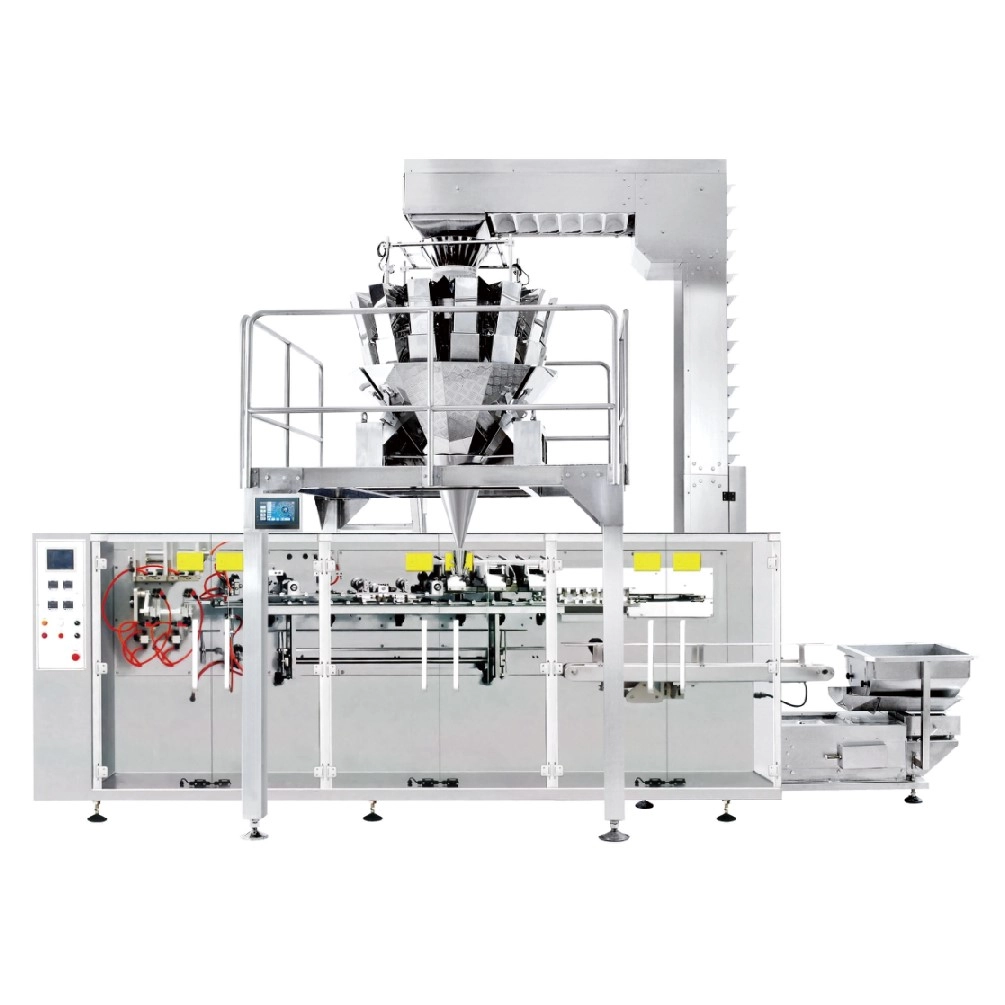
Horizontal Packaging Machine With Multihead Weigher for Weighing Pet Foods Puffy Foods B11
Horizontal Packaging Machine With Multihead Weigher for Weighing Pet Foods Puffy Foods B11 is a fully automatic solution for high-speed, high-accuracy packaging. Ideal for snacks like candy, jelly, nuts, and puffed food, as well as hardware and plastic granules in various shapes. It supports premade bags with firm, attractive sealing. Designed for customers needing high production efficiency and large output capacity.
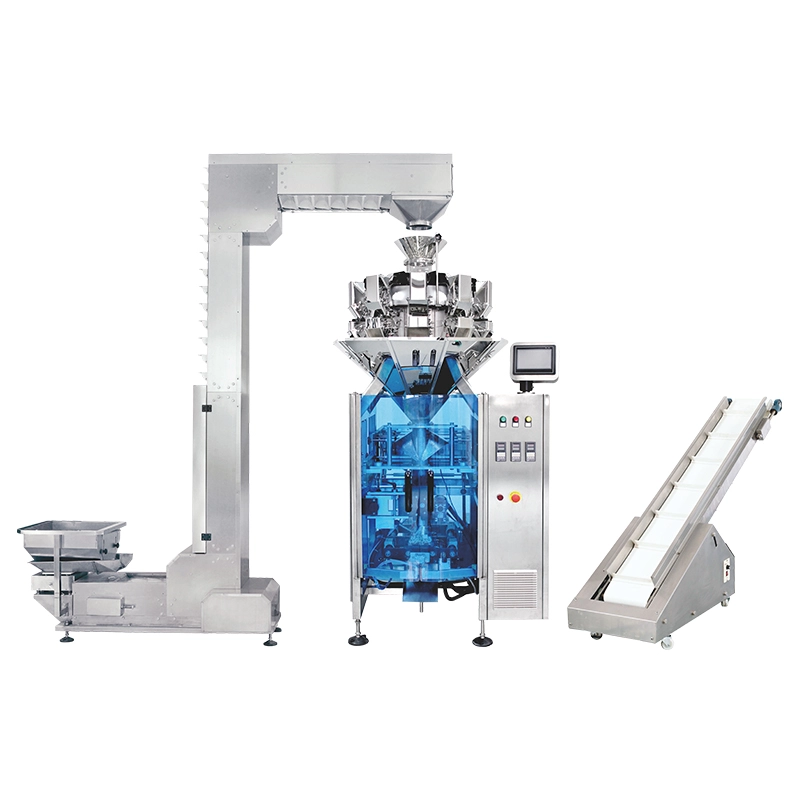
Combined Multihead Weighing Weigher and Packaging Machine with Z Conveyor JW-B4
The JW-B4 Combined Multihead Weighing and Packaging Machine with Z Conveyor is a compact, fully automatic solution ideal for packing snacks, nuts, candies, pet food, frozen products, hardware, and more. It integrates feeding, weighing, filling, sealing, and labeling with high precision and speed. Suitable for a wide range of materials, it’s perfect for space-limited production lines.
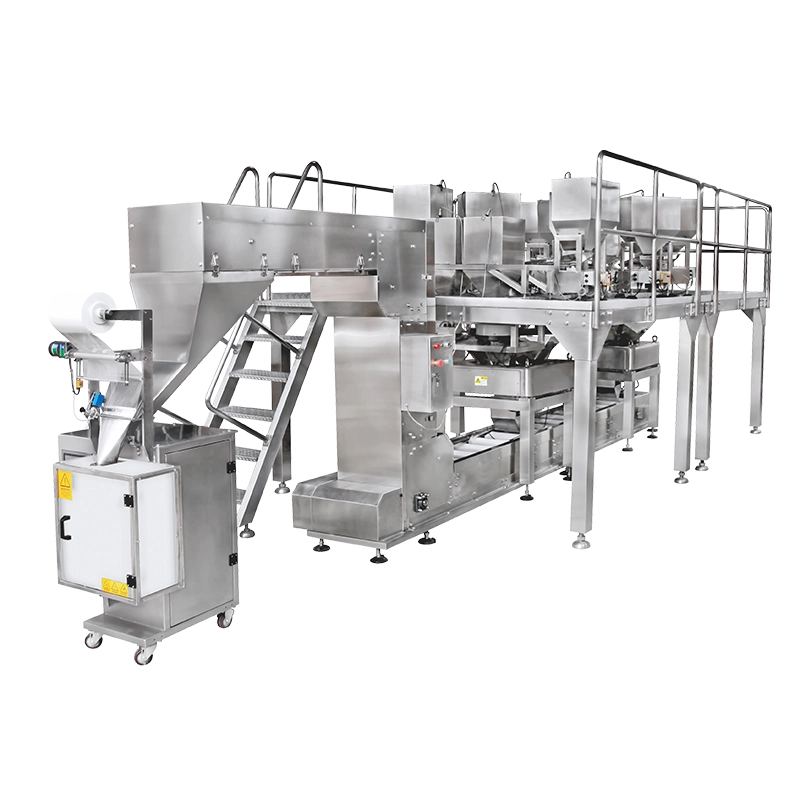
JW-B28 Multihead Weigher Mixing & Weighing System for Food Packaging | High-Speed, Accurate, Automated
The Kenwei JW-B26 Single Multihead Weigher Mixing and Packaging System offers fully automated operation, completing feeding, weighing, filling, date printing, and product output with high accuracy and speed. Ideal for granules, slices, irregular shapes, and mixed products like candy, nuts, snacks, pet food, and even small hardware. Its versatility and precision make it a perfect solution for diverse packaging needs.
Vertical Frozen Food Packaging Machine for IQF & Frozen Products JW-B1
The Kenwei JW-B1 Vertical Frozen Food Packaging Machine is designed for IQF and frozen products, ensuring efficient, airtight packing. This vertical packing machine boosts productivity with precision sealing, ideal for frozen food packaging needs in the food industry.
Contact Kenwei
Our company is located in areas with convenient transportation and developed economy. Our products are supplied in a timely manner. In the course of business operation, we always focus on customers.Have any questions or concerns about our products? Please leave us a message here, and our team will get back to you promptly.
Kenwei
Kenwei
Kenwei multi weigh
Kenwei
Kenwei
Kenwei